
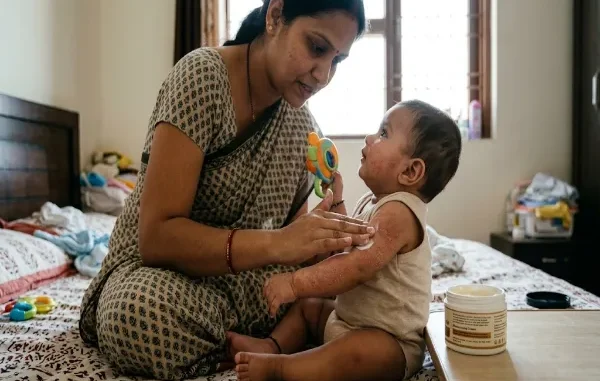
While skin dryness is common and not something anybody fusses over, the minute the first red spots of eczema appear on your baby’s skin can still be a lot to take in! You are right to worry. In fact, you have every right to worry! But at the same time, we would like to tell you that this skin condition can be effectively managed. As long as you use the right moisturiser and take a few proactive measures to limit triggers, things should be fine eventually. Of course, you have to learn everything you need to know about baby eczema first, and that’s what this article is here! So let’s begin.
What Is Baby Eczema?
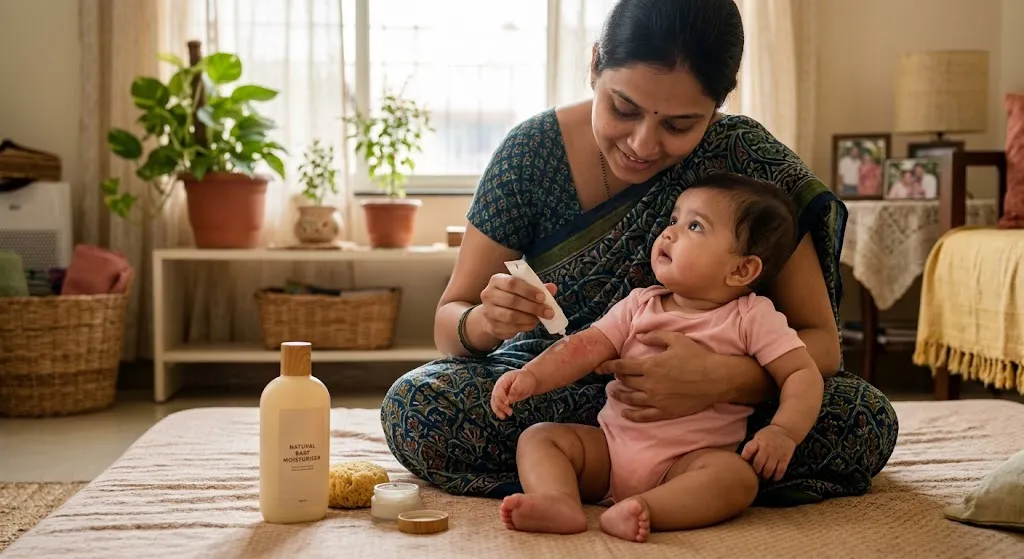
Baby eczema can look like an ordinary skin rash at first but it is a little more than that. Also known as atopic dermatitis in medical speak, it is a very common skin condition characterised by dry and itchy spots on your baby’s skin that may look red and inflamed while being sensitive to touch.
Despite its prevalence, there is no real cure for eczema, but the good news is that it can be effectively managed. In fact, there is a good chance that it might even go away in a few years if you take all the necessary precautions to prevent future outbreaks. We’ll discuss what you can do on that front later in this article.
What Causes Baby Eczema?
The are two major causes behind baby eczema, and the causes do not affect the treatment much, though they may impact management strategies:
Genetics
If you have a history of allergies, atopic dermatitis or asthma in your family, your baby is more likely to develop eczema. It has been discovered that most causes of genetic eczema have one thing in common – babies who have them typically born without a specific type of protein in their bodies. This protein is known as filaggrin and its job is two-fold. Firstly, it supports the normal functioning of your baby’s epidermis, which is the top layer of the skin that maintains its moisture levels. Secondly, this protein plays a critical role in forming the protective barrier between the environment and your baby’s skin. So without it, skin issues are likely.
Environmental factors
A couple of environmental factors can trigger allergic reactions or make existing atopic dermatitis worse. Irritants that can penetrate through your baby’s epidermis and cause allergies include dust, pollen, pet dander, certain types of foods, clothing materials, certain types of wipes or heavily fragranced items, bedding and blankets, household items such as soaps and detergents, common cold and excess sweating or dry temperatures.
How Can A Moisturiser Help With Baby Eczema?
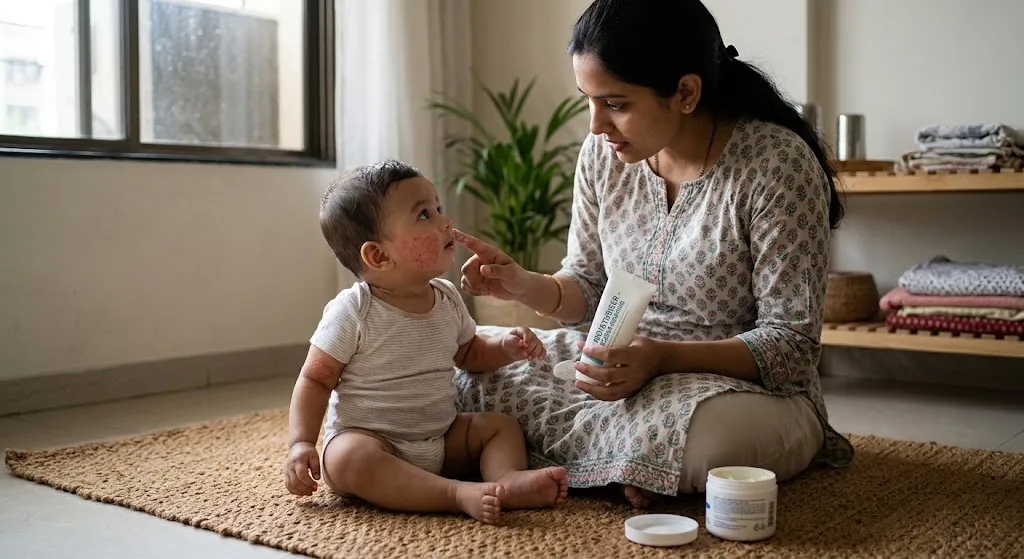
Did you know the most effective treatment option recommended for baby eczema is using a moisturiser? It’s true. All you need is a moisturising cream to get rid of the visible signs and symptoms of baby eczema including the dryness, rashes, red spots and itchiness. Of course, you must limit exposure to allergens and eliminate those allergens altogether that you can. But using a moisturiser is an absolute unskippable part of the treatment plan.
Now comes the tricky part though – choosing a moisturising cream that actually works. While your doctor might make recommendations based on your baby’s case, you must still incorporate a good deep moisturising cream into their skincare routine to soothe existing flare-ups and prevent future ones.
Look for ingredients that can help. For example, natural oils such as Sweet Almond, HempSeed and Pomegranate Oils are excellent emollients that prevent moisture loss when applied to your baby’s skin.
Natural butters are a great option too. Think Shea Butter, Mango Butter and Ghee. Each one of them is not only deeply moisturising, but they also are a rich source of Vitamins E and A, which are useful in keeping skin infections and inflammation at bay.
Lastly, a moisturising cream is incomplete without hydrators, so make sure you look for one that contains intensely hydrating ingredients such as Hyaluronic Acid and Pentavitin®. They prevent itchiness and dryness, while providing hydration that lasts for up to 24 hours after application. If you find a cream that also contains Saffron Extract, that will be great because it is a very skin soothing ingredient that can help in easing some of the discomfort your baby feels.
Conclusion
Baby eczema can seem very alarming at first. But with the right care and management strategies, you can fight its symptoms and keep your baby comfy and happy once again. Just be diligent and have a proper moisturising routine for your baby as that is your best defense against this particular skin condition.
Related posts:
 Regaining Control on the Road to Recovery: What You Need to Know
 🦷 Emax vs Zirconia: Which Dental Veneer Is Better for Your Smile?
 Medical Malpractice in Florida: What Every Healthcare Provider Should Understand
 Why Migraine and Motion Sickness Often Travel Together
 How PRP Therapy Is Being Used for TMJ and Jaw Pain in Florida Clinics
Leave a Reply