
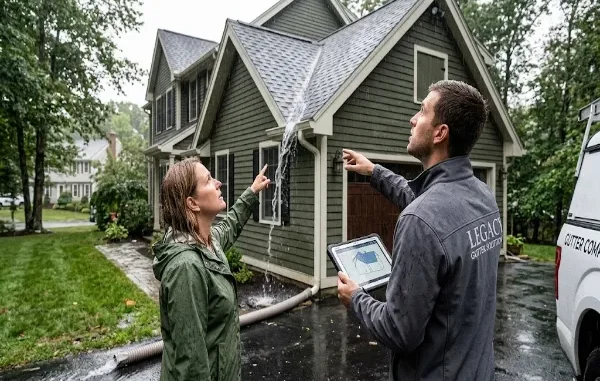
A gutter system may look simple from the ground, yet its performance depends heavily on the shape and layout of the roof above it. Roof valleys, steep slopes, long sections, and intersecting rooflines can send large amounts of rainwater toward specific areas. If gutters are not planned around these conditions, water may overflow even when the channels are relatively clear.
Drainage problems are sometimes mistaken for ordinary clogs because overflowing water is the most noticeable symptom. Cleaning can certainly restore flow when debris is responsible, but it cannot correct every design issue. Homeowners may need to consider how water travels across the roof before deciding what kind of gutter improvement makes sense.
A professional Gutter Company can examine the relationship between the roof, gutters, downspouts, and surrounding property. Legacy Gutter Solutions helps homeowners consider these connected features rather than treating every overflow as an isolated maintenance problem. A system designed around actual drainage patterns has a better chance of managing rainfall effectively.
Roof Shape Determines Where Rainwater Collects
Rain does not reach every section of a gutter system in equal amounts. A simple roof may distribute water fairly evenly along its edges, while a complex roof can concentrate runoff at several specific points. Those concentrated areas often experience greater drainage demands during heavier rainfall.
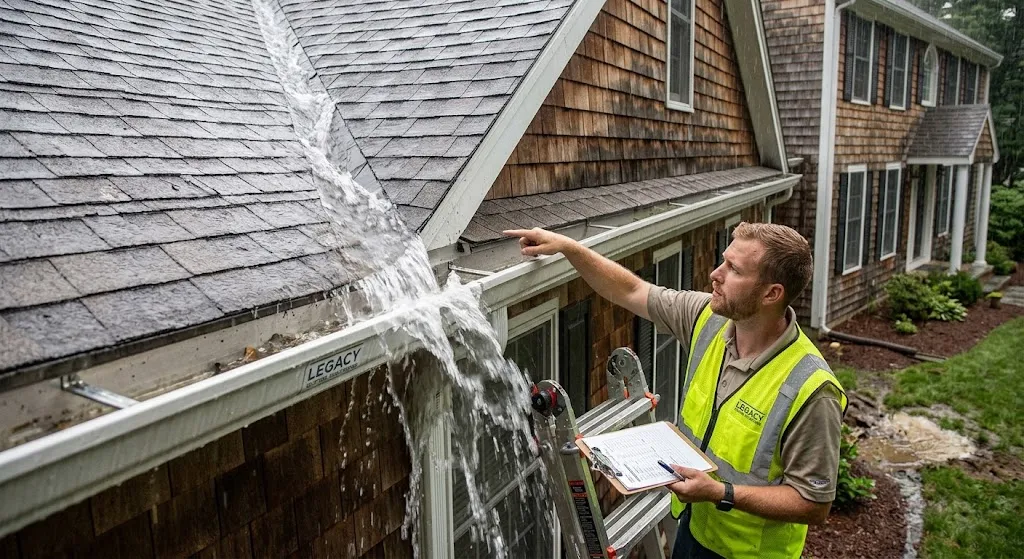
Roof valleys are a common example. Two roof surfaces can direct water toward the same narrow path, creating a faster stream as it reaches the gutter below. A gutter section that performs normally elsewhere may struggle at this location because it receives substantially more water.
Home additions can create similar challenges. When multiple roof sections meet, the original drainage layout may no longer match the amount or direction of runoff. Evaluating these changes helps explain recurring overflow that ordinary cleaning does not resolve.
Steep Roof Slopes Can Change Water Movement
Roof pitch influences how quickly rainwater travels toward the edge. On steeper surfaces, water can reach gutters rapidly during strong rainfall instead of moving gradually across the roofing material. This faster movement can place greater demand on certain gutter sections.
Homeowners often notice the result during storms. Water may rush over the gutter edge at one location while nearby sections appear to function normally. Watching where overflow occurs can provide useful information about the drainage pattern.
The solution should be based on the actual cause rather than assumptions. Adjustments to gutter positioning, drainage capacity, or related components may be considered after the roof and existing system have been properly evaluated.
Valleys Require Special Attention During Drainage Planning
Roof valleys deserve careful evaluation because they collect runoff from adjoining surfaces. During heavy rain, a concentrated stream can reach the gutter at greater speed and volume than water flowing from a single roof plane. This creates a demanding point within the overall system.
Observe Where Concentrated Water Reaches the Gutter
Homeowners can safely observe drainage behavior from ground level during rainfall. If the same area repeatedly overflows beneath a valley, the pattern is worth noting. Photographs taken from a safe location can also help document what happens during different storm conditions.
Legacy Gutter Solutions can use observations alongside an inspection of the existing drainage arrangement. Understanding where water concentrates helps distinguish a design concern from a blockage, loose component, or maintenance issue that produces similar symptoms.
Long Roof Edges Need Suitable Drainage Routes
A long gutter run must move collected water toward one or more downspouts. If water has too far to travel, or if the slope does not support proper movement, drainage may become less effective. Problems can become especially noticeable when substantial roof area feeds the same section.
Correct gutter slope matters because water needs a controlled route toward an outlet. Too little slope may encourage water to remain in sections of the channel, while poor alignment can interfere with normal drainage. Visual appearance alone does not always reveal these subtle installation concerns.
Downspout placement also influences performance. A well-positioned outlet helps water leave the gutter instead of forcing excessive runoff through an unnecessarily long route. The complete drainage path should therefore be considered as one connected system.
Downspout Locations Affect the Entire System
Downspouts perform the essential job of carrying collected water from gutters toward the ground. Their location, condition, and relationship to the gutter runs influence how efficiently the entire system drains. An otherwise sound gutter layout can still struggle if outlets are poorly positioned.
A professional gutter company in New England can evaluate whether existing downspouts reasonably support the roof areas feeding them. This assessment may include looking at long gutter runs, roof valleys, additions, and locations where water repeatedly accumulates. The objective is to understand the complete route from roof surface to discharge point.
Downspouts must also release water appropriately after it reaches ground level. Simply moving roof runoff downward is not enough if discharge allows water to collect immediately beside the structure.
Home Additions Can Disrupt Older Drainage Plans

Renovations sometimes change a roof without corresponding changes to the drainage system. An addition may introduce another roof plane, redirect runoff, or increase the amount of water reaching an existing gutter section. The older arrangement may then perform differently than it did before construction.
This problem can be confusing because the gutters themselves may not appear damaged. Homeowners may repeatedly clean them while overflow continues during significant rainfall. Looking at how the roof configuration changed can reveal a more useful explanation.
Drainage should be reviewed whenever substantial exterior remodeling affects rooflines. Planning around the completed structure helps prevent new sections from directing unexpected volumes of water toward gutters that were designed for an earlier layout.
Gutters Must Work With the Property Below
Roof design is only half of the drainage picture. After rainwater travels through gutters and downspouts, it still needs somewhere appropriate to go. Poor discharge conditions can create puddling, erosion, or repeated wet areas around the exterior.
Property grading and landscaping can influence where discharged water travels. If the surrounding surface directs water back toward the house, gutter performance alone cannot solve the entire concern. Homeowners may need appropriate guidance for drainage conditions beyond the gutter system itself.
Observing the property after rain can reveal useful patterns. Persistent puddles near downspout outlets or visible soil erosion may indicate that the final stage of water management deserves attention.
Overflow Does Not Always Mean Gutters Are Too Small
Seeing water spill over an edge can lead homeowners to assume that larger gutters are automatically necessary. Capacity may sometimes be part of the problem, but debris, alignment, outlet placement, roof valleys, or other conditions can produce similar symptoms. Correct diagnosis should come before replacement.
A detailed inspection can examine the gutter channel and the roof area feeding it. The goal is to identify why water is escaping instead of immediately choosing a larger component. This approach can prevent homeowners from paying for changes that do not address the actual cause.
Legacy Gutter Solutions can assess multiple factors before recommendations are made. Property-specific planning is more useful than assuming one gutter size or layout will perform equally well on every house.
Watch Drainage Performance During Real Rainfall
Dry-weather inspections reveal physical conditions, but rainfall shows how the system behaves under actual demand. Homeowners who can observe safely from the ground may notice overflow points, slow drainage, leaking joints, or downspouts that appear unable to move water effectively.
These observations should be made without climbing ladders during wet weather. Slippery surfaces and storms create unnecessary risks. A simple written note about where and when problems occur can provide valuable information later.
The intensity of rainfall also matters. Overflow that happens during ordinary rain may suggest a different concern from occasional spillover during unusually intense conditions. Recording the circumstances makes the pattern easier to evaluate.
Plan Repairs Around the Cause of Poor Drainage
Effective repairs begin with understanding the problem. Loose fasteners require a different response from an inadequate drainage route, while a blocked outlet differs from runoff concentrated by a roof valley. Treating all symptoms in the same way can waste time and leave recurring issues unresolved.
A qualified Gutter Company should consider roof configuration, gutter alignment, downspout placement, existing wear, and visible drainage patterns together. Homeowners can then understand why particular repairs or modifications are being recommended instead of receiving a generic solution.
Good drainage planning follows the path of rainwater from the roof to its final discharge location. By examining that entire route, homeowners can make better decisions about repairs, adjustments, and future maintenance while helping their gutter systems handle the specific demands created by their home’s roof design.
Related posts:
 Longhornsurvey com The Online Survey Platform
 Decoding The Real Slim Shady Lyrics
 Embracing the Paradox: The Power of Being Consistently Inconsistent
 The Ultimate Guide to Creating a Cozy and Functional Living Space with Home Goods
 Why Siding Plays a Key Role in Reducing Exterior Maintenance Throughout the Year
Leave a Reply