
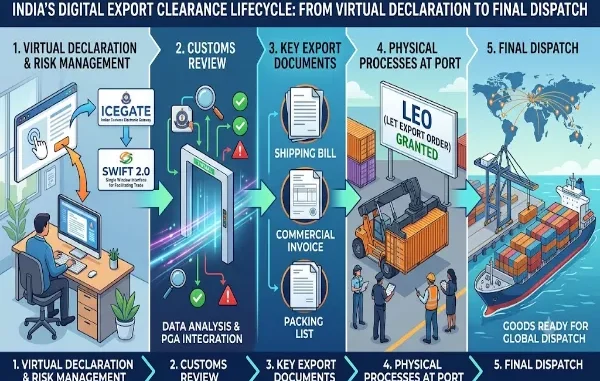
Moving goods out of India is a process that has become much more organized over the last few years. It is no longer a maze of physical files and endless waiting at port offices. For a small business, the goal is simple: get the product to the customer as fast as possible without getting stuck in a legal bottleneck. Export clearance is essentially the government checking that everything leaving the country is accounted for and follows the law. It sounds formal, but once you break it down, it is just a series of checkpoints.
What Happens During Export Clearance
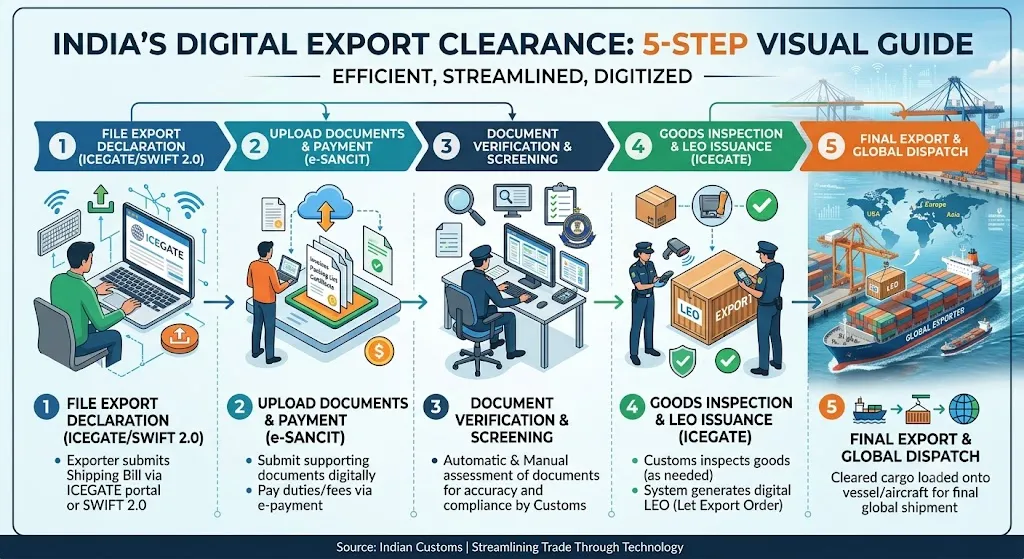
However, this process commences much earlier than when goods arrive at the port. This process involves the electronic submission of export documents that serve as a virtual handshake between the exporter and the customs authority.
The Clearance Lifecycle
- Virtual Declaration: Firms use the web portal to communicate their intention of exporting goods, which includes details regarding the buyer and transaction costs.
- Risk Management: Risk management processes are carried out by the custom authorities based on data. If the exporter has a good record of compliance, then there will be no requirement for inspections in most of his cargo shipments, thus fulfilling the Ease of Doing Business target.
- Performance in Context: Despite some difficulties, the Indian export business continues to prove its strength. In the fiscal year 2025-2026, the total merchandise and services exports from India were approximately $219 billion, reflecting the growing reliability of these digital systems.
Key Export Documents Required
If you ask any seasoned exporter about the most important piece of paper, they will mention the shipping bill. This is the primary document that allows you to load your goods onto a ship or a plane. Without it, nothing moves. It acts as an application for permission to export.
Beyond that, you need the basics like the invoice and the packing list. The invoice is the proof of the sale, and the packing list tells the officers exactly how many items are in each box. It is a bit like a recipe for a large meal; everything needs to be listed so the person checking knows what to expect. While the business handles the packing, many SMEs find it easier to work with a logistics partner like DHL to manage the actual flow of these documents. Having someone who knows the system can prevent small errors that might cause a shipment to be held back for days.
| Document | Purpose | Why it is needed |
| Shipping Bill | Official export declaration | To get customs permission to load |
| Commercial Invoice | Record of the transaction | For valuation and tax checks |
| Packing List | Detailed breakdown of cargo | To verify the physical quantity |
Role of Digital Customs Systems
Contemporary trade relies on an efficient digital ecosystem, which is designed to minimize “dwell time,” the period during which shipments are idle at the port.
Essential Platforms
- ICEGATE (Indian Customs Electronic Gateway): The national online platform for all transactions. It brings together exporters, banks, and customs officials under one roof, facilitating round-the-clock transactions and updates.
- SWIFT 2.0 (Single Window Interface for Facilitating Trade): This system came as an electronic upgrade to SWIFT 1.0. It acts as a single window. It integrates many Partner Government Agencies (PGAs), such as those related to food or textiles, for the purpose of sending digital NOCs and real-time notifications.
Moving Toward Final Dispatch
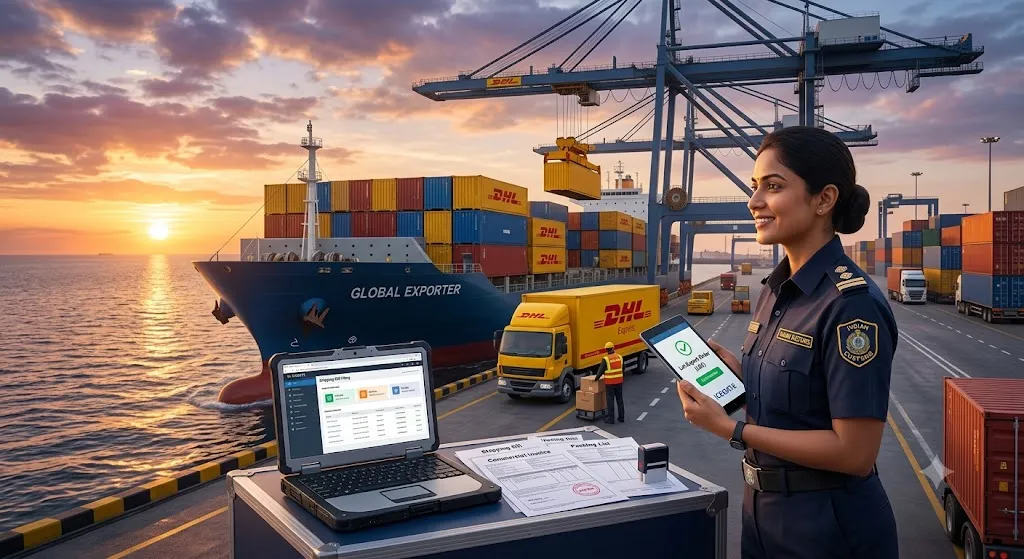
If the custom officer or electronic system is satisfied with the process, then he issues the “Let Export Order” (LEO). This is the last document issued, indicating that all necessary documents, inspections, and duties have been sorted out. This order gives you the go-ahead to load your cargo on the vessel or flight.
Tips for Consistent Success
- Be Thorough: Accuracy is the secret to a smooth export journey. Ensure the information on your screen perfectly matches the physical items in your container.
- Monitor Digital Updates: Use the dashboard features in ICEGATE and SWIFT 2.0 to stay alerted to any queries or status changes in real-time.
- Build Longevity: Since India’s exports will keep expanding around the world, becoming proficient at these processes will help small firms develop into global competitors. Doing things right from the start means fewer roadblocks along the way and more opportunities to seal another deal.
As Indian exports continue to reach new heights, staying on top of these digital steps is what helps a small business grow into a global player. It is all about getting the details right the first time so you can focus on making your next sale.
Related posts:
 How Verified Consultants Can Help You Close Office Deals Faster in Bangalore
 How Maya Thompson Turned $100 Into a Million-Dollar Empire
 What Is a Road Trading Strategy? A Trend Method for FX Beginners
 Refinancing Your Home Loan After RBI Rate Cuts: A Smart Way to Save
 Building a Scalable Business Through Accelerator Mentorship and Capital
Leave a Reply