
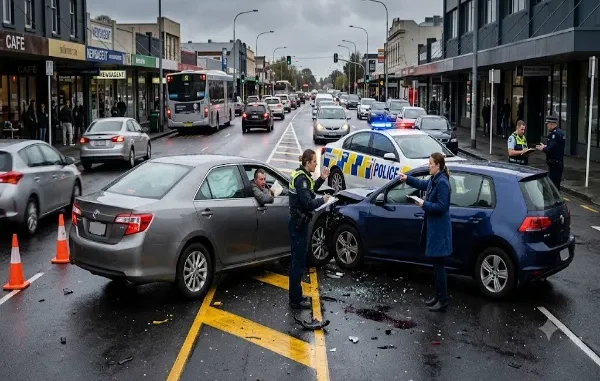
U-turn collisions often seem straightforward at first. One driver attempts to turn around, another vehicle is approaching, and a crash occurs. Because the maneuver itself can appear risky, many people assume fault will be obvious from the beginning.
The reality is often far more complicated. Drivers involved in these accidents frequently have very different versions of what happened. One person may believe the other vehicle was speeding, while the other insists the U-turn was made unexpectedly and without enough space. These disagreements can quickly make the situation more difficult to evaluate.
A u turn accident often requires a careful review of traffic conditions, driver behavior, visibility, and right-of-way rules. What appears obvious immediately after a crash may look very different once investigators, insurers, and other parties begin examining the available evidence and surrounding circumstances.
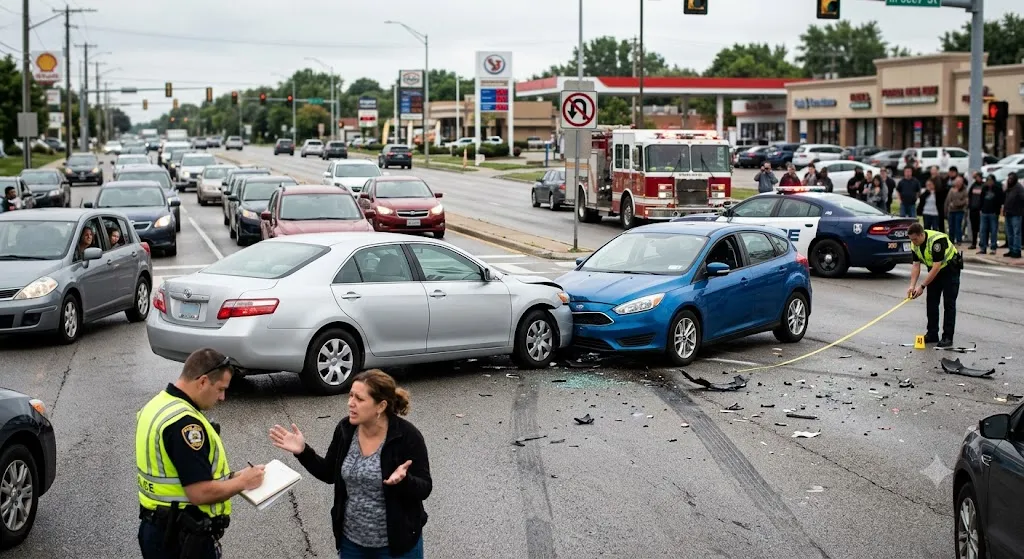
Why These Maneuvers Create So Many Problems
U-turns interrupt the normal flow of traffic in ways that other driving maneuvers often do not. A vehicle making a U-turn must cross lanes, judge approaching traffic, and complete the turn safely while accounting for multiple moving vehicles. Small errors in timing can create dangerous situations.
Visibility is another common issue. Drivers attempting a U-turn may have limited views of approaching traffic due to curves, parked vehicles, weather conditions, or other obstacles. Likewise, approaching drivers may not immediately recognize that another vehicle is preparing to reverse direction.
Many crashes occur when expectations differ. Traffic generally moves in predictable patterns, and sudden changes can catch drivers off guard. A split-second misunderstanding about speed, distance, or timing can quickly result in a collision that leaves both drivers arguing about what actually happened.
The Rules Are Not Always As Clear As People Think
Right-of-way rules often play a central role in determining responsibility after a U-turn collision. In many situations, drivers making U-turns must yield to oncoming traffic before proceeding. However, the analysis does not always stop there.
Drivers sometimes assume that having the right of way automatically removes all responsibility from their side of the case. That is not always true. Speeding, distracted driving, or other unsafe actions by the approaching driver may still become relevant when the crash is evaluated.
The surrounding circumstances matter. Traffic signals, roadway markings, visibility conditions, and local traffic laws can all influence how fault is assessed. A rule that appears simple on paper may become more complicated when applied to the specific facts of an actual collision.
Sometimes Responsibility Is Shared
Not every accident results in a single driver being blamed entirely. In some situations, investigators conclude that both drivers contributed to the events leading to the crash. These shared-fault scenarios are more common than many people realize.
For example, a driver making a U-turn may have misjudged the distance of an approaching vehicle. At the same time, the approaching driver may have been traveling well above the speed limit. When both actions contribute to the collision, responsibility may be divided rather than assigned exclusively to one party.
Comparative negligence rules in many jurisdictions allow fault to be allocated among multiple parties. This approach recognizes that accidents often result from a combination of decisions rather than a single mistake. Determining those percentages requires a careful examination of all available facts.
Reconstructing What Really Happened
Investigators often rely on multiple sources of evidence when evaluating U-turn collisions. Police reports, witness statements, photographs, and vehicle damage patterns can help establish how the accident occurred. Each piece of information contributes to the larger picture.
Physical evidence can be particularly important when drivers disagree about key facts. The location of impact, skid marks, debris patterns, and roadway conditions may provide clues about speed, direction, and positioning immediately before the crash occurred.
Technology has also become increasingly valuable. Traffic cameras, surveillance footage, dashcams, and electronic vehicle data sometimes capture details that would otherwise be impossible to verify. These objective sources can help resolve disputes and provide a clearer understanding of the sequence of events.
Looking Beyond First Impressions
U-turn accidents often appear simple until the facts are examined more closely. Questions about right of way, driver behavior, traffic conditions, and visibility frequently create a more complex picture than people initially expect.
Determining fault usually requires more than identifying which driver was making the turn. Investigators and insurers often review a wide range of evidence before reaching conclusions about responsibility. Small details can significantly influence how a case is evaluated.
Before drawing conclusions about any collision involving a U-turn, it is important to consider the full set of facts. A careful review of the evidence often reveals nuances that are not immediately obvious and helps ensure that responsibility is assessed as accurately as possible.





Leave a Reply