

For analysts in the year 2026, the business environment will be more and more marked by decision-making that is technology-driven, time-bound, and strategic. Analytics can be defined rather fundamentally as the skill whereby people obtain, verify, and interpret data so as to enable proper decision-making. Accuracy and precision are the essential cornerstones of analytics. Accuracy and precision are the only qualities that will enable the decision-making phase of analytics to become less challenging and more successful. They would never be viable or possible within an AI-powered analytics solution.
Analytics First: Why Accuracy Is Not Optional
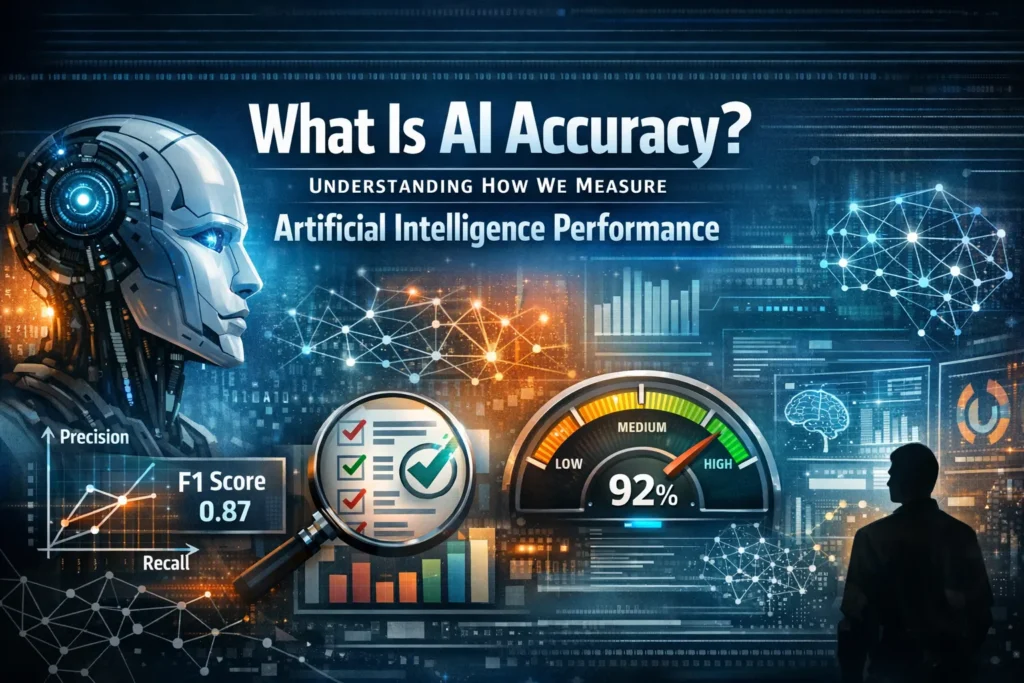
Before AI enters the picture, analytics already demands rigor: clean data, correct calculations, consistent logic-all help analysts correctly assess performance and trends. Accuracy makes sure the values reflect reality. Precision ensures that measurements are consistent, repeatable. Taken together, they form the basis of trust in analytics.
When analytics is inaccurate, AI just increases the problem tenfold. Automated models can run flawed data quickly, yet they cannot rectify assumptions that are wrong or unreliable input by themselves. This is why AI data analytics tools need to be built on sound analytic foundations that stress correctness before automation.
How AI Can Improve Analytics Without Reproducing It
AI does not replace analytics. It complements the field by adding speed to those manually executed time-consuming activities like data preparation, spotting patterns, identifying anomalies, and deriving insights.
Nevertheless, AI needs to maintain the integrity of analysis. There is a need for explanations on why a particular metric has changed, what drives the changes, and how a particular result is linked to authentic data. By making sense of AI results, analysts are able to interpret them in business contexts.
Precision is More Important as Decisions Are Made Quicker

As the decision cycles get shorter, small levels of error can multiply greatly. Pricing tactics, forecasting demand, budgeting, and entering markets all rely on exact deciphering of signals from the data.
High-accuracy analytics allows analysts to identify small changes that signal rising trends. On the contrary, inaccurate models create a blur around these signals such that the earliest signs of trends become impossible to differentiate from noise. By the year 2026, decision-making accuracy will not only be a technological preference but a business need.
Visualizing Relies On Correct Data
Visualization is probably the initial way in which insights are delivered to stakeholders. The way in which graphs, charts, and reports shape perceptions and drive decisions is unparalleled. This is an area in which AI visualization is rapidly making its presence felt, taking complex data and presenting it in an intuitive visual form.
However, the potential for misdirection is only as strong as the associated data. Visualizations created using AI that are based on inaccurate or illogical data will mislead decision-makers efficiently and profoundly. For analysts, the challenge increases exponentially. Any AI-powered visualization needs to start from trusted metrics and sound logic. Otherwise, the goal of clear vision becomes a mirage.
What Analysts Require from Explainability
Analysts have responsibility for the results of the analysis that they provide. Analysts must explain their results, rationalize assumptions that are made, and be prepared to defend their results to management. Black box systems of AI that have opaque results undermine trust.
Best-in-class data analytics tools in the AI space offer their users the advantage of explainability while leveraging the power of automation. They can represent the drivers, correlation patterns, and variables that contribute to the outcome in a fashion that makes it possible for the data analyst to interrogate the results.
How AskEnola Addresses Accuracy and Precision

AskEnola develops solutions with a top-of-mind philosophy: speed without accuracy engenders risk. The analytics approach at AskEnola delivers clear, explainable insights that analysts can trust. Striking the balance with an emphasis on structured analysis, consistent logic, and crisp explanations enables AskEnola to support executives as well as analysts in continuously producing high-quality analyses by benefiting from AI-driven automation.
Rather than emphasizing flashy outputs, the platform focuses on insight reliability to help analysts move from data to decision with confidence.
In 2026, AI-powered analytics will have become deeply baked into the way all organizations work. But with automation comes no guarantee of better decisions. Accuracy and precision remain the bedrock of the best analytics. AI data analytics tools that compromise on these principles weaken trust and strategic value.
When paired with responsible AI for visualisation, accurate analytics enables analysts to convey insights clearly and credibly. Every platform, such as AskEnola, proves that AI can be applied to augment analytics instead of compromising rigour, helping analysts present decisions founded on truth, clarity, and confidence.
Related posts:
 Voyage Through Time: When will Time Travel be Possible
 Water Damage Restoration Service Lanham: Fast & Efficient
 Can Treasury Management Software Make Borrowing Safer and Smarter?
 Avatar vs. Human: Who’s Better at Explaining Your Product in 30 Seconds?
 AI Photo Generators Elevate Your Editing Without Quality Loss
Leave a Reply