
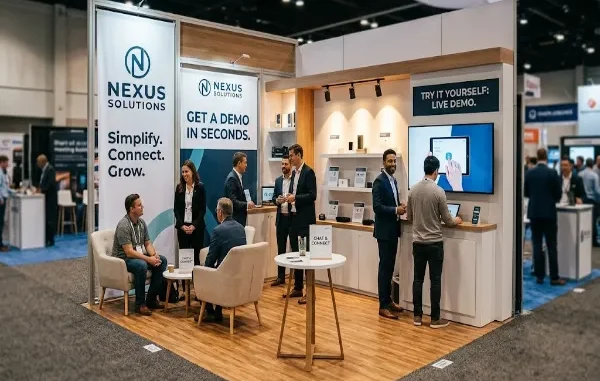
Trade show booth or retail pop-up — doesn’t matter. Seconds. That’s all you get before someone decides to walk in or keep moving. It’s gut-level, visual, and it’s already over before you open your mouth. Landing that judgment in your favor demands real planning across multiple fronts — layout, comfort, lighting, signage, the actual humans staffing your floor. Pull those pieces together and your booth becomes a destination, not a detour.
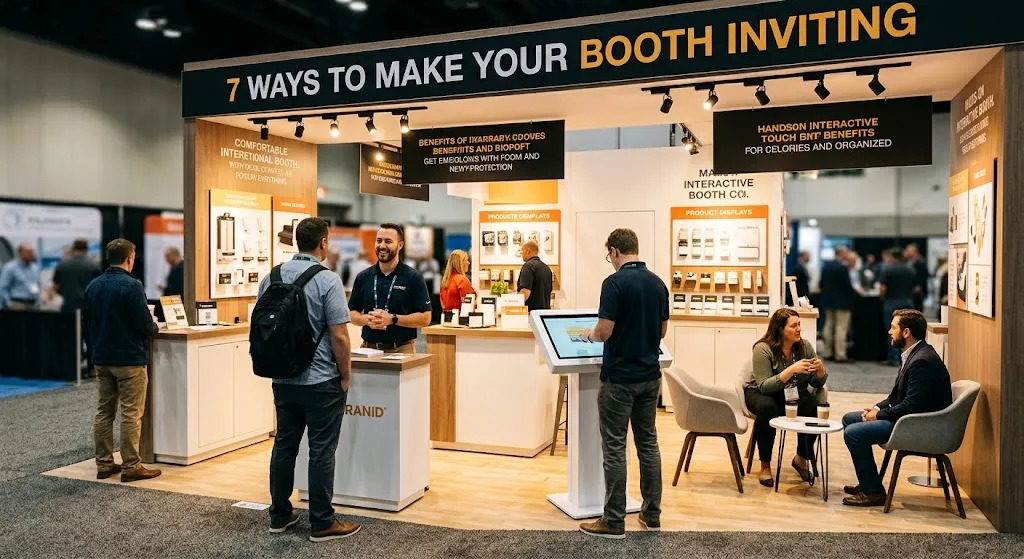
1. Optimize Your Layout for Easy Navigation
Cramped and confusing? People walk straight past. Nobody wants to squeeze through a gap, guess where to stand, or feel cornered. Cut clear pathways instead — ones that pull visitors through naturally, without dead ends or bottlenecks. Your strongest visual hook belongs right at the entrance. Everything else sequences logically behind it. Seating, product displays, interactive stations — arrange them so visitors keep moving, keep finding things. Done right, the layout itself does half your selling before a single conversation starts.
2. Incorporate Comfortable Seating and Meeting Spaces
Event floors are brutal. Hours of standing grinds people down, and they remember which booths actually let them rest. Even a couple of well-placed chairs sends a signal — that you value their time, not just their eyeballs. Comfort makes people linger. Conversations go deeper when nobody’s shifting weight from foot to foot. A semi-private meeting nook, even a small one, changes the entire tone — suddenly it’s a real conversation instead of a pitch. That’s where deals start taking shape.
3. Use Lighting to Create Warmth and Focus
Harsh overhead fluorescents kill the mood fast. Flat, cold light makes a booth feel clinical — like a waiting room nobody chose. Warm-toned lighting works differently; it draws people toward the space rather than repelling them. But warmth alone won’t cut it. Placement matters just as much. Accent lights aimed at key products or displays do the directing for you — no extra signage needed. Combine ambient fill with targeted accent lighting and the whole setup reads as considered, intentional. That registers.
4. Display Clear Signage and Information
Visitors shouldn’t have to work to understand you. If your message doesn’t land from ten feet away, they won’t bother walking closer to decode it. Big, bold, no paragraph-length explanations — your main message needs to hit at a glance. High-contrast colors. Legible fonts. Enough size to actually be read from a distance. Then layer it: headline up top, supporting detail below for whoever stops and looks twice. Hierarchy matters enormously here. Don’t bury the lead under secondary information.
5. Create Interactive or Hands-On Elements
Passive displays get forgotten. Experiences stick. Anything hands-on — a product demo, a touchscreen, something visitors can actually try — gives them a concrete reason to stop rather than drift past. For exhibitors working with compact footprints, trade show displays built for 10×10 spaces help teams fit interactive elements in without wrecking the flow or cluttering the visual. The payoff is real, too. When someone does something at your booth — touches it, tries it, plays with it — they remember. They talk about it afterward. That organic word-of-mouth is nearly impossible to manufacture any other way.
6. Maintain Clean and Organized Displays
Clutter reads as carelessness. Immediately. Doesn’t matter how strong your product is — a chaotic table by noon tells visitors something unflattering about you. Regular tidying throughout the day keeps the space sharp. Organized displays let people see what’s on offer without sorting through visual noise first. And cleanliness isn’t just surfaces — it’s floors, equipment, brochure holders, everything sitting in someone’s eyeline. A tight, clean booth says something about how you operate as a company. People pick up on that signal whether they consciously register it or not.
7. Staff Your Booth with Approachable Team Members
Your team is the booth. Full stop. A gorgeous setup with stiff, distracted staff goes nowhere. Positioning matters — arms crossed, backs turned, staff huddled in their own conversation? That’s a wall, not a welcome. Face outward instead. Eye contact. A smile that looks genuine rather than rehearsed. But approachability is only half of it. Listening is the other half — really listening to what visitors need, not just waiting for a pause to launch into the pitch. Warm, knowledgeable, genuinely present: that combination turns a brief stop into something that actually sticks.
Conclusion
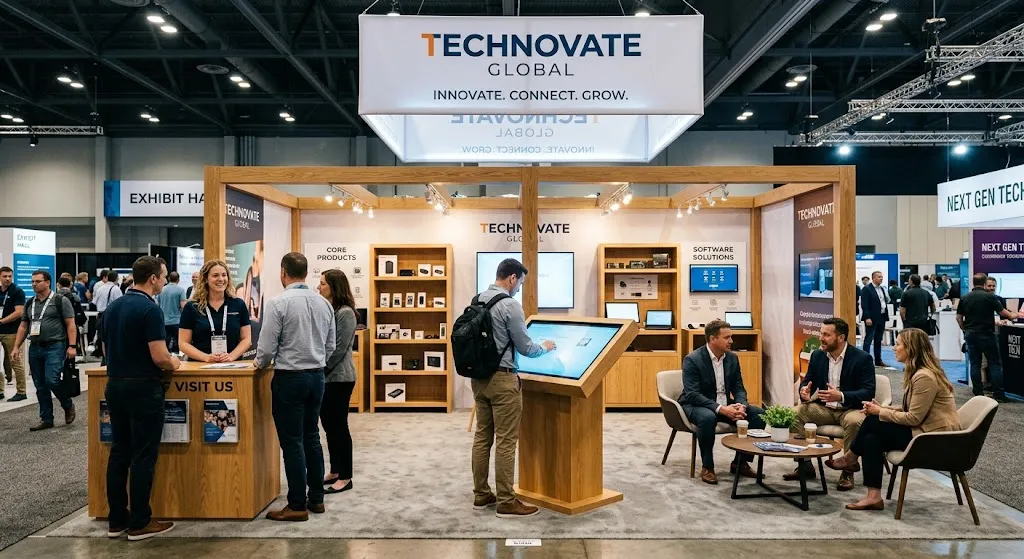
No single element carries the whole thing. Layout, seating, lighting, signage, interactive touches, cleanliness, people — they work together or they don’t. When they do, something shifts. Visitors slow down. They stay longer. They leave with your brand lodged somewhere real in their memory rather than vaguely recalled from a blur of identical setups. Put serious work into each of these areas and your booth becomes somewhere people actively seek out — not just something they walk past on the way to the next one.
Related posts:
 How Verified Consultants Can Help You Close Office Deals Faster in Bangalore
 How Maya Thompson Turned $100 Into a Million-Dollar Empire
 What Is a Road Trading Strategy? A Trend Method for FX Beginners
 Refinancing Your Home Loan After RBI Rate Cuts: A Smart Way to Save
 Building a Scalable Business Through Accelerator Mentorship and Capital
Leave a Reply