
NFTs look simple on the surface. A token ID points to some metadata, which points to an image or file. That’s it. But once teams begin real production work – often after talking with NFT development companies or planning wallet features tied to cryptocurrency wallet development – they discover that storage is the real backbone of the entire system. The blockchain holds ownership, but storage defines value. And as projects grow, the long-term cost of that choice becomes hard to ignore.
NFTs break in subtle ways when storage fails. Metadata disappears. Files move. Links rot. Performance collapses. And the ecosystem quietly inherits the technical debt.
On-chain storage: reliable, but expensive
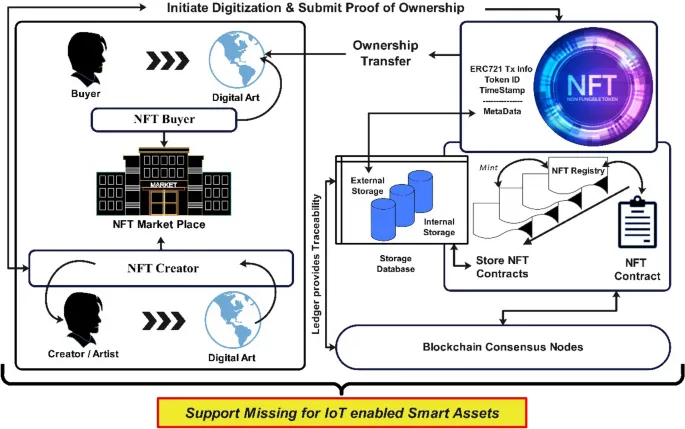
Storing everything on-chain sounds like the safest option. The data is immutable, globally accessible, and tied directly to the token. But as soon as files grow beyond tiny metadata, the costs spike.
Strengths:
- Highest reliability
- Guaranteed permanence
- No dependency on external systems
- Strongest link between asset and ownership
Weaknesses:
- Extremely high gas cost
- Limited storage size
- Slow updates
- Harder to support large media
For high-value art or small generative collections, on-chain storage works. For anything with heavy assets (video, complex models, game data), it becomes unrealistic. Even experienced teams at firms like S-PRO treat storage design as a core architectural decision rather than an afterthought.
IPFS: cheap and popular, but not guaranteed
IPFS is the most common solution. It’s decentralized, flexible, and cheap. But “decentralized” doesn’t mean permanent. Files only persist if someone keeps them pinned.
This creates hidden risks:
- Creators forget to pin files long term
- Third-party pinning services shut down
- Wallets load broken links
- Metadata becomes irretrievable when gateways fail
IPFS is good for distribution, but not good for guaranteed longevity unless pinned aggressively. Many NFT projects learned this the hard way when assets began disappearing months after launch.
The hidden cost: permanence requires operational work. IPFS alone doesn’t provide it.
Arweave: permanence with a different price tag
Arweave is built for long-term storage. Data is paid for once and kept “forever.” For NFTs that promise long-term reliability, Arweave solves many problems that plague IPFS.
Strengths:
- Very high durability
- Permanent storage model
- Ideal for art, collectibles, historical assets
- Predictable access URLs
Weaknesses:
- Higher upfront cost
- Slower to update or patch content
- Requires ecosystem familiarity
- Not ideal for dynamic media
Arweave works best when permanence is the whole point. But for dynamic collections or game assets that change often, it becomes restrictive.
Hybrid models: the practical middle ground
Most production NFT systems adopt hybrids:
- Metadata on-chain
- Media on IPFS
- Critical media on Arweave
- Hashes stored on-chain for verification
- Off-chain caching for performance
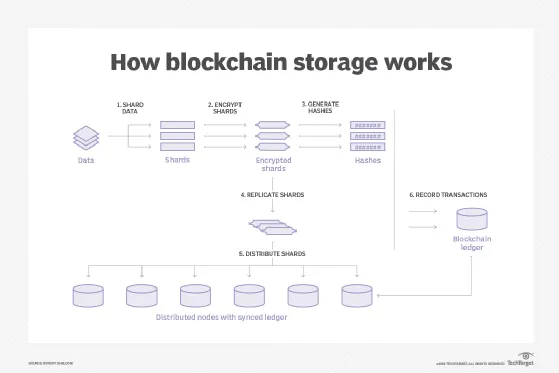
This gives flexibility while ensuring the core asset can’t vanish. It also lets teams shift heavier assets to cheaper layers without losing integrity.
The hybrid approach matters for scalability. As collections move into tens of thousands of NFTs, pure on-chain storage becomes impossible. And relying entirely on IPFS becomes too risky.
A hybrid model controls cost, reliability, and flexibility better than any single solution.
What breaks under real scale
Storage issues grow slowly and then all at once. At small scale, every method works fine. At large scale, patterns emerge:
1. Gateway pressure
Popular projects overload IPFS gateways. Images fail to load. Wallets appear broken.
2. Metadata inconsistencies
Even tiny mismatches between metadata and token definitions break rendering across marketplaces.
3. Link rot
Outdated gateway URLs or unpinned content cause assets to disappear.
4. Slow retrieval times
Large datasets slow indexing and reduce wallet responsiveness.
5. Migration headaches
Moving assets between storage systems is painful and often irreversible.
These issues affect UX more than technology. Users assume the NFT “stopped working,” not that the storage layer is unstable.
How storage choices shape trust and long-term value
Collectors and platforms care about reliability. If a project uses fragile storage, its long-term reputation weakens. Wallets load inconsistently. Marketplaces fail to preview items. And as time passes, even enthusiastic communities drift away when reliability cracks.
Storage design impacts:
- Asset permanence
- Marketplace compatibility
- Resale confidence
- Platform trust
- Brand reputation
- Future integration options
NFTs aren’t just tokens. They are data systems. The system is only as strong as the slowest link in the chain – and storage is often that link.
How teams should choose a storage model
There is no universal answer, but a few rules guide good decisions:
1. If permanence matters, avoid IPFS-only setups
Add Arweave or on-chain hashes to lock down the asset.
2. For large media, plan for hybrid storage
Use IPFS for size, Arweave for reliability, and chain-stored hashes for proof.
3. Document storage logic explicitly
Many NFT projects fail years later because no one knows where the files live.
4. Treat metadata as critical infrastructure
Metadata rot is more damaging than image loss.
5. Use redundancy
A project with three storage layers has a much longer lifespan than one with a single dependency.



Leave a Reply