
Conventional financial services and most centralized exchanges require identity checks to comply with AML and CFT regulations. They also gain access to personal records, addresses, and financial data, exposing them to data breaches and surveillance. With growing concerns about financial privacy, more users want to know how to trade without providing sensitive information. No-KYC trading allows users to purchase, sell, and trade cryptocurrencies without verifying their identity, focusing on privacy while still allowing access to the entire market.
The Evolution of Identity Verification in Crypto Markets
Pseudonymous participants marked the early days. The emergence of Bitcoin meant that peer-to-peer transfers no longer required gatekeepers. People used the wallet addresses, not legal names, to communicate. Stricter enforcement of AML and CTF by governments came over time. Transactions intended to attain legitimacy were in compliance with financial reporting standards. Centralized platforms began requiring identity documents before allowing any withdrawals. The failures of high-profile exchanges led to increased regulation by regulatory authorities. This ambiance transformed crypto exchanges into quasi-banking institutions. Key trading platforms were mandated to use KYC. Meanwhile, privacy-alternative sites were developed to serve privacy-seeking. These alternatives still maintain crypto-native principles of pseudonymity and open access.
What No-KYC Trading Actually Means
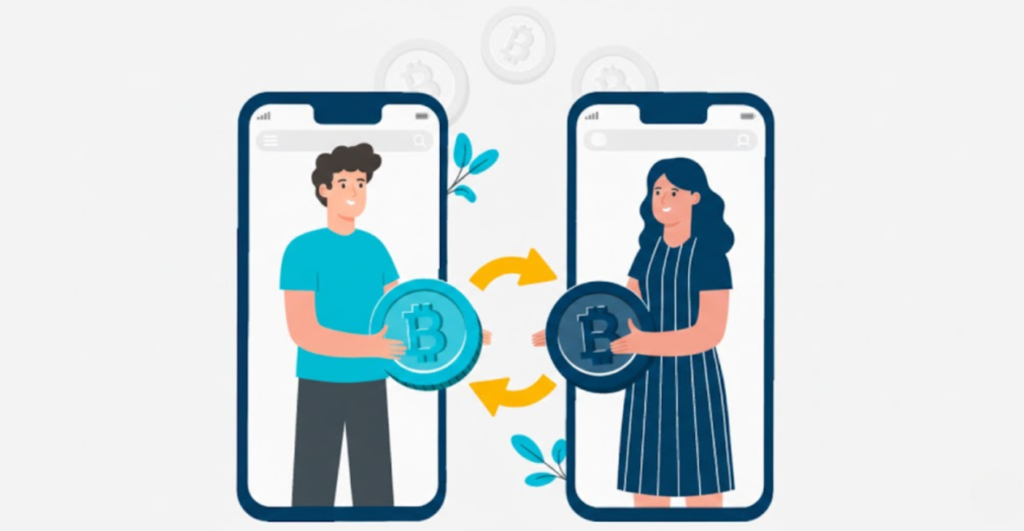
No-KYC trading involves the exchange not needing identity documents to set up an account. Merchants can register using email or the bare minimum credentials. Some platforms even enable interaction using wallets and no traditional accounts. Partial KYC models are likely to have withdrawal limits or restrictions. Zero-verification models eliminate identity requirements for core functions. Password setup and security verification are the general steps involved in account creation. Traders add cryptocurrency to their wallets to start trading. Such platforms typically have a limited number of, or no, fiat on-ramps. Crypto-to-crypto trading has remained the most common access model, with identity information decoupled from trading. Platforms such as Zoomex meet this demand, providing smooth trading environments that balance convenience, security, and privacy-conscious participants.
The Operational Framework Behind No-KYC Platforms
No-KYC services are grounded on simplified onboarding. Registration entails some personal information and mighty passwords. During registration, traders store digital assets in personal wallets. Internal ledger accounting systems are credited to the platform balances. Other platforms have a custodial power over deposits. Others have non-custodial features, meaning consumers can keep their wallets. Transaction monitoring is used in risk management rather than identity anchoring. Robots detect suspicious trading patterns and abnormal flows. Other safety measures taken by exchanges are withdrawal monitoring and rate limits. These types of operations strike a balance between the platform’s accessibility and security.

Key Technical Components Enabling Privacy-Centric Trading
Privacy-oriented transactions are based on stratified technical protection. Most of them incorporate non-custodial wallet connectivity to provide better user control. Isolating cold and hot wallets prevents massive theft. Cold wallets are not connected to the internet to reduce the chances of hacking. Hot wallets help manage daily liquidity and withdrawal processes. Multi-signature authorization systems involve more than one signature to approve a funds transfer. Algorithms API-based trading allows manual-free trading. Login credentials and transactional metadata are encrypted using standards. Transport Layer Security protocols safeguard communication between the user devices and servers. Constant penetration testing enhances the infrastructure’s resilience. The mechanisms facilitate trading without a compulsory disclosure of identity.
Why Privacy-Focused Users Prefer No-KYC Trading
Traders with privacy concerns are more concerned with the risk of centralized data storage. Large exchanges have suffered attacks that reveal personal documents. Stealing identity may cause long-term financial loss. No-KYC solutions do not use centralized identity databases. Less friction in onboarding enables quicker market entry. Traders can meet volatility without approvals, but it takes time. Certain jurisdictions have restrictive capital controls or exchange bans. In such environments, no-KYC models are accessible. Philosophical advocates of decentralization are also encouraged by financial independence. Many crypto participants appreciate the separation between identity and capital allocation. Eschewing over-monetization of data enhances users’ privacy confidence on privacy-oriented platforms.
Core Motivations Behind the Shift to No-KYC
- Data Sovereignty: Users retain direct control over personal identity information and reduce exposure to centralized data repositories. This structure minimizes risks associated with large-scale exchange database breaches.
- Faster Market Entry: Traders access markets immediately without document review or approval cycles. Rapid onboarding supports timely execution during volatile price movements.
- Lower Bureaucratic Barriers: Simplified registration removes procedural friction for global participants. This approach encourages broader inclusion across diverse geographic regions.
- Reduced Identity Risk: Absence of stored identity documents lowers vulnerability to identity theft. Sensitive personal information never resides on centralized exchange servers.
- Strategic Privacy: Trading strategies remain disconnected from verified personal identity records. This separation limits profiling based on financial behavior patterns.
Security Trade-Offs and Risk Considerations
Trade-offs are part of no-KYC trading, and they need to be considered. Account recovery can be limited without identity linkage. Loss of login credentials can permanently restrict access to funds. Regulation is differentially exposed in different jurisdictions and in local enforcement policies. Other countries block unconfirmed trading sites. Of special importance are the platform’s reputation and third-party security audits. Liquidity levels can differ from those in the major regulated markets. Liquidity diminution can increase slippage with large orders. Traders must analyze risk before they invest capital. Good operational security means good and responsible involvement.
Comparison Between KYC and No-KYC Exchange Models
| Feature | KYC Exchanges | No-KYC Exchanges |
| Identity Verification | Mandatory government ID | Not required |
| Onboarding Time | Hours to days | Minutes |
| Withdrawal Limits | Often higher | May vary |
| Regulatory Alignment | High | Limited or jurisdictional |
| Privacy Level | Low to moderate | High |
This comparison highlights structural differences between compliance-focused and privacy-focused models. Each approach offers distinct advantages depending on user priorities.
How Zoomex Aligns With Privacy-First Trading Principles
Zoomex was founded in 2021 and aims to be simple and user-first in its trading philosophy. The site is distinguished by its support for No-KYC transactions. It has high leverage and deep liquidity pools in which contracts are traded. Spot markets and copy trading increase the extent of participation of traders with varying degrees of experience. Multi-signature cold and hot wallet systems safeguard client assets. The exchange registers are recorded under MSBs in FINTRAC, Ausstrac, and FinCEN. Such registrations ensure systematic compliance without compromising privacy. Fast infrastructure offers an interface latency of under 10ms. Real-time pricing engines enable volatile execution. This architecture has demonstrated that performance and privacy are not mutually exclusive.
Conclusion
A market need that has potential is financial privacy. The growing data monitoring is subject to identity exposure. No-KYC trading aligns with the concept of decentralization. However, autonomy requires autonomy-responsibility and due diligence. Traders are required to evaluate the platform security, jurisdictional risks, and liquidity depth. Informed use improves the sustainable application of privacy-oriented systems. There might also be hybrid compliance models that arise as blockchain infrastructure matures. The existence of diversified exchange structures is nearly inevitable in the future to support various risk preferences. Trading of privacy will also be a feature in the digital asset ecosystem.




Leave a Reply