

Ordering your first hair topper can bring a mix of excitement and nervousness. You may have spent hours comparing colors, watching styling videos, and imagining how much fuller your hair will look. So when the package finally arrives, you naturally want to put it on and see the transformation right away.
But what if the hair looks flat, the part seems too obvious, or the style feels completely different from what you expected?
Before you assume you made the wrong choice, take a breath. A new hair topper may need a little preparation and styling before it looks its best. Understanding what to expect can help you avoid unnecessary frustration and make a more confident decision.
1. Your Hair Topper May Look Different Straight Out of the Box
One of the first surprises for beginners is that a hair topper may not look perfect as soon as it arrives.
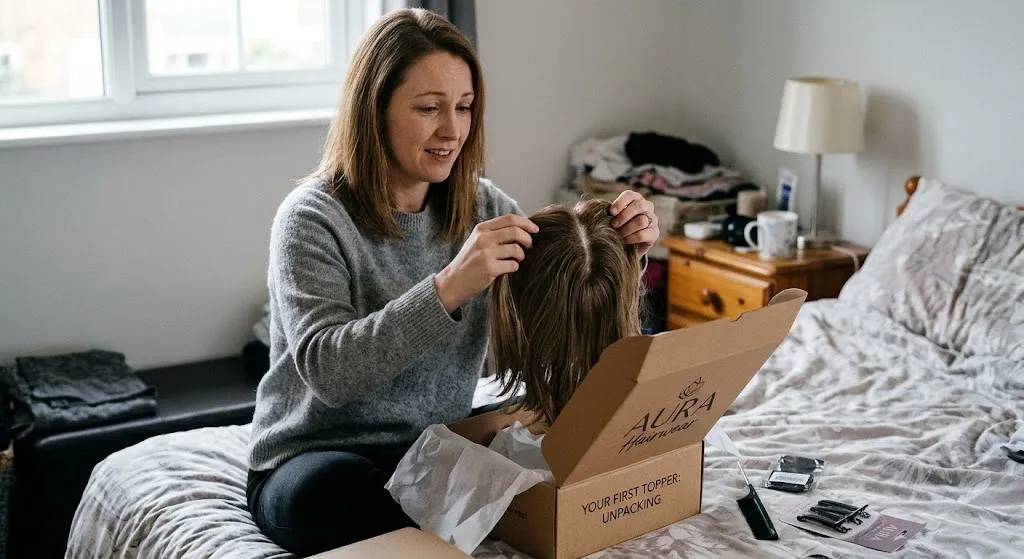
During shipping, the hair can become compressed or tangled inside the packaging. You might notice flattened roots, unusual bends, or strands that stick out in different directions. The part may also look flatter or more defined than you expected.
This is especially noticeable with human hair toppers, which may need some gentle styling after being packed for delivery.
The good news is that these issues do not automatically mean something is wrong with the product. In many cases, gentle detangling and light restyling can help restore the hair’s shape.
Before making any major changes, read the care instructions for your specific topper. Some products respond well to gentle blow-drying, while others require different handling methods.
A useful tip: Give yourself time to inspect and prepare the topper before judging its final appearance. What you see immediately after opening the box may not be how it looks once styled.
2. The First Try-On May Feel Awkward
Even if you have chosen the right color and length, wearing a hair topper for the first time can feel unfamiliar.
You may be unsure where to place it, how to secure the clips, or how to blend it with your own hair. Looking in the mirror can also feel strange because you are seeing yourself with a new amount of volume and a different hair shape.
These reactions are common among beginners. They do not necessarily mean that the topper is unsuitable for you.
Start by positioning the base over the area you want to cover. Secure it according to the product instructions, making sure the clips do not pull uncomfortably on your natural hair. Then gently arrange your own hair around the topper to create a more natural transition.
If the result still looks unfamiliar, try making small adjustments to the placement before changing anything else.
Remember that learning to wear a topper is a process. You do not have to master everything during your first attempt.
3. Online Photos Don’t Show the Whole Styling Process
Have you ever seen a hair topper look beautiful in a product photo or social media video, only to feel disappointed when you try a similar style yourself?
There is often an important difference between the finished look you see online and the product you receive.
Photos and videos may show a topper after it has been cut, shaped, blended, and professionally styled. Lighting, camera angles, and the wearer’s natural hair can also affect the final appearance.
A topper that looks seamless on one person may need a few adjustments to work with someone else’s hair.
For a more natural result, pay attention to these details:
Color matching: Choose a shade that blends with the hair surrounding the topper. If your hair has several tones or highlights, consider how those colors will look together.
Hair length: The topper should work with the length of your natural hair. A noticeable difference may require professional blending.
Hair density: Choose a volume level that looks balanced with your existing hair rather than dramatically different from it.
Placement: The topper should cover the intended area while allowing your natural hair to blend around the edges.
The goal is not necessarily to recreate another person’s hairstyle exactly. It is to find a look that works with your own features, hair, and preferences.
4. Styling and Blending Can Make a Big Difference
A hair topper is more than an extra layer of hair. The way it is positioned and styled helps determine how natural the finished look will be.
For example, a topper may appear bulky if its hair is sitting in an awkward direction after unpacking. Gently rearranging the strands and adjusting the part can help create a softer shape.
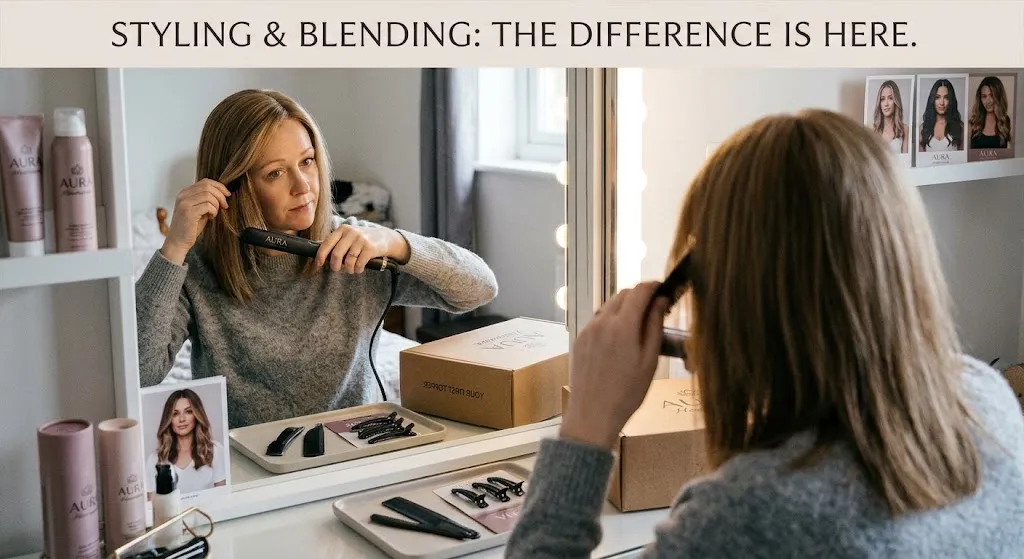
Blending is equally important. If your natural hair is straight but the topper has more volume or a different texture, the contrast may be noticeable. Styling both together can help create a more consistent appearance.
Here are a few beginner-friendly tips:
Start With Gentle Detangling
Use an appropriate brush or comb and work carefully through the hair. Avoid pulling hard on knots, especially near the base.
Adjust the Shape Gradually
Try changing the direction of the part, lifting the roots gently, or arranging the strands with your fingers. Small changes may be enough to improve the overall appearance.
Consider Professional Help
If the topper looks too bulky, feels difficult to blend, or needs a more personalized shape, a stylist experienced with hair toppers may be able to help.
Before cutting or making permanent changes, check the seller’s return and exchange policy. Altering a product may affect your eligibility for a return.
5. What Should You Check Before Deciding to Keep It?
Although styling can improve a topper’s appearance, not every problem can be solved through adjustments. Some basic features should work for you from the beginning.
Instead of asking whether you love the look immediately, focus on whether the topper is suitable for your needs.
Check the Fit and Comfort
Place the topper on your head and check whether the base sits properly over your thinning area. It should feel secure without pinching, causing pain, or creating excessive tension on your natural hair.
If the cap feels uncomfortable, review the placement and attachment method. Persistent discomfort is a reason to stop wearing it and reassess whether the design is right for you.
Make Sure the Length Works
Think about the hairstyle you want to achieve. If the topper is already too short for your intended look, styling cannot add extra length.
A slightly longer topper may offer more flexibility because a professional can trim it to suit your hairstyle, provided you are comfortable with the cost and any effect on return eligibility.
Evaluate the Color
The color does not always need to be an exact match to look natural, but it should work with your existing hair or the look you want to create.
Compare the topper with your hair in natural lighting if possible. Indoor lighting can make colors appear warmer or cooler than they really are.
Review the Base and Coverage
Different base designs offer different levels of coverage and styling flexibility. Make sure the base covers the area you want to conceal and suits the condition of your natural hair.
If you experience more extensive hair loss, check whether the topper provides enough coverage and whether your remaining hair can support its attachment method.
If the fit, length, color, and coverage are all suitable, it may be worth trying some styling adjustments before deciding that the product is wrong for you.
6. When Should You Return or Exchange a Hair Topper?
It is reasonable to give a new topper some time to settle into your routine, but that does not mean you should ignore a genuine mismatch.
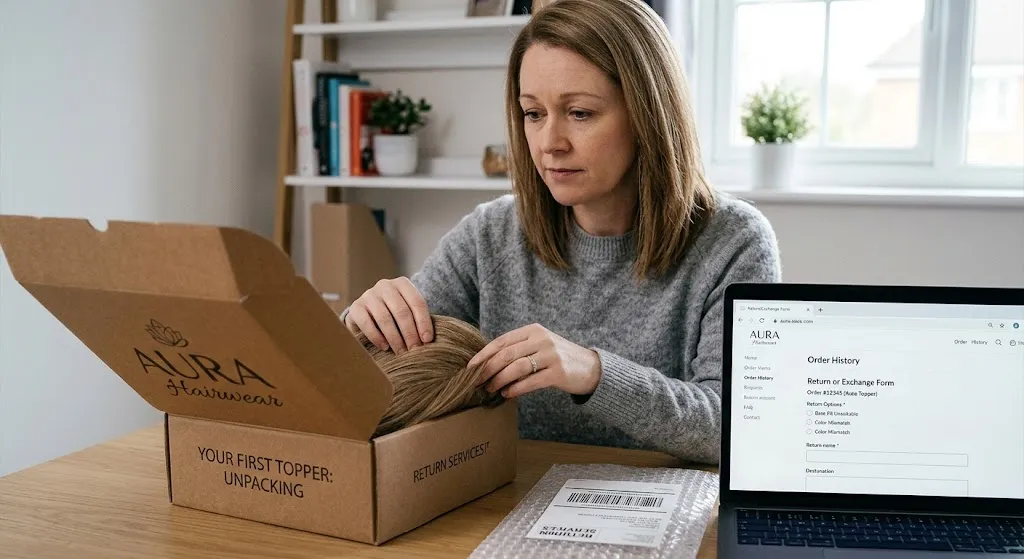
Consider contacting the seller about a return or exchange if:
The base does not fit the area you need to cover.
The length is unsuitable for your intended style.
The color is significantly different from what you ordered.
The attachment method does not work with your hair or scalp needs.
The topper has a defect or does not match the product description.
Before washing, cutting, coloring, or significantly restyling the topper, review the seller’s current return policy. Some changes may make the product ineligible for a return.
If the main concern is that the hair looks flat or unfamiliar straight out of the box, however, gentle preparation may be worth trying first, as long as you remain within the seller’s care and return guidelines.
7. Give Yourself Time to Get Comfortable
Your first hair topper is not just a new hair accessory. It may also represent a personal change, especially if you are using it to manage thinning hair or hair loss.
It is understandable to hope that it will immediately restore the look you have been missing. When the first try-on does not meet those expectations, disappointment can feel bigger than the styling problem itself.
Try to approach the experience with patience. Give yourself time to learn how the topper sits, how to blend it with your natural hair, and which styles make you feel most comfortable.
You can also practice wearing it at home before taking it out in public. This gives you a chance to make adjustments in a familiar setting without feeling rushed.
There is no need to compare your first attempt with someone else’s finished transformation. Everyone starts with different hair, different preferences, and different levels of experience.
Final Thoughts
Opening your first hair topper can be exciting, but the experience may involve a few unexpected challenges. Flattened hair, an unfamiliar shape, or difficulty blending the topper with your natural hair does not always mean you chose the wrong product.
Start by checking the essentials: fit, length, color, and coverage. If those elements are suitable, gentle styling and blending may help you get closer to the look you want.
At the same time, do not feel pressured to make an unsuitable topper work. Comfort, proper coverage, and a style that fits your needs matter more than trying to force a particular result.
With realistic expectations and a little practice, your first topper can become easier to manage and more comfortable to wear. The most important step is finding an option that works for you, rather than expecting yourself to achieve a perfect result on the very first try.
Related posts:
 Longhornsurvey com The Online Survey Platform
 Why Siding Plays a Key Role in Reducing Exterior Maintenance Throughout the Year
 The Ultimate Guide to Building Your Signature Personal Style
 Zach Bryan Merch and the Art of Building a Concert-Ready Wardrobe
 Smart Landscaping in Victoria BC: Irrigation, Drainage Planning and Low-Maintenance Yards
Leave a Reply