
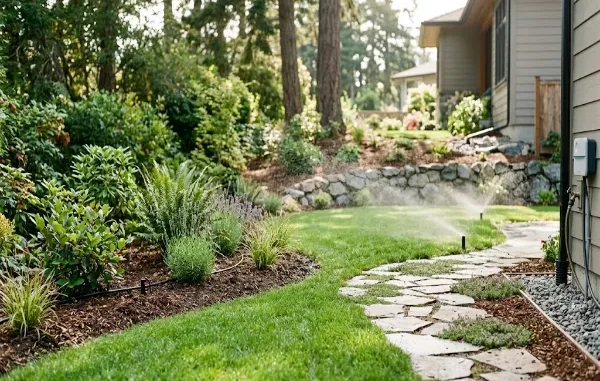
A healthy yard in Greater Victoria depends on more than good plants and fresh mulch. The region has a distinctive climate, with long, wet winters and dry, mild summers, and that pattern shapes everything from the type of lawn that survives to how a property handles heavy rain. Homeowners who work with an experienced landscaper in Victoria often find that the most valuable upgrades are the ones you rarely see: a well-designed irrigation system, thoughtful drainage, and a planting plan that suits the coast.
This guide explains how smart irrigation, drainage planning, and water-wise design work together to create a yard that looks good with less effort. It also covers how to winterize your system and avoid the repairs that catch most homeowners off guard.
Why Victoria BC Yards Need a Different Landscaping Approach
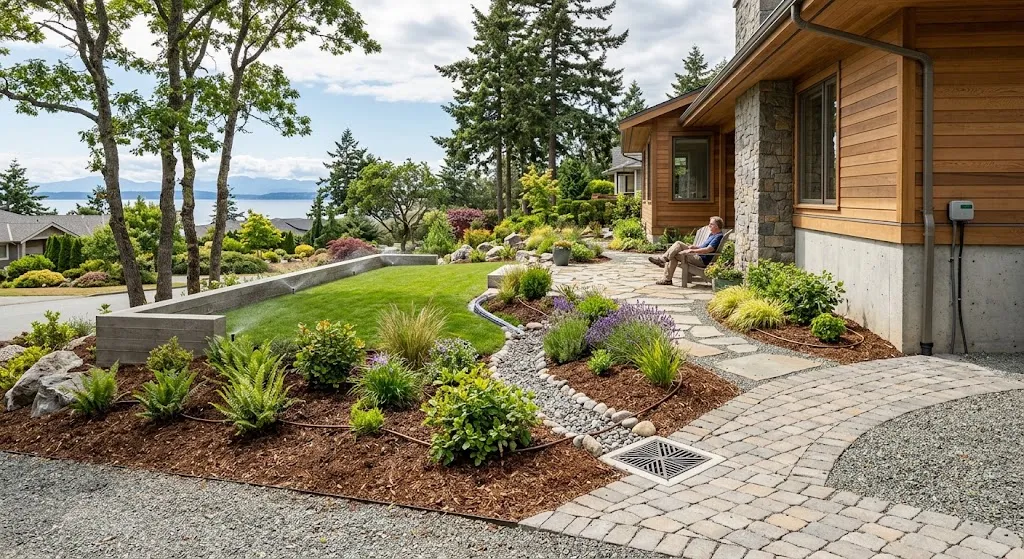
Victoria sits in one of the driest and mildest corners of coastal British Columbia. Rainfall is concentrated between October and March, while July and August can pass with very little precipitation. Lawns that look lush in January can turn brown and stressed by August without supplemental water.
Soil adds another layer of complexity. Many properties in the Capital Regional District sit on shallow topsoil over rock, compacted fill, or dense clay. These conditions drain slowly in winter and dry out quickly in summer. Sloped lots in areas such as Saanich, Oak Bay, and the Westshore communities bring additional challenges, including runoff, erosion, and uneven moisture across the same yard.
Water conservation also plays a role. The Capital Regional District encourages responsible outdoor water use, and seasonal watering restrictions are common in the drier months. A yard designed around efficient water use is easier on your utility bill and easier to manage when restrictions apply. Because rules can change from year to year, it is always worth checking the current stage with your municipality or the CRD before setting a watering schedule.
What a Quality Landscaper in Victoria Should Deliver
Choosing a landscaper is a long-term decision, because the work lasts for years and mistakes underground are expensive to fix. Quality shows up in details that are easy to overlook at first glance.
A professional landscaper should begin with a site assessment that looks at sun exposure, soil type, slope, existing drainage patterns, and how your family uses the space. From there, the plan should address water movement, plant selection, hardscape placement, and irrigation zones as one connected design rather than separate tasks.
Material quality matters just as much as design. Look for:
- Commercial-grade irrigation components such as brass or heavy-duty polymer fittings, pressure-rated pipe, and reliable valves
- Properly graded, compacted base material beneath patios, walkways, and retaining walls
- Clean, screened topsoil and quality compost that support healthy root development
- Native or well-adapted plants sourced from reputable regional nurseries
- Drainage rock, geotextile fabric, and perforated pipe installed to proper slope
Workmanship should be tidy and well documented. A reliable contractor will explain what is going into the ground, mark valve box locations, provide a zone map, and walk you through how to operate the system before the job is complete.
Irrigation Systems in Victoria BC: How They Work
An in-ground irrigation system delivers water to your lawn, shrubs, and garden beds on a controlled schedule. The main components include a connection to the water supply, a backflow preventer, a main shutoff, a controller, electric valves, buried pipe, and the sprinkler heads or drip lines that distribute the water.
The yard is divided into zones, and each zone is served by one valve. Zones are separated because different areas have different water needs. A sunny lawn on a south-facing slope needs far more water than a shaded fern bed under a Douglas fir. Spray heads, rotor heads, and drip emitters each deliver water at different rates, so mixing them in one zone leads to overwatering some areas and underwatering others.
Efficiency is where modern systems have changed the most. Pressure-regulated heads, matched precipitation rates, and drip irrigation for planting beds reduce waste from overspray, evaporation, and runoff. For homeowners searching for irrigation systems.The goal is not simply to water the yard but to deliver the right amount of water to each plant at the right time.
Smart Irrigation Controllers and Automated Sprinklers
The controller is the brain of the system, and it is where technology has made the biggest difference for homeowners. Older timers run on a fixed schedule whether it rained yesterday or not. Smart irrigation controllers adjust watering based on real conditions.
Most smart homes connect to Wi-Fi and use local weather data, including temperature, humidity, wind, and rainfall, to modify run times automatically. Many use a calculation called evapotranspiration, which estimates how much water your landscape loses through evaporation from the soil and transpiration from plants. When the weather is cool and cloudy, the controller shortens or skips watering. During a hot dry spell, it increases run times to keep roots hydrated.
Useful features to look for include:
- Weather-based scheduling that adapts to local forecasts and recent rainfall
- Rain and freeze sensors that pause watering during or after rain or near freezing temperatures
- Soil moisture sensors that measure actual moisture at root depth and prevent unnecessary cycles
- Flow monitoring that detects a stuck valve or broken line and can shut the system down
- Smartphone control that lets you adjust zones, start a manual cycle, or receive alerts from anywhere
These features matter because rainfall can be unpredictable in spring and fall. A traditional timer might water in a downpour, while a smart controller recognizes the conditions and holds off. Over a full season, this reduces water use noticeably and protects plants from the root problems that come with overwatering.
Automated sprinklers also allow for deep, infrequent watering at the best time of day. Early morning cycles reduce evaporation and give foliage time to dry, which helps limit fungal issues in lawns and ornamental plants.
Sprinkler System Installation: Planning, Materials, and Placement
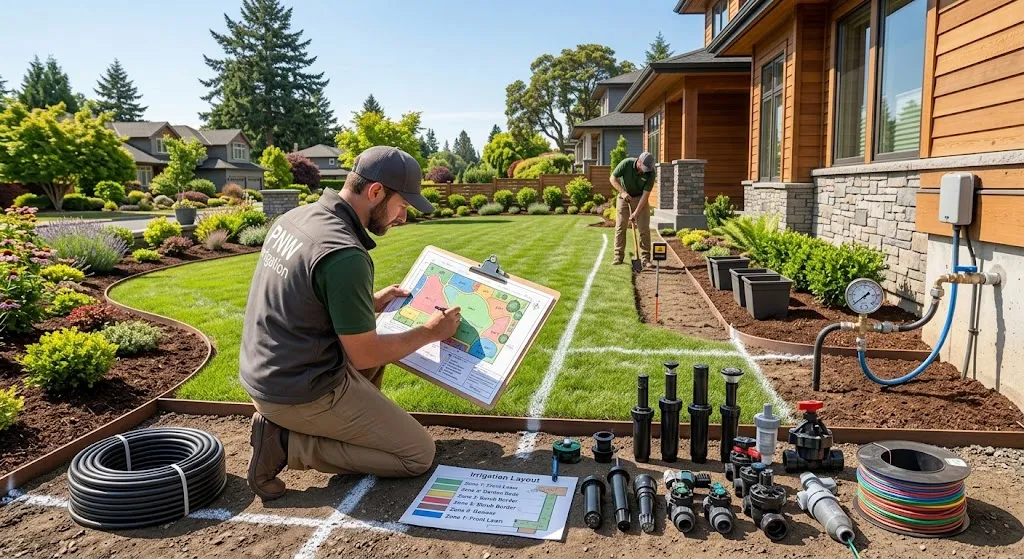
Good sprinkler system installation starts well before any trenching begins. The first step is checking water pressure and flow at the property, since these figures determine how many zones are needed and which heads will perform properly. A system designed without this information often ends up with weak coverage or misting heads that waste water.
Next comes the layout. Heads are spaced for head-to-head coverage, meaning the spray from one head reaches the next, which prevents dry patches. Lawn areas, shrub borders, vegetable beds, and container plantings are placed on separate zones. Slopes and shaded areas get their own zones as well, since they absorb and lose water differently.
A professional installation will also include:
- A code-compliant backflow prevention device to protect the household water supply from contamination
- Buried pipe at suitable depth, with fittings joined properly and tested for leaks
- Valves grouped in accessible boxes for easier servicing
- Wiring that is waterproofed and clearly labeled at the controller
- Drip irrigation lines with filters and pressure regulators for garden beds, hedges, and trees
Backflow devices in the region generally require periodic testing by a certified tester, so it is wise to ask your installer how this will be handled. Taking time to plan these details at the start prevents the type of problems that otherwise show up two or three seasons later.
Drainage Planning for Wet Victoria Winters
Irrigation gets attention in summer, but drainage does the heavy lifting from late fall through early spring. Victoria receives enough winter rain to saturate clay soils, flood low corners of a yard, and push water toward foundations if the grading is wrong.
Drainage planning begins with understanding how water moves across your property. Surface water should flow away from the house at a gentle, consistent slope. Where the natural grade cannot be changed, a combination of solutions can redirect it:
- French drains consisting of perforated pipe in a gravel-filled trench wrapped in filter fabric, which collect and carry away groundwater
- Catch basins and channel drains placed at low points, driveways, and patios to capture surface runoff
- Downspout extensions and dry wells that move roof water away from foundations and let it soak in gradually
- Rain gardens planted with moisture-tolerant species that absorb stormwater and filter it naturally
- Retaining walls with drainage backfill on sloped lots to reduce pressure behind the wall and prevent failure
Drainage and irrigation also affect each other. Overwatering a poorly drained yard makes soggy conditions worse, while a well-drained yard lets irrigation water reach the root zone without pooling. Addressing both together results in a healthier lawn and less maintenance over time.
Water-Wise Garden Planning for Coastal BC
A water-wise garden, often called xeriscaping, does not mean a yard full of gravel. It means choosing plants and design strategies that thrive on the rainfall the region already provides, with modest supplemental watering during summer.
Plants native to the Pacific Northwest and the Garry oak ecosystem are natural choices. Salal, Oregon grape, ocean spray, red-flowering currant, camas, and sword fern all handle Victoria’s wet winters and dry summers once established. Ornamental grasses, lavender, rosemary, sedum, and ceanothus add texture and colour while using relatively little water.
Several design principles help a yard stay efficient:
- Group plants by water need so each irrigation zone serves similar species
- Apply mulch at a depth of about five to eight centimetres to hold soil moisture, suppress weeds, and moderate soil temperature
- Improve the soil with compost so it holds water in sandy areas and drains better in heavy clay
- Reduce lawn area where it is not used, replacing it with groundcovers, planting beds, or permeable hardscape
- Capture rainwater in barrels or cisterns for use on garden beds during dry periods
Established water-wise plantings often need very little irrigation after the first year or two, which is a major advantage in a region where summer water use draws close attention.
Low-Maintenance Landscaping That Still Looks Good
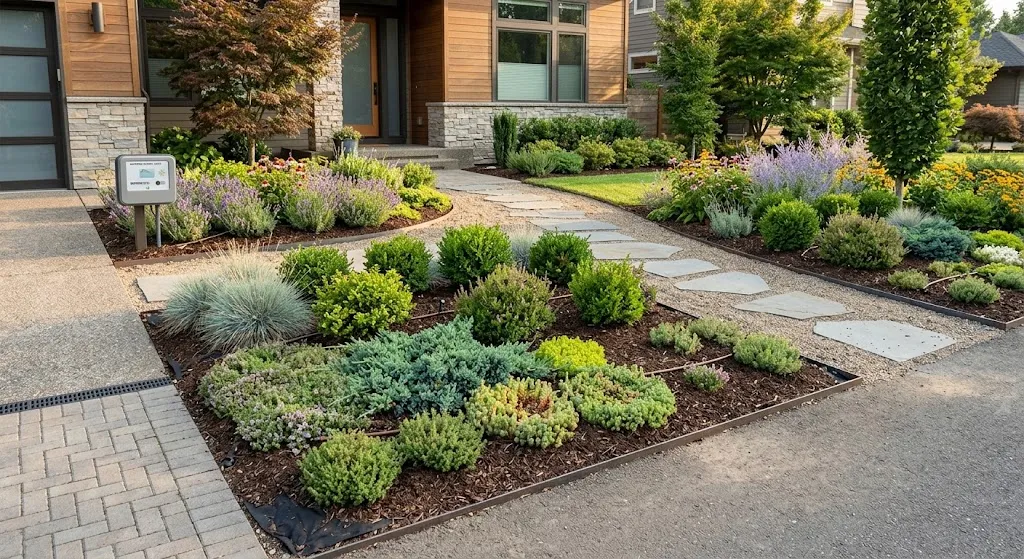
Low maintenance landscaping is about reducing the recurring work a yard demands rather than removing greenery. The aim is a yard that stays tidy with seasonal care rather than weekly effort.
Start with a clear plan for how each area will be used. Lawns that serve as play space or gathering areas are worth keeping, but narrow strips, steep banks, and shady corners where grass struggles are better suited to groundcovers or shrubs. Defined planting beds with clean edging keep the lawn and garden separate and cut down on trimming.
Hardscape also supports easy upkeep. Permeable pavers, compacted gravel paths, and natural stone steps give a polished look without mowing or watering, and permeable surfaces let rainwater soak into the ground instead of running off. Weed barrier fabric under gravel and thick mulch in beds limit weeds from the start.
Plant choice makes the biggest difference over time. Slow-growing, compact shrubs need less pruning, and perennials that return each year reduce the need for replanting. When combined with a smart irrigation controller, the yard essentially looks after its own watering, leaving only occasional pruning, seasonal cleanup, and fertilizing.
Winterizing Irrigation Systems in Victoria
Victoria winters are mild compared with much of Canada, but cold snaps do happen, and a single hard freeze can crack above-ground pipe, backflow devices, and fittings that still hold water. Winterizing your irrigation system is a small step that prevents costly spring repairs.
The most reliable method is a compressed air blowout. A technician connects an air compressor to the system and clears water from every zone, one valve at a time, until the lines are empty. This must be done at a controlled pressure, since too much air can damage heads and fittings.
A thorough winterizing visit usually involves:
- Shutting off the water supply to the system
- Draining the backflow preventer and main line
- Blowing out each zone with compressed air
- Insulating exposed pipe and backflow assemblies
- Setting the controller to rain mode or turning it off for the season
The best time to schedule this is in the fall, typically between late October and mid November, before the first overnight frost. Spring startup is just as important. The system is slowly refilled, each zone is inspected for leaks and damaged heads, and the controller schedule is reset for the growing season. Many homeowners combine winterizing and startup into a yearly service plan so the timing never slips.
Common Irrigation Repairs and How to Avoid Them
Most irrigation problems are predictable, and many can be prevented with regular attention. The most common repairs include:
- Broken or clogged sprinkler heads, often caused by lawn mowers, foot traffic, or debris
- Leaking valves that cause low pressure or constant seepage in one zone
- Cracked pipe or fittings from freezing, root intrusion, or shifting soil
- Faulty solenoids or wiring that prevent zones from turning on
- Misaligned heads that spray sidewalks, fences, or driveways instead of the lawn
- Controller errors from dead backup batteries or outdated schedules
A few habits go a long way toward preventing these issues:
- Run each zone manually once a month during the season and watch for geysers, soggy spots, or dry patches.
- Adjust heads as plants grow, since shrubs and perennials can block spray patterns.
- Keep mulch and soil clear of the heads so they pop up freely.
- Review the controller schedule each season, because watering needs in June are very different from those in September.
- Book annual winterizing and startup service to catch small issues before they become expensive.
- Watch your water bill. A sudden increase often signals a hidden leak.
Early detection matters most. A small drip at a valve costs very little to repair, while an unnoticed leak can drown plants, erode soil, and inflate water bills for months.
Working With a Local Landscaper in Victoria
Because irrigation, drainage, and planting are so closely connected, the best results come from a single team that understands all three. A local landscaper knows how the region’s soil, microclimates, and municipal requirements affect a project, and can recommend products that suit the conditions rather than a generic package.
Companies such as Triton Landscaping offer irrigation installation, servicing, and seasonal maintenance alongside broader landscaping Victoria work, which helps keep design, installation, and long-term care coordinated. When comparing providers, ask about experience with smart controllers, how they test and document installed systems, and whether they offer winterizing and spring startup as part of ongoing service.
Final Thoughts on Smart Landscaping in Victoria
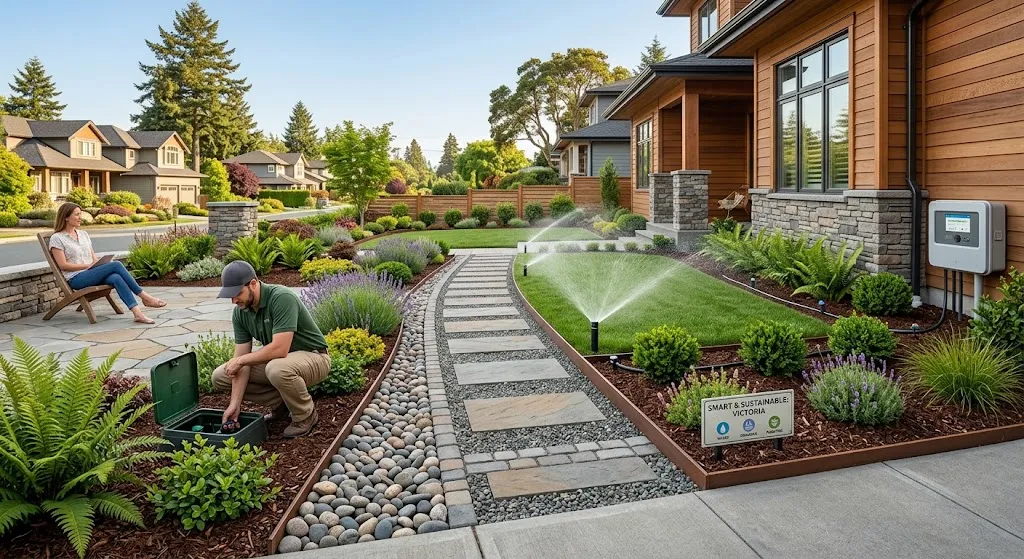
A well-planned yard in Victoria works with the climate rather than against it. Smart irrigation controllers and automated sprinklers deliver water only when plants need it, thoughtful drainage protects your property through the rainy months, and water-wise planting reduces the demand on both your time and the regional water supply.
Add a yearly winterizing routine and regular system checks, and you have a landscape that stays healthy, looks polished through every season, and asks very little in return. Whether you are building a new yard or improving an existing one, investing in quality design and materials at the start is the surest way to enjoy a beautiful, efficient outdoor space for years to come.




Leave a Reply