
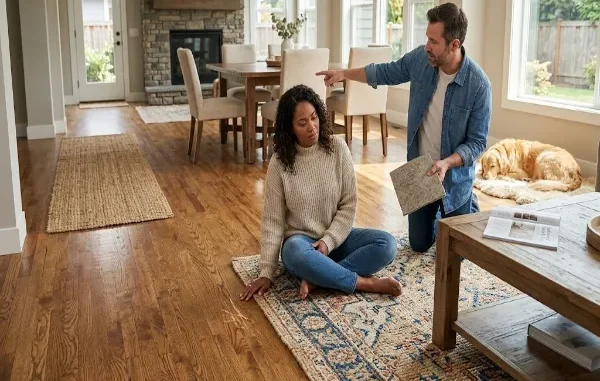
Hardwood floors are one of those home features people spend years dreaming about. They’re warm, timeless, and capable of making almost any room look polished. Once you finally have them, the idea of covering them up can seem counterintuitive.
The good news is that you don’t have to. Hardwood floors can absolutely be left bare, but strategically adding floor coverings can make your space more comfortable while protecting your investment. The trick is knowing where they’re actually useful and where you can let those beautiful boards steal the show.
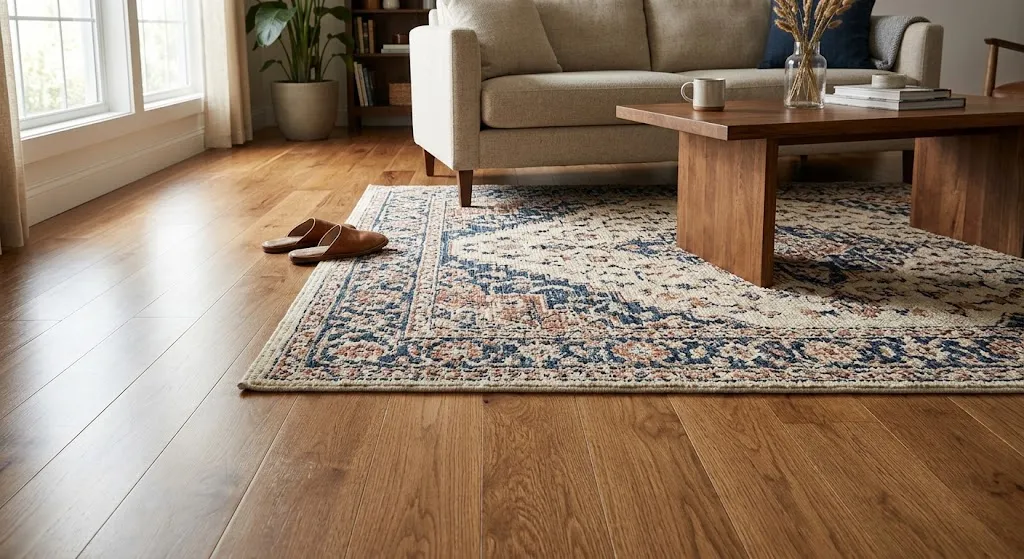
Do Hardwood Floors Need Rugs?
Your hardwood floors won’t demand accessories the moment they’re installed. However, rugs can solve several common problems that come with living on hardwood, from scratches and scuffs to chilly feet.
Think of them less as something that hides your floors and more as a protective layer in the spots that get the most action. A well-placed area rug can reduce everyday wear while adding color, texture, and personality to the room.
Protect High-Traffic Areas From Everyday Wear
Take a look at the paths you walk every day. The route from the front door to the kitchen, the hallway leading to the bedrooms, and the space around your sofa probably see considerably more traffic than a quiet corner.
Those busy areas are where hardwood tends to show wear first. Runners and area rugs create a buffer between the floor and shoes, pet claws, dirt, and everything else that comes through your home.
You don’t need wall-to-wall coverage, either. Protecting the busiest pathways can make a noticeable difference.
Keep Furniture From Scratching Your Floors
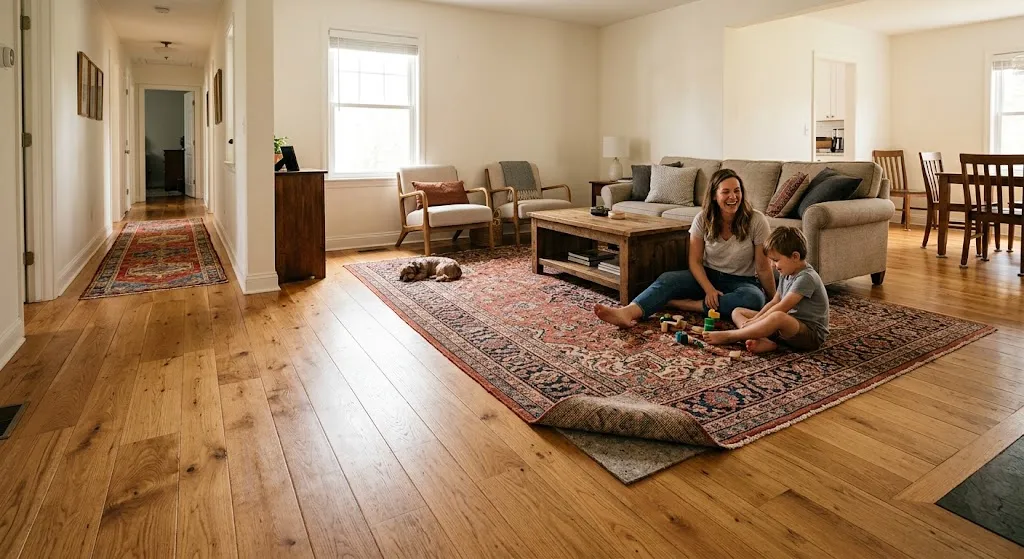
Furniture can be surprisingly tough on hardwood. Dining chairs slide back and forth, sofas shift slightly, and desk chairs can repeatedly roll over the same spot.
Placing an area rug beneath furniture helps prevent those movements from directly scraping the floor. For even more protection, add felt pads underneath furniture legs, particularly on pieces that aren’t positioned entirely on the rug.
Make Hardwood Floors Feel a Little Cozier
Hardwood looks inviting, but it doesn’t always feel that way under bare feet. During colder months, especially, stepping onto a chilly floor first thing in the morning isn’t exactly luxurious.
Adding something soft underfoot instantly makes a room feel warmer and more comfortable. Bedrooms, living rooms, nurseries, and reading nooks are especially good places to introduce that extra softness while still leaving plenty of hardwood visible.
Cut Down on Noise and Echo
Hardwood floors may look fantastic, but they aren’t particularly good at keeping things quiet. Footsteps, conversations, televisions, and the occasional dropped toy can all sound louder when noise bounces off hard surfaces.
Area rugs help absorb some of that sound, making rooms feel calmer and less echoey. They’re particularly useful in open-concept spaces, upstairs bedrooms, playrooms, and homes with energetic pets or kids. Adding a rug won’t soundproof the room, but it can take the edge off everyday household noise.
Use Rugs To Define Different Areas
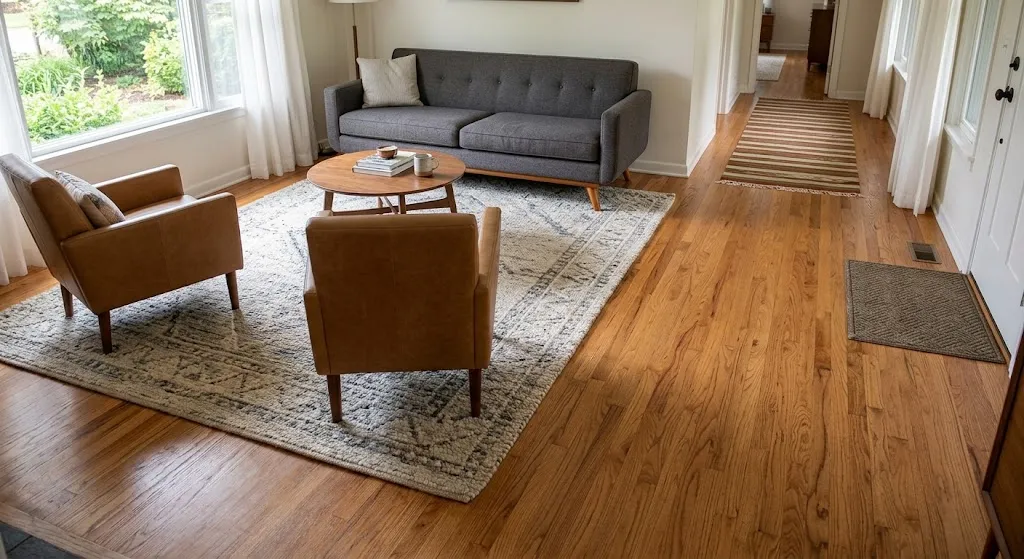
Sometimes, a rug’s biggest job has nothing to do with protecting the floor. It can also give a room some much-needed structure. This is especially helpful in open-plan layouts where the living room, dining room, and kitchen blend together.
Placing an area rug beneath your sofa and chairs creates a clear conversation zone, while another beneath the dining table establishes a separate eating area. Even in smaller rooms, a rug can visually anchor furniture so that everything feels intentional rather than randomly placed.
Don’t Forget What’s Under the Rug
Putting something between your rug and hardwood is almost as important as choosing the rug itself. A quality rug pad helps prevent slipping, adds cushioning, and reduces friction with the floor.
Look for a pad specifically labeled as safe for hardwood, since certain rubber, latex, or adhesive-backed materials may react with some floor finishes and cause discoloration. And don’t forget to clean underneath periodically. Dirt and grit can work their way beneath a rug, where repeated pressure may eventually create tiny scratches.
Know When Leaving Hardwood Bare Makes Sense
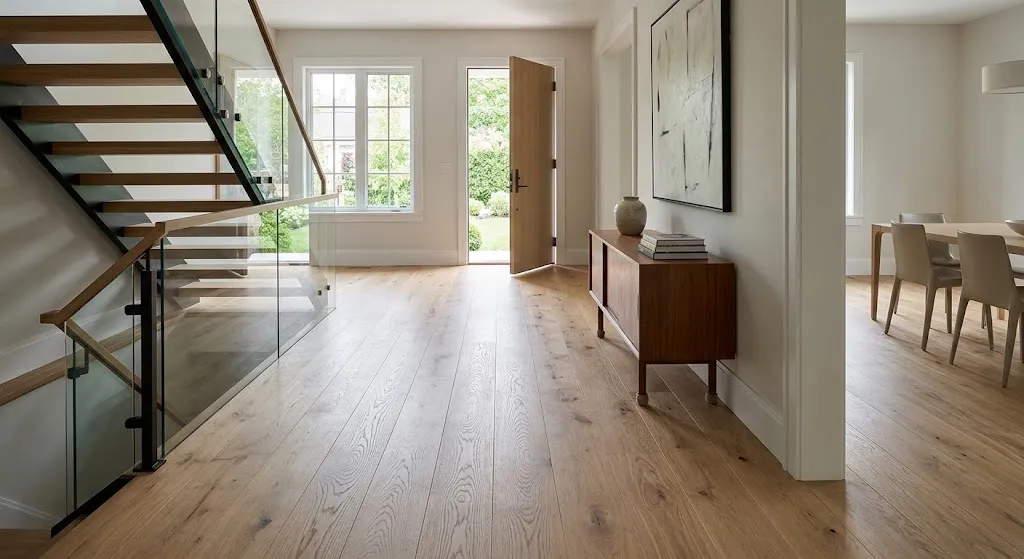
You don’t need to cover every available patch of flooring. In fact, doing so might defeat the purpose of having gorgeous hardwood in the first place.
Low-traffic spaces can often remain completely bare. You might also skip rugs in rooms where you want beautiful wood grain, unique patterns, or architectural details to take center stage. A little exposed flooring also creates visual breathing room and keeps your home from feeling overly layered.
Give Your Hardwood the Best of Both Worlds
So, do hardwood floors need rugs? Not necessarily, but the right ones can certainly make living with hardwood easier.
Rather than covering everything, focus on strategic placement. Protect high-traffic areas, cushion furniture, soften spaces where you relax, and leave plenty of beautiful flooring visible. That balance allows you to enjoy everything you love about hardwood while helping protect it from the realities of everyday life.
Related posts:
 Who Is Calling From 14075830183? What You Need to Know About This Mysterious Florida Number
 The Many Struggles of a Digital Nomad and How to Deal with Them
 Understanding Long-Term Disability Claims in Michigan and Workplace Injury Legal Support
 Canada Visa for Indians Planning a Summer in the Great White North
 How VR Porn Is Challenging Traditional Views on Sex and Connection
Leave a Reply