
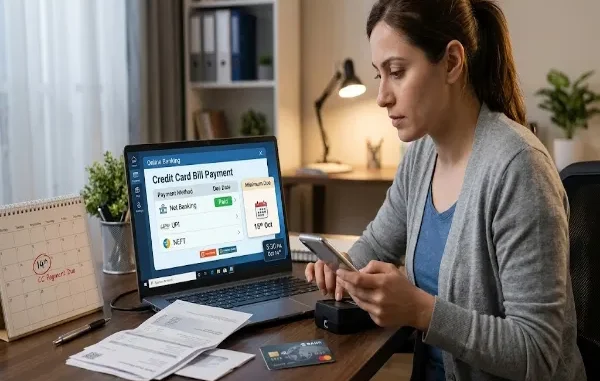
Over the years, the usage of credit cards has significantly increased due to the convenience and flexibility that they offer. However, users are also required to manage the repayment schedule, as timely credit card bill payments help cardholders avoid paying late fees, maintain a healthy credit score and even manage their finances better. Unlike the traditional process, where an individual used to visit banks or payment centres to pay bills, modern digital platforms have made it easier for them to make their bill payments online without a hassle.
But before making a choice of how and when to pay the dues, cardholders must understand the available payment methods, the billing cycle of the card, due dates and consequences of delayed payments.

What Is a Credit Card Billing Cycle?
The period within which transactions made using the card are recorded is considered the credit card billing cycle. At the end of this cycle, the issuer of the card generates a statement that shows their transactions, total amount due, the minimum amount due and the payment deadline.
The last date by which the required payment is made is considered the due date. Cardholders are required to regularly check their statements rather than relying on assumptions, as the billing cycle and due dates differ between cards.
Understanding these dates can make credit card bill payment easier to plan and reduce the possibility of missing a deadline.
What Are the Different Methods for Paying Credit Card Bills?
The different methods you can choose to pay your card bills online include:
- Net Banking and Mobile Apps: Choose and log in to the issuer’s website or mobile app and choose your card. Transfer the funds that are directly linked to your savings account.
- UPI: Navigate to the UPI bill payment section in the chosen apps, enter the card details and make the transfer with your UPI PIN.
- NEFT, IMPS, or RTGS: Internet banking platforms or supported bank accounts are used to pay the credit card dues. The required bill details are entered, and the transaction is made.
- Third-Party Bill Platforms: To view and clear your credit card bill payments, there are several third-party platforms that are also popularly used.
How Should You Track Your Credit Card Due Date?
To avoid late payment charges, it is necessary for an individual to keep track of their card due dates. While making an early payment can provide extra time to check failed or delayed transactions, here are some practices that you can also consider to track them:
- Whenever a new statement is generated, make sure to check the due dates.
- In advance, make sure to set a calendar or mobile reminder beforehand.
- Enable the payment notifications from your card issuer.
- If you use multiple credit cards, keep a list of due dates.
What Happens If You Miss a Credit Card Payment?
When you miss credit card bill payments, it can have financial consequences. This is what usually happens:
- Late-Payment Charges: A late-payment fee is charged by the issuer when the payment is not made by the due date.
- Additional Interest: According to the terms of the card, outstanding balances attract interest. This is how unpaid dues can increase the overall cost.
- Impact on Credit History: Your credit profile and score get negatively affected if there are any repeated payment delays. To maintain financial credibility, a consistent record of timely payment is essential.
- Loss of Interest-Free Benefits: Your interest-free period can be affected when you carry an unpaid balance. It usually depends on the issuer’s policies.
How Can You Avoid Late Fees?

There are multiple habits that can make bill payments online more manageable and reduce late fees:
- Set Multiple Reminders: Set multiple reminders; one can be days before the due date and another for a date closer to the due date. It helps when you are managing multiple cards.
- Pay Before the Last Day: Don’t wait until the due date, as payment processing of payments may take time, based on the method you use.
- Maintain Sufficient Funds: Check if there are sufficient funds available in your bank account to complete the transactions successfully.
- Review Your Statement: Regularly check the transactions and your outstanding dues, as identifying incorrect transactions early gives more time to contact the issuer.
- Keep Payment Records: After you have completed the payments, save the message, receipts and transaction reference numbers.
Conclusion
Regular and timely credit card bill payment is an important part of responsible credit management. Understanding the billing cycle, tracking due dates, choosing a suitable payment method and paying the total amount whenever possible can help minimise unnecessary charges.
Whether you use UPI, net banking, a banking application or another trusted platform for bill payments online, always verify the amount, biller and payment status. Most importantly, avoid waiting until the last moment and maintain a consistent repayment routine to keep your credit card finances under control.
Stashfin supports bill payments online for cards from more than 30 banks through a single app. Its features include automatic bill fetching through Bharat Connect, real-time reminders and flexible UPI payment options. Eligible users can also receive assured 24K digital gold worth up to ₹500 on successful transactions, subject to applicable terms.
Related posts:
 How Verified Consultants Can Help You Close Office Deals Faster in Bangalore
 How Maya Thompson Turned $100 Into a Million-Dollar Empire
 What Is a Road Trading Strategy? A Trend Method for FX Beginners
 Refinancing Your Home Loan After RBI Rate Cuts: A Smart Way to Save
 Building a Scalable Business Through Accelerator Mentorship and Capital
Leave a Reply