
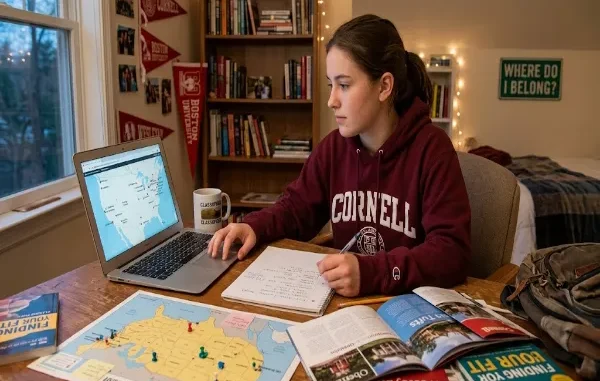
Understanding the College Search
“So… where are you thinking of going to college?” This question can either ignite excitement or send a chill down your spine. Whether you’re thrilled or terrified, searching for that perfect college isn’t easy. The choices seem endless and the pressure is always there, making it all feel a bit overwhelming. So, how do you even begin this journey? Well, picking the right college is about more than just browsing the latest rankings on U.S. News. Sure, those lists can be useful, but they shouldn’t be your only guide. College is a pivotal four-year chapter in your life—you’re selecting a community, a location beyond the campus gates, and an academic environment that fits you—while also keeping an eye on your budget.

Key Factors: Academics and Community
Kicking off your search means honing in on two crucial aspects: academics and community. These broad categories will help you unlock the path to your ideal college!
Academics
When you’re setting out to find the right college, academics might top your list of priorities. Most colleges offer a range of typical majors like English, Anthropology, or Physics. But some institutions might have unique variations like Data Science instead of Statistics or Social Policy in place of Public Policy. And hey, if you’re not yet sure about your major, that’s completely fine too! Depending on where you stand, there’s advice tailored for you below. If you’ve got your major locked in, check out Student A’s section; if you’re still exploring possibilities, move on to Student B.
Student A: You Know Your Major
Thinking that knowing your major simplifies things? Not so fast! While knowing what you want to study helps narrow down some options, there are still loads of schools to consider. Before diving into your search, it’s crucial to identify which colleges excel in your chosen field. This ranking might not correspond with the usual national standings. For instance, if you’re eyeing a creative writing program, you might assume Ivy League schools are top-tier. Yet, the University of Iowa boasts one of the finest creative writing programs nationwide and ranks highly for Writing in the Disciplines according to U.S. News—a reminder that rankings shouldn’t dictate your choice.
Student B: You’re Undecided
If you’re still weighing options or seeking some guidance on choosing a major, this section’s for you! Look into Liberal Arts colleges; they promote a well-rounded education by requiring students to sample various academic fields before declaring a major. These colleges encourage trying new things each term—one semester you might dive into STEM subjects and then switch gears to Humanities the next. They often embrace interdisciplinary learning, showing how different disciplines intersect when tackling societal challenges.
Exploring Community

Community is another cornerstone when considering which college suits you best. Each campus has its own unique vibe. Some schools emphasize residential life like the University of Chicago does, while others spotlight school spirit through athletics like Northwestern University. As you explore options, spend time visiting college websites and digging into sections labeled “Community” or “Student Life”—these give insights into how colleges foster their sense of community and what opportunities they offer for building connections.
Beyond campus culture itself lies its geographical context—the town or city it’s part of matters too! Urban campuses provide access to off-campus internships and public transport (not to mention tons of fun activities). On the flip side, being situated in a quaint college town brings its perks—think walkable campuses with lotsa school pride…and potentially lower living costs compared to big cities.
In essence, community encompasses more than just student groups—it’s about everything contributing to the atmosphere that’ll become your home away from home.
Seeking Your New Home
Ultimately, this journey isn’t solely about academics—it’s about finding where you’ll feel at home for these transformative years ahead! Whether this marks the beginning stages or final steps in shaping up that college list focus on creating an environment where YOU thrive academically AND personally.
If you’d like more insights along this journey, check out this related resource
Related posts:
 A General Practice Attorney: Your Legal Ally
 Who Is Calling From 14075830183? What You Need to Know About This Mysterious Florida Number
 The Many Struggles of a Digital Nomad and How to Deal with Them
 Understanding Long-Term Disability Claims in Michigan and Workplace Injury Legal Support
 Canada Visa for Indians Planning a Summer in the Great White North
Leave a Reply