
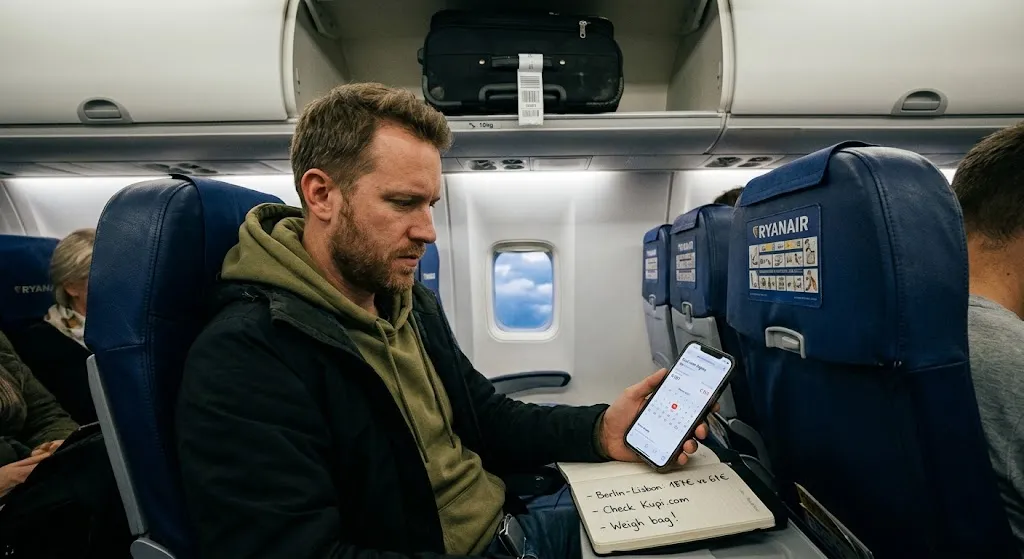
I paid €187 for a Ryanair flight from Berlin to Lisbon last March and then watched the same seat drop to €61 eleven days later. The fare calendar I had open showed the lower price the whole time; I just refused to believe it, because the common advice says booking early is always cheaper. That advice is wrong more often than airlines want you to know, and it cost me a week of hostel beds in Portugal, a lesson I now check against Kupi.com flights before committing.
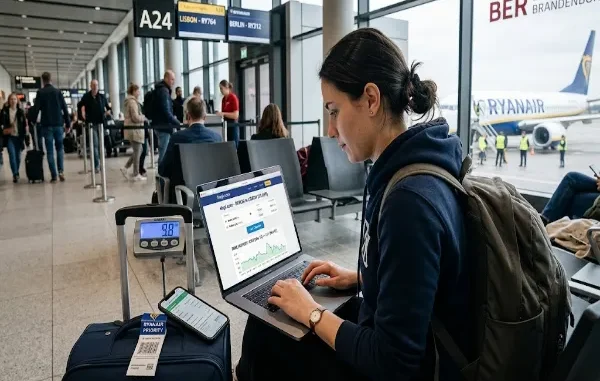
The first mistake is trusting the “book early” mantra without checking the actual curve. Low-cost carriers like Ryanair and Wizz Air raise prices as seats fill, sure, but they also run sales that undercut their own baseline fares by 40 percent or more. I now check a price calendar, the fare map I keep open in a second tab, every morning for a week before committing to anything. When the number drops twice in three days, that is the signal to buy, not the first price you see.
Baggage is where carriers recover every cent they lose on the base fare, and the rules changed mid-trip on me twice last year. My carry-on weighed 9.8 kilograms on the Ryanair scale at Stansted, under the 10-kilo limit, but the agent flagged the wheel size, which technically exceeded their dimensions. I had flown that exact bag four times without issue, which is the trap: every airline enforces differently, and EasyJet’s sizer is more forgiving than Ryanair’s, while Wizz’s seems calibrated to catch anything with a laptop inside.
What I do now is weigh the bag at the hostel and then again at the airport, because hostel scales are optimistic in a way that costs you €65 at the gate. I also stopped packing jeans on any flight under three hours, since they are the difference between 9.9 kilos and 10.1, and I have watched more than one traveler repack their entire life in a boarding queue.
The third mistake, and I was slow to learn this one, is ignoring the airport you fly from. Everyone obsesses over the destination price and forgets that the same route from a secondary airport can be half the cost. Flying out of Charleroi instead of Brussels saved me €42 on a trip to Barcelona, and the bus to Charleroi cost €14, which is a net win even with the 4am departure.
- Check the fare calendar daily for a week before booking
- Weigh your bag at the hostel, not just at the airport
- Compare secondary airports within two hours of your start
- Search in a private window, then clear cookies before you check again
- Buy when the price drops twice, not on the first quote
The last thing I changed was how I search in the first place. I stopped defaulting to the big comparison sites, which show you the cheapest option but bury the fees, and started checking the airline’s own site after seeing the price on a price calendar. When I book through the site I use, the total is what gets quoted, baggage and seat selection included, which saves the surprise at checkout.
I was wrong about loyalty programs too, thinking they were for business travelers with expense accounts. The Avios system across seven airlines transfers free between all of them, which means a credit card bonus can become a reward seat on a route you actually fly. I flew from London to Budapest last month on points accumulated from groceries.
The real lesson is that overpaying is a decision, not bad luck. You can check the calendar, weigh the bag, pick the secondary airport and still pay more than the person next to you who booked via this link in a private browser at 2am. The difference is they spent ten minutes on it and you spent nothing.
These days I treat the first fare I see as a starting bid, not a price. The airline wants you to think the number on screen is fixed, but it is the opening move in a negotiation you are allowed to walk away from.




Leave a Reply