
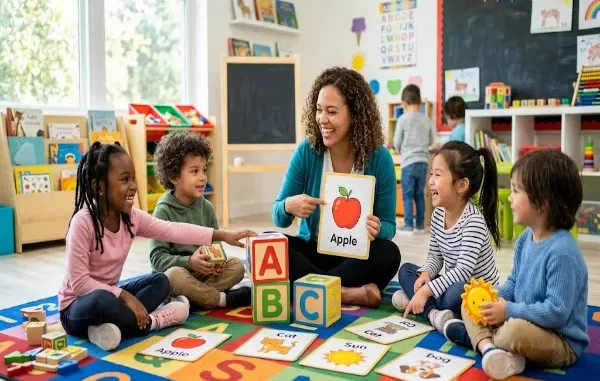
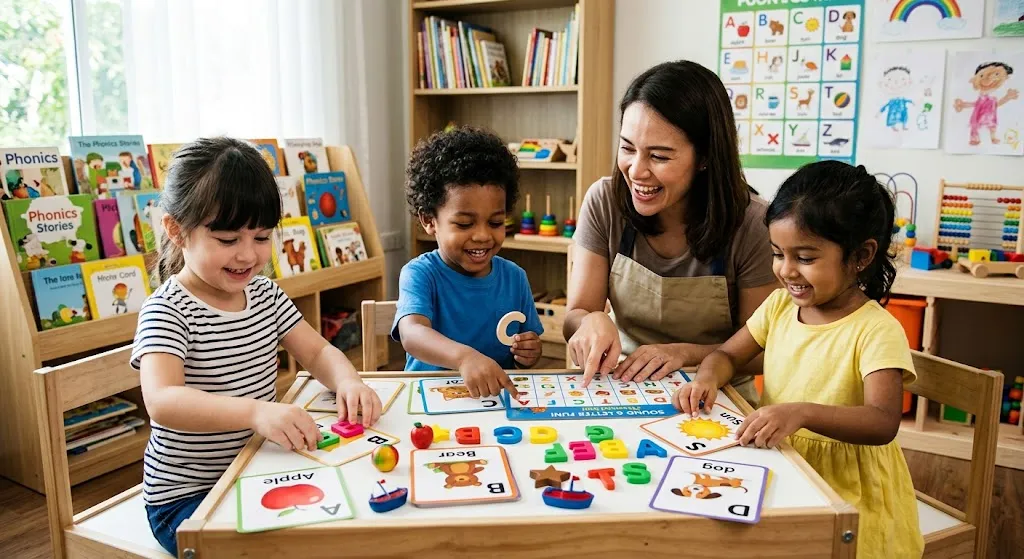
Early childhood is an ideal time to introduce children to the sounds that form the foundation of reading. Young learners are naturally curious, and they often learn most effectively when educational concepts are presented through play, movement, stories, and hands-on experiences. Sound recognition and early literacy become more enjoyable when children engage in phonics activities for preschoolers, helping them participate actively while developing essential reading skills.
Rather than treating language learning as a formal lesson, parents and educators can introduce simple games, songs, picture activities, and storytelling exercises that gradually help children connect letters with their sounds. With regular encouragement and age-appropriate resources, children can develop stronger listening abilities, vocabulary, pronunciation, and early reading confidence.
| Key Takeaways Play-based learning can make early literacy more enjoyable.Sound recognition is an important foundation for reading.Songs and rhymes help children notice patterns in language.Picture games can connect sounds with familiar objects.Short, regular practice sessions are suitable for young learners.Storybooks and educational resources can reinforce sound awareness.Positive encouragement helps children develop confidence. |
Why Phonics Matters During the Preschool Years
Learning to read does not happen all at once. Before children can read words independently, they need to become familiar with spoken sounds, recognise letters, and understand that written symbols represent sounds in language. Preschool is a valuable stage for introducing these ideas in an age-appropriate way.
Phonics-based learning supports early literacy by helping children notice the relationship between sounds and letters. When introduced gradually, these concepts can make unfamiliar words easier to approach later. The goal at preschool level should not be intensive examination preparation, but building curiosity and familiarity with language.
Parents and teachers can create meaningful learning experiences by combining structured activities with opportunities for children to explore sounds naturally.
Building Sound Awareness
Children can begin by listening carefully to individual sounds in familiar words. Simple exercises involving animals, objects, names, and everyday sounds can help develop attentive listening.
Connecting Letters and Sounds
Once children become comfortable recognising sounds, adults can introduce corresponding letters. Repeating these connections through games and visual materials helps make the learning process memorable.
Fun Ways to Introduce Sound-Based Learning
Young children respond particularly well to activities that involve movement, imagination, and interaction. A short game can sometimes hold a child’s attention more effectively than a lengthy worksheet. Activities should therefore be varied enough to maintain interest while repeating important concepts naturally.
Here are some practical ideas:
- Sound hunts: Ask children to find objects that begin with a particular sound.
- Picture matching: Match pictures of familiar objects with their beginning letters.
- Clapping games: Clap out the sounds or syllables in simple words.
- Letter treasure hunts: Hide letters around a room and ask children to identify them.
- Sound sorting: Place pictures into groups according to their beginning sounds.
- Mystery bags: Let children identify an object and discuss the sound at the beginning of its name.
These activities can be adapted according to age and ability, making them suitable for both individual learning and small groups.
Using Songs, Rhymes and Movement to Strengthen Learning
Music and movement can make language practice more memorable for young children. Songs naturally involve repetition, rhythm, and pronunciation, giving children opportunities to hear sounds several times without feeling that they are completing a formal exercise.
Try Simple Action Songs
Parents can create actions for frequently repeated sounds or words in a song. Children might clap, jump, tap a table, or point to a letter whenever they hear the target sound.
Make Rhyming Games Interactive
Give children pairs of simple words and ask whether they sound similar at the end. Picture cards can make this easier for children who are still developing vocabulary.
Building Vocabulary Through Pictures and Everyday Objects
Vocabulary development and sound awareness can work together naturally. Children encounter hundreds of objects during a normal day, providing parents and teachers with countless opportunities to talk about words and sounds.
Everyday Learning Examples
| Activity | Skill Developed |
| Naming household objects | Vocabulary and sound recognition |
| Matching pictures | Visual and language association |
| Sorting objects | Classification and listening |
| Reading picture books | Listening and comprehension |
| Singing rhymes | Sound awareness and pronunciation |
| Identifying letters | Letter recognition |
These simple activities demonstrate that early literacy can be integrated into everyday experiences without making learning feel like a chore.
Choosing Resources That Support Early Literacy
Books and educational resources can provide useful structure when parents want to reinforce learning at home. However, preschool materials should be selected according to a child’s developmental stage rather than based solely on the number of exercises included.
Look for Age-Appropriate Content
Preschool resources should use simple instructions, familiar vocabulary, clear illustrations, and activities that match children’s developing abilities. Materials that are too advanced can cause frustration instead of encouraging confidence.
Encourage Active Participation
Look for activities involving tracing, matching, colouring, listening, speaking, and identifying sounds. A combination of activities gives children different ways to practise the same underlying skills.
Parents searching for additional early-learning resources can also explore Preschool Books to find materials that complement language development and other foundational learning activities.
Creating a Positive Learning Routine at Home
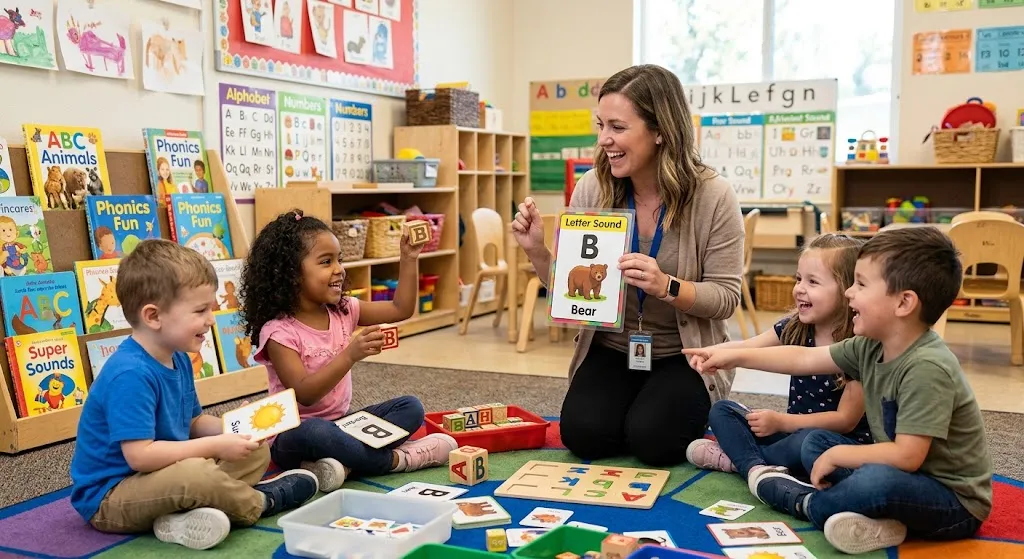
Consistency is more valuable than long study sessions during the preschool years. Children have developing attention spans, so short activities spread throughout the week can be more productive than asking them to sit through an extended lesson.
Consider the following approach:
- Start with a familiar song or rhyme.
- Introduce one sound or letter.
- Practise using pictures or objects.
- Read a short story together.
- Finish with a simple game.
- Praise the child’s effort and participation.
The objective is to create positive associations with reading and language rather than focusing solely on completing a particular number of activities.
Supporting Different Learning Styles
Not every child responds to the same activity in the same way. Some children enjoy drawing and visual materials, while others learn better through songs, movement, conversation, or repetition. Recognising these differences can make early literacy experiences more effective.
Follow the Child’s Interests
Using favourite animals, toys, stories, or characters can make sound-based learning more relatable. Familiar subjects often encourage children to participate more willingly.
Avoid Comparing Progress
Children develop language skills at different rates. Encouraging individual progress is more beneficial than comparing one child’s abilities with those of siblings or classmates.
How Parents Can Make Learning More Enjoyable
The attitude of the adult guiding the activity can influence how a child responds to learning. Enthusiasm, patience, and encouragement can transform a simple exercise into a memorable experience.
Parents do not need to act like teachers throughout every activity. Asking questions, listening to answers, reading together, and celebrating small improvements can provide valuable support.
Helpful approaches include:
- Praise effort rather than perfection.
- Allow children to repeat activities they enjoy.
- Use stories to introduce new vocabulary.
- Take regular breaks.
- Let children choose between two activities.
- Celebrate small achievements.
- Keep corrections gentle and constructive.
Most importantly, learning should remain enjoyable. Positive experiences during early childhood can encourage children to approach reading and language with greater curiosity as they grow.
Final Takeaway
Early literacy develops through many small experiences, from listening to sounds and singing rhymes to exploring picture books and playing language games. When learning is interactive and appropriate for a child’s age, children can develop important foundations for reading while maintaining their natural enthusiasm for discovery.
For parents looking for supportive educational materials, SAPGRP offers a range of preschool and early-learning resources that can complement activities at home and provide children with engaging opportunities to practise essential skills.
Give your child more opportunities to discover the joy of early learning.
Explore the educational resources available at sapgrp.com and find age-appropriate books that support language development, literacy, and confident learning.
Frequently Asked Questions
Phonics can be introduced during the preschool years when children begin developing awareness of sounds, letters, and spoken language. Parents can use simple songs, rhymes, picture games, and storytelling to introduce basic sound concepts enjoyably.
Parents can practise phonics using everyday objects, picture cards, toys, storybooks, and simple sound games. For example, children can identify objects that begin with a particular sound or match pictures with their corresponding letters.
Phonics games can make early literacy practice more engaging because children learn through interaction, repetition, and play. Activities such as sound hunts, matching games, sorting exercises, and letter searches encourage children to recognise sounds while keeping them actively involved.
Preschool children generally benefit from short learning sessions that match their attention span and interest. A 10–15-minute activity can provide meaningful practice when it includes engaging games, songs, or picture-based exercises.
Yes, suitable preschool books can reinforce phonics by introducing children to letters, sounds, vocabulary, and simple words through age-appropriate activities. Parents can make reading interactive by pointing out familiar letters, asking children to identify sounds, and discussing pictures and words.
Related posts:
 Longhornsurvey com The Online Survey Platform
 Decoding The Real Slim Shady Lyrics
 Embracing the Paradox: The Power of Being Consistently Inconsistent
 The Ultimate Guide to Creating a Cozy and Functional Living Space with Home Goods
 Why Siding Plays a Key Role in Reducing Exterior Maintenance Throughout the Year
Leave a Reply