
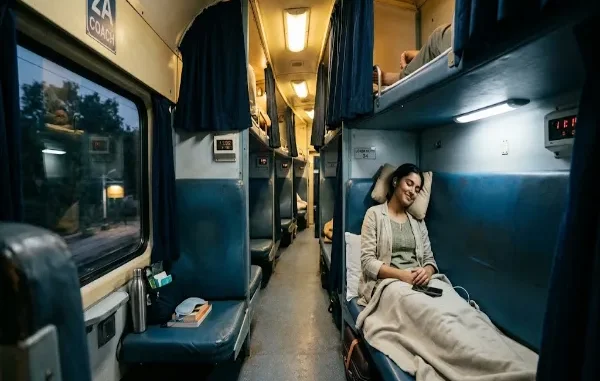
An overnight train journey can turn travel time into useful rest, but only when the trip is planned with care. The right train, berth, clothing and luggage choices can make the night calmer and the arrival far less tiring. Indian rail journeys also involve practical details such as station timing, food, safety and last-minute updates.
A simple plan helps you settle in quickly, sleep with fewer interruptions and step off the train ready for the day ahead at the destination.
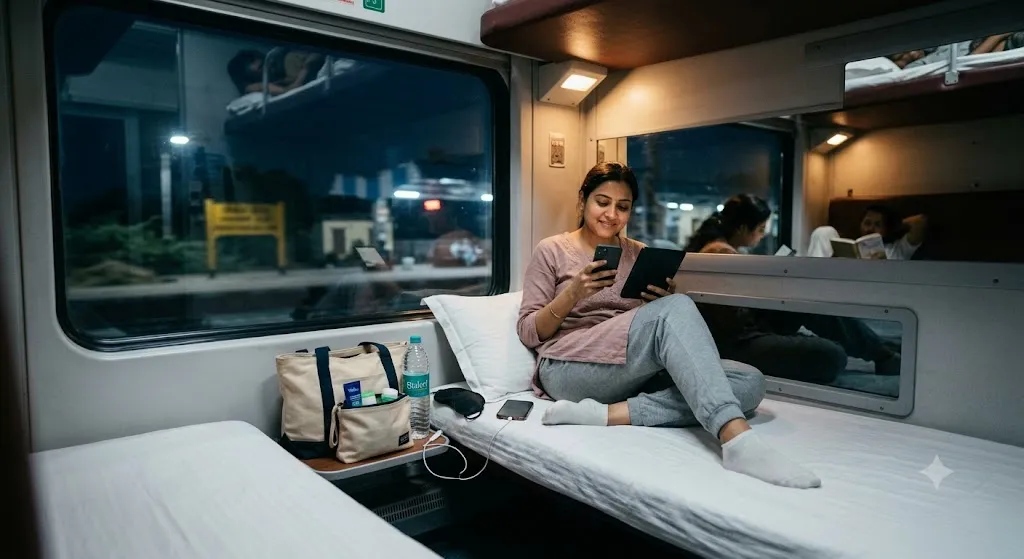
Choose the Right Overnight Train
Start by checking whether the train’s departure and arrival times suit your wider travel plan. A slightly longer journey may still be more practical when it reaches the destination at a convenient hour. Review the route, scheduled stops and expected arrival platform where available.
- Prefer timings that allow a comfortable station transfer.
- Check whether the train stops near your final area.
- Avoid connections with very narrow gaps.
- Consider how easily you can reach the departure station at night.
- Check local transport near both stations.
Book Tickets Early for Better Seats
Early train booking usually gives you more choice across classes and berth preferences. It also leaves time to adjust other arrangements, including transport to the station and accommodation after arrival. Before paying, confirm the boarding point, travel date, passenger details and destination station carefully.
- Book once your travel plan is reasonably settled.
- Enter names and ages exactly as required.
- Review the selected boarding station before payment.
- Save the ticket details where they remain easy to access.
- Keep the ticket available offline before leaving home.
Pick the Best Class and Berth
Your class and berth can shape how well you rest through the night. Consider privacy, ventilation, bedding arrangements, coach layout and the needs of anyone travelling with you. After booking, check the PNR status regularly so you know whether the reservation is confirmed or still changing.
- Lower berths offer easier access for many travellers.
- Upper berths may face fewer passing passengers.
- Side berths can feel more compact.
- Choose a class that matches comfort and budget needs.
- Discuss berth needs with companions before making payment.
Pack Essentials for the Night
Keep overnight necessities in a small bag rather than placing everything inside the main suitcase. This saves repeated movement after other passengers have settled. Pack only what you are likely to use between boarding and arrival, while keeping the coach space around your berth clear.
- Carry tissues, sanitizer, and basic toiletries.
- Pack a light blanket or travel sheet.
- Keep medicines in their original, accessible pouch.
- Add earplugs, an eye mask, and a charging cable.
- Keep a small torch for finding items quietly.
Wear Comfortable Clothing
Overnight travel calls for clothing that allows easy movement and remains comfortable across changing temperatures. Choose breathable layers rather than tight outfits or heavy accessories. Footwear should also be simple to remove and wear without creating inconvenience for nearby passengers during the night.
- Carry a light jacket for cooler coaches.
- Avoid jewellery that may disturb sleep.
- Choose clothes suitable for the arrival weather.
- Keep an extra pair of socks handy.
- Wear footwear with a secure, comfortable fit.
- Carry a scarf for flexible, lightweight warmth.
Keep Food and Water Handy
A planned meal helps you avoid depending entirely on late-night availability. Carry food that is easy to eat, mild in flavour and unlikely to spill. Water should remain within reach, although drinking excessive amounts just before sleeping may interrupt rest.
- Choose simple food that keeps well during travel.
- Avoid strong-smelling dishes in shared coaches.
- Carry a reusable bottle with a secure lid.
- Keep a few dry snacks for unexpected delays.
- Dispose of waste responsibly after eating.
- Keep napkins and cutlery in the same pouch.
Stay Safe with Your Belongings
Organise your luggage before most passengers settle down for the night. Larger bags should be placed securely in the available storage area, while valuables should remain close to you. Avoid displaying cash, documents or costly devices unnecessarily, and stay aware during station halts.
- Use sturdy locks on suitcases and backpacks.
- Keep your phone and wallet in a zipped pocket.
- Carry identification in an accessible inner pouch.
- Do not leave devices charging without attention.
- Check your berth area before every major stop.
- Share journey details with someone trusted.
Sleep Comfortably during the Journey
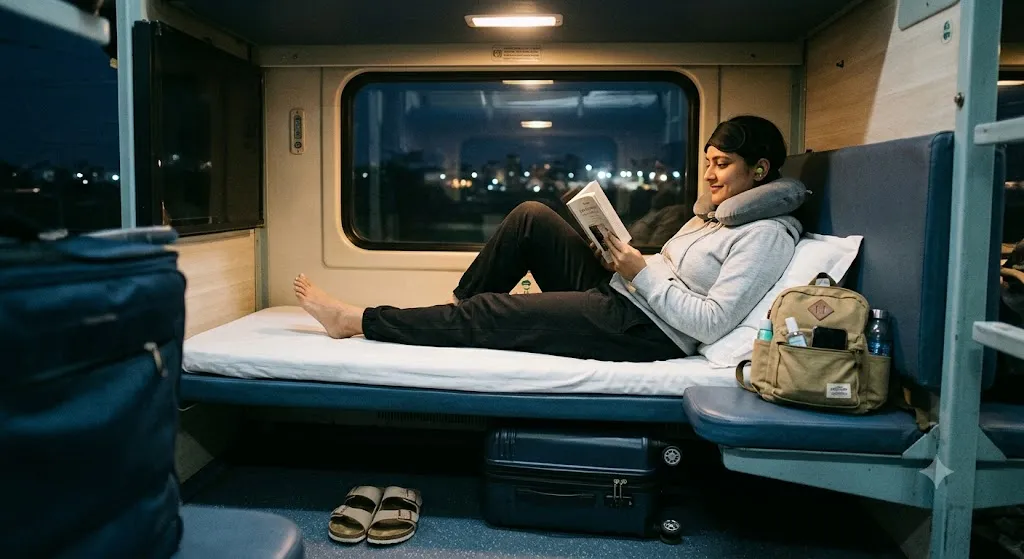
Good sleep on a train often depends on small adjustments. Settle your bedding early, reduce screen use and arrange essential items before the lights are lowered. Respecting the shared space also helps everyone rest with fewer disturbances throughout the journey.
- Use an eye mask when lights remain visible.
- Keep alarms low and close to your pillow.
- Place footwear neatly below the berth.
- Avoid loud calls during sleeping hours.
- Stretch gently before lying down.
- Adjust layers instead of repeatedly opening luggage.
- Silence phone alerts overnight.
Prepare before Reaching Your Destination
Begin preparing before the train reaches your station, especially when arrival is scheduled early in the morning. Check live updates where available, gather loose items and confirm onward transport. Rushing only after the train stops can lead to forgotten belongings and an uncomfortable exit.
- Set an alarm before the expected arrival time.
- Freshen up while the washroom is available.
- Return charging cables and documents to your bag.
- Confirm the correct station before leaving.
- Keep footwear and outer layers ready.
- Move towards the door calmly.
Common Overnight Train Travel Mistakes to Avoid
Many uncomfortable journeys result from simple planning gaps rather than the train itself. Booking the wrong boarding point, packing essentials deep inside luggage or sleeping through the destination can create avoidable stress. A final check before departure keeps the journey more organised.
- Do not rely on a single alarm.
- Avoid carrying more luggage than you can manage.
- Never assume food will always be available.
- Do not ignore changes in arrival timing.
- Avoid blocking aisles with bags or footwear.
- Recheck every berth carefully before leaving.
Conclusion
A well-planned overnight train journey should feel settled from the moment you reach the station to the time you arrive. Choosing suitable timings, booking the right berth, packing sensibly and preparing for the final stop can reduce unnecessary disruption during the night. With redBus supporting both rail and road travel planning, passengers can manage the complete journey with greater clarity and comfort, rather than treating each stage as a separate task.




Leave a Reply