
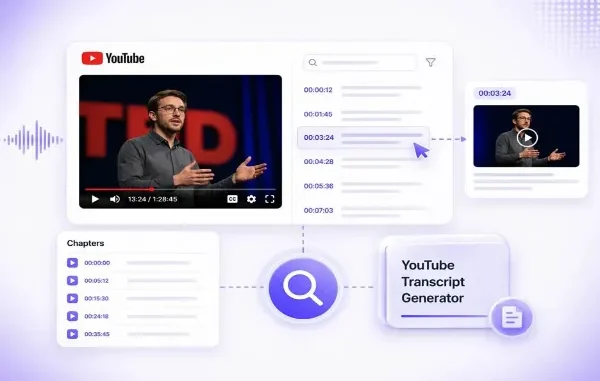
Picture yourself watching a YouTube clip lately, maybe for a project or just learning something new. Perhaps it ran nearly an hour – a deep dive into code, someone speaking at an event, or a detailed chat full of useful ideas. Chances are, you remembered bits here and there – yet how solid is that memory now? Did hours slip by while you listened? Would locating that exact moment with the crucial line even be possible today?
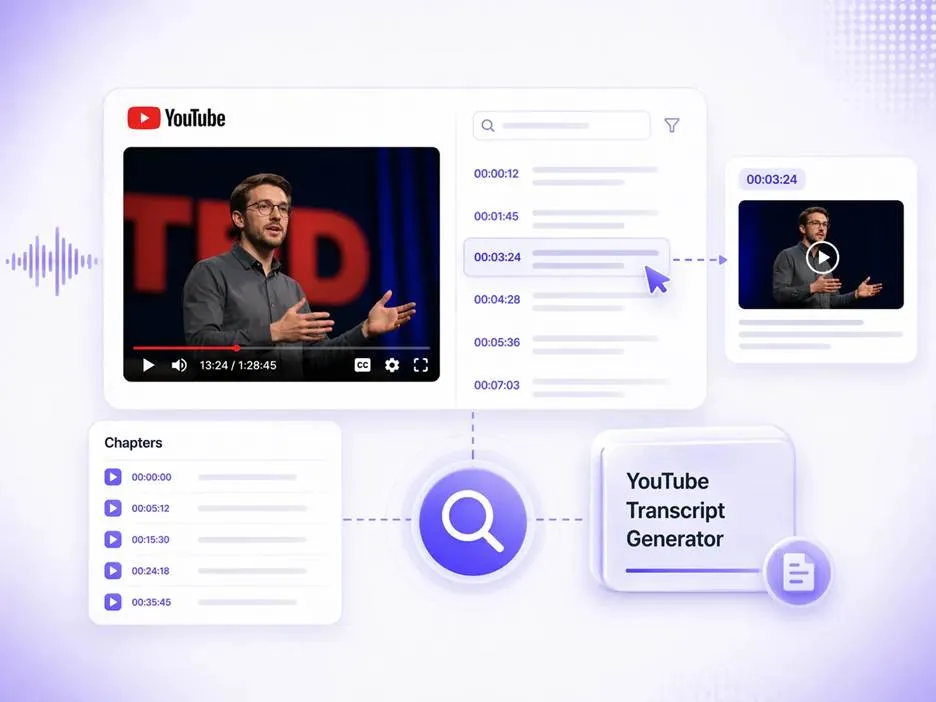
Here lies the core challenge of our visual era: plenty to watch, little time to spare. Because videos pack so much yet demand attention, smart shortcuts help. One such shortcut pulls spoken words into text instantly. Another shapes long footage into tight summaries using artificial intelligence. Neither removes the need to view clips fully. Instead they push each second of playback to do more heavy lifting. Learners rely on them when lectures drag. Office workers turn to them during back-to-back meetings. Scientists skim hours of presentations without sitting through every frame. Creators study competitors’ material faster than ever before. What once required patience now moves at decision speed.
YouTube by itself isn’t enough
Out here, YouTube stands apart. Its collection holds more than 800 million clips, growing nonstop as fresh material arrives each second. This place now stores a massive share of what people know, show, and say. Learning happens within its streams. Some folks shape whole jobs around it. When urgent stories emerge, they often land there before anywhere else.
Yet most of YouTube’s material stays locked away from readers – no written version exists. Though videos dominate, they vanish when someone wants words instead.
Searching within a YouTube video remains out of reach. Rewatching becomes necessary before any quote finds its way into a report by hand. A sixty-minute documentary resists quick scanning unlike text on a page. Auto-generated captions exist yet stumble often. Misheard words pop up where others should be. Punctuation vanishes without warning. Accents trip the system every time. Technical terms? Often unrecognizable noise replaces them.
Out there, endless hours of useful videos stay stuck in a shape that takes too long to go through, can’t be looked up easily, doesn’t lend itself to quoting. Built right, a tool turning YouTube audio into written words clears each hurdle in one move.
How a YouTube transcript generator works
Most folks find it handy when speech turns into words on screen. One click grabs a video link, another runs it through smart software. That system listens closely, then writes down what people say. Accuracy matters, so errors get trimmed fast. Text comes out clear, ready to scan or share. Some tools work quicker than others do. Results show up neatly, line by line. Reading beats replaying clips over again.
Surprisingly straightforward at first glance – yet powered by complex systems underneath. These tools rely on advanced neural networks, shaped through exposure to massive collections of spoken words. Instead of struggling, they adapt: recognizing dialects, adjusting to fast talkers, filtering out hums and clatter. Even when voices cross paths or jargon appears, performance stays strong. Outcomes often beat what comes built into YouTube itself.
Imagine clean lines instead of clutter. One tool shapes speech into neat rows, fitting words where they belong.
Each line of text appears with its precise moment marked. Jump straight to any part by clicking – no more dragging the progress bar at random. Words tie directly to where they happen on screen. Find what you need fast because each phrase points to its place in time. Clicking moves you right there instead of guessing.
Who speaks when becomes clear with speaker labels in videos featuring several people. These tags help during interviews, panels, or meeting recordings. Correct quote attribution relies on them. When voices overlap, knowing who said what stays possible. Accuracy improves without guesswork about speakers. Misattribution drops when each person gets named visibly.
Start strong by making sure each paragraph flows just right. Punctuation marks appear where they should, letters cap when needed. The words fit together without tripping up. Every line feels clear, never messy or rushed. Sentences breathe on their own, yet link through ideas. Structure holds but does not shout. Reading it sounds like talking, only smoother. Details stay put, nothing spills out of place. Order comes quietly, not forced. Clarity arrives without fanfare. Things make sense because they are arranged well. Nothing drags behind. Each part knows its role.
Some tools now help translate videos, turning speech in one tongue into written words in another. This change lets people everywhere understand YouTube clips made in languages they do not speak. Foreign content becomes reachable through simple text shifts. A spoken German clip might appear as English lines. One example is a TikTok transcript generator, which helps turn short-form videos into readable text instantly. Viewers gain access without needing fluency. These features quietly bridge gaps across regions. Language stops being a wall when subtitles move easily between forms.
Grab what you need by saving the transcript in formats like plain text, Word, PDF, or subtitles – pick based on how you plan to use it. Different options open up once you start downloading, fitting whatever comes next.
Searchable words appear after the talking stops. That kitchen lesson? Now it lives on paper. Quotes jump out when needed most. One talk turns into many forms later. Printed lines grow from spoken ones. Every answer finds new places once typed. The stage speech shifts shape easily now. Audio changes form without losing meaning. Text slips free from moving images.
AI video summarizer steps in
A full transcript helps a lot – yet takes time to get through. About four thousand words come from just thirty minutes on screen. Going word by word misses the point sometimes. That’s when an AI tool steps in, cutting it down fast.
Starting off, the tool scans every line of spoken text inside a video. Then it uses smart parsing to spotlight only meaningful parts. Instead it ignores small talk or repeated phrases. From long discussions, three real choices emerge clearly. Even in dense clips, useful steps stand out after sorting. What remains is shown either briefly in prose or listed plainly. Without sitting through footage, users still get informed completely. Watching becomes optional because coverage stays accurate.
Most strong tools for summing up Free YouTube transcript generator online skip simple cuts or repeats of first moments. Instead, they grasp what’s truly being said – spotting core topics, linking similar points, pulling out key messages. These thoughts get arranged clearly so someone new to the footage can follow without watching it.
This ability brings fresh ways of working into play
One researcher might see twenty talks covered fast when software picks out key points. Instead of sitting through hours, moments stand out clearly. Each clip gives up its core idea quickly because the tool moves swiftly between voices. Time bends here – what takes sixty minutes now fits into five.
Meetings get turned into clear notes for work groups, where choices and next steps stand apart from the rest of the talk. Packed details emerge without clutter, splitting what was said from what must happen. Each point finds its place, pulled straight from recordings, leaving behind only what matters. Structure rises naturally, making follow through easier than before.
Out of just one YouTube clip, content creators get several pieces at once. Minutes pass, then here comes a short article version. A ready-to-post message for social platforms shows up next. An email snippet appears, followed by standout lines pulled straight from the dialogue. One system handles every part, start to finish.
When students record their classes, this turns long sessions into quick summaries. One full hour of teaching becomes compact notes ready for last-minute reading. From spoken lessons come written takeaways, fitting big ideas into small study packets. Before tests arrive, these snapshots offer clear recall. Lecture audio transforms into focused pages, saving time when it matters most.
Most people wonder if a video is worth their time. This one cuts through the guesswork. Instead of sitting through hours, get the core in under two minutes. An artificial intelligence breaks down what matters. Find out fast if that long film earns its run time or just wastes yours.
The Full Workflow Transcript First Summary Second
One tool works best when followed by another, step by step. First up, the YouTube transcript generator captures every spoken word, keeping time markers and who said what clear. After that comes the AI video summarizer, which takes the full text and pulls out only what matters most.
One result is a complete written version of everything said, useful for checking details or deeper understanding. Another outcome gives a shorter overview meant for quicker review and making choices without delay. A link between them comes from time markers embedded in the full text, tied straight to the original recording. When something in the brief version feels unclear, go right to that exact part of the video instantly by selecting the marked spot.
One after another, these platforms rolled out a seamless workflow packed into one tool. Take Notta or Fireflies.ai – drop a YouTube link, then get back a complete written version plus an organized breakdown made by AI, fast. Even Otter.ai works this way now. Some browser add-ons powered by GPT do it too. What used to be clunky feels nearly invisible today.
The Hidden SEO Advantage
Most folks overlook why this method matters outside daily tasks. Search engines struggle with video, even when it looks sharp. Text gets scanned by Google. Audio buried in a YouTube clip? Ignored completely.
When videos get turned into text using a tool that pulls transcripts from YouTube, then posted online, they help websites show up better in search results. Because what people say in the video – full of useful words and details about the topic – can finally be seen by search engines. A single solid video ends up serving two roles: one as moving images with sound, another as readable pages made at nearly the same time. Instead of making separate content for each format, you build both together without extra work.
This shift isn’t just tweaking a small detail for companies putting money into video. Instead, it can massively boost how far their existing content spreads without extra cost.
Picking the Right Tools
These days there are plenty of choices. Picking one means looking at what really matters. Not every tool handles both jobs well. Some work faster than others. Accuracy often sets them apart. Price plays a role too. A handful need internet access constantly. Others store data differently. Speed sometimes trades off with detail. Testing a few helps spot differences. Each person might value something unique. Long-term use changes which fits best.
Start by checking how well it handles real-world clips. A trial run matters most when voices carry accents or jargon fills the air. See if muffled sounds still translate clearly. Jumping straight to payment skips a vital step. Real performance shows up in messy details first.
What makes a summary good? That matters just as much. Some artificial intelligence tools only repeat what happens at the start, then again near the end. Better ones actually grasp what unfolds in between – details others miss, how ideas connect. Try testing one using material you understand deeply. See if its version lines up with yours.
What sticks around is what slips right into your day. Tools like Notion or Gmail matter less than whether they feel natural next to your habits. A system works only if it shows up every morning without a fight. Smooth links between apps mean fewer hiccups when switching tasks. Consistency beats features each Tuesday, Wednesday, even Sundays.
The Bottom Line
Locked audio becomes text that can be searched, quoted, reused – thanks to a YouTube transcript tool. Long videos shrink into clear, useful insights through an AI summary system. When combined, these tools change the way you interact with some of the most valuable content online.
Picture endless videos piling up every minute. These tools aren’t extras anymore. Built into how we understand things now. Those who learn them tend to get further, spot patterns quicker, see what others miss. Sitting back with just a play button won’t cut it.
Related posts:
 Voyage Through Time: When will Time Travel be Possible
 Water Damage Restoration Service Lanham: Fast & Efficient
 What Does C3PAO Mean for the Future of Risk Management?
 Creating Stunning Face Swap Videos with AI: How to Use Face Swap Video Tools for Free
 How Dechecker AI Checker Turns Awkward Drafts Into Human-Readable Content
Leave a Reply