
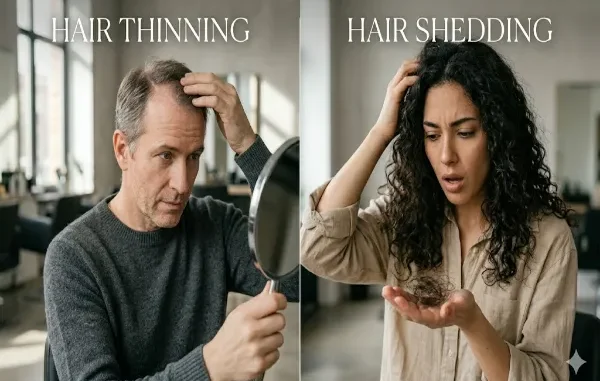
Seeing extra hair in your brush or shower drain can feel stressful, but not all hair loss means the same thing. Hair shedding and hair thinning are often confused, yet they have different causes and patterns. Understanding the difference can help you better identify what may be happening and what steps could support healthier hair over time.
Hair shedding is usually temporary and tied to disruptions in the normal hair growth cycle. Hair thinning tends to happen more gradually and may involve long-term changes in density or strand thickness. Knowing the signs can help you decide whether lifestyle changes, nutritional support, or professional guidance may be helpful.
Signs Your Hair Is Thinning Instead of Shedding
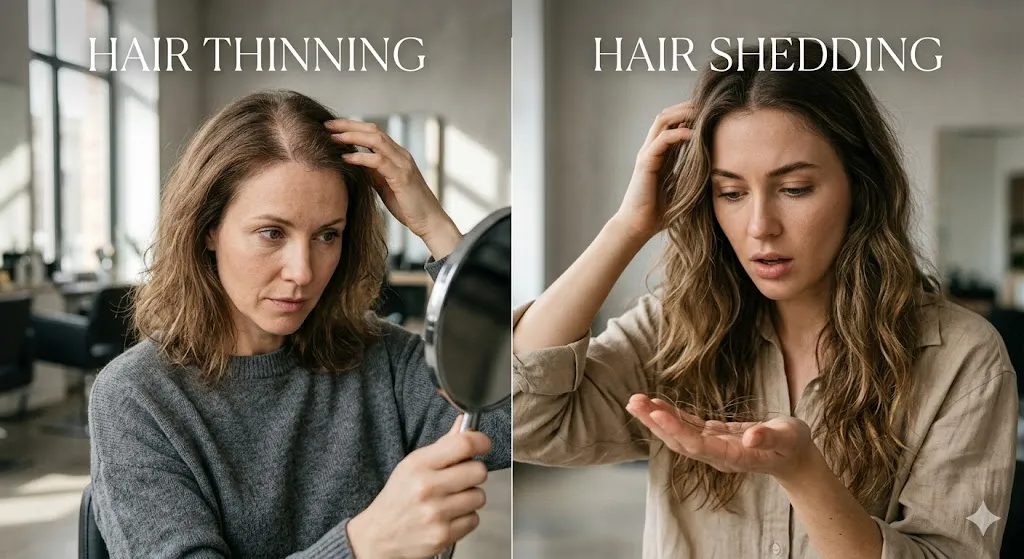
Hair shedding typically happens suddenly. You may notice more strands falling out while washing, brushing, or styling your hair. This type of shedding is often linked to stress, illness, hormonal changes, rapid weight loss, or other temporary disruptions. Even though more hair may fall out than usual, the overall density of the hair often remains fairly even.
Hair thinning is different because it usually develops slowly over time. Instead of seeing dramatic shedding all at once, you may notice your ponytail feels thinner, your part appears wider, or your scalp becomes more visible in certain areas. The hair itself may also feel finer or weaker than before.
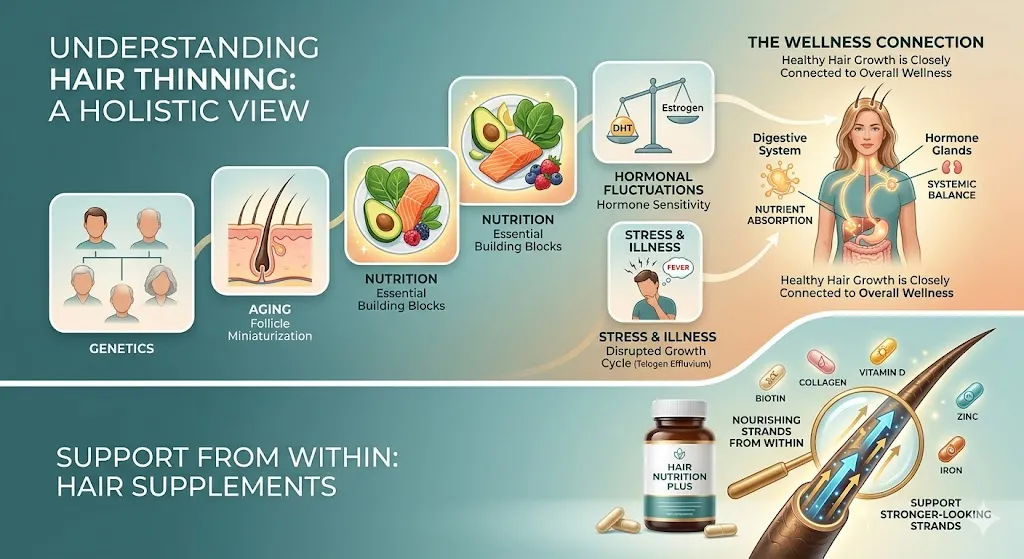
A variety of factors can contribute to thinning, including genetics, aging, nutrition, and hormonal fluctuations. Because healthy hair growth is closely connected to overall wellness, many people turn to supportive products like hair supplements to help nourish hair from within and support stronger-looking strands.
Nutrition also plays a major role in maintaining healthy growth cycles. Ingredients such as biotin, collagen, iron, and vitamin D are commonly associated with hair wellness. Learning more about dermatologist recommended supplements for hair growth can help individuals better understand which nutrients may support healthier-looking hair over time.
Many people focused on hair wellness also prioritize overall self-care and skincare. Products like neck firming cream are often incorporated into broader beauty routines that focus on healthy aging and long-term skin support.
Why Stress and Hormones Affect Hair Growth
Stress and hormones can have a major impact on the hair growth cycle. High stress levels may trigger a condition called telogen effluvium, which pushes more hairs into the resting phase prematurely. This often results in noticeable shedding a few months after a stressful event.
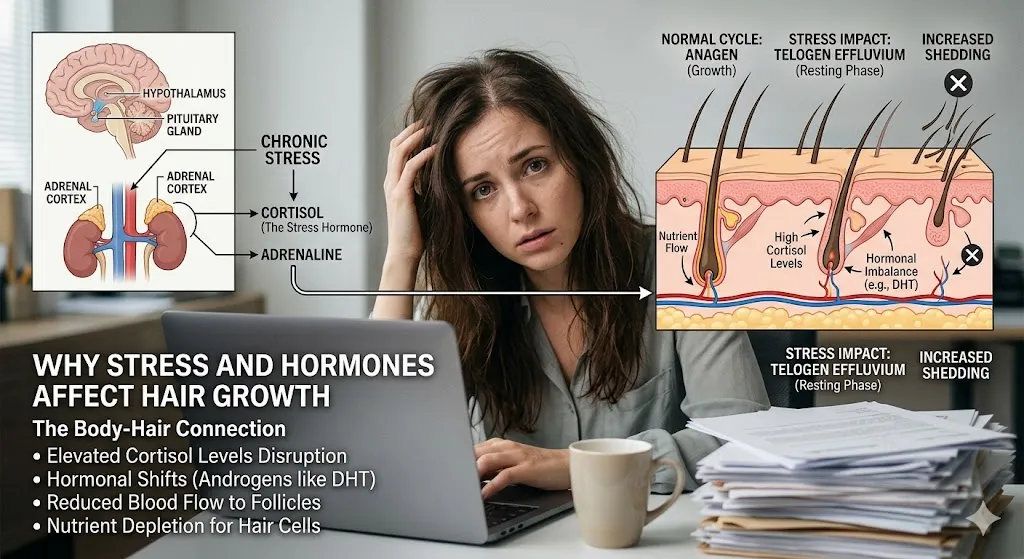
Hormonal changes can also influence hair density and texture. Pregnancy, menopause, thyroid imbalances, and shifts in hormone levels may affect how hair follicles function, sometimes causing strands to become thinner or weaker over time.
Lifestyle habits also matter. Sleep quality, hydration, nutrition, and stress management all contribute to healthier hair growth. When the body is under chronic stress, it may redirect energy away from non-essential functions like hair growth, which can worsen thinning concerns.
The good news is that many forms of shedding improve once the underlying trigger is addressed. While thinning may take more time and consistency to manage, supportive habits and early attention can help improve the appearance and strength of hair over time.
Related posts:
 Simple Tips And Tricks To Help You Improve Your Health And Wellness
 Fun Facts About Milk
 Regaining Control on the Road to Recovery: What You Need to Know
 🦷 Emax vs Zirconia: Which Dental Veneer Is Better for Your Smile?
 Medical Malpractice in Florida: What Every Healthcare Provider Should Understand
Leave a Reply