
Misplaced calls during serious conversations are inconvenient to work and routine. In the meantime, simple tasks, such as emailing or checking maps, are annoying because of the slow data speeds. The high-density constructions, isolated areas, and bandwidth saturation of buildings tend to disrupt signals precisely when they are required most. This leads to a decline in productivity and unreliable communication.
That is where a cell phone signal booster comes in. When you learn how signal enhancement technology works, better connectivity is possible. Rather than accepting a bad reception, it is possible to enhance reception indoors.
This article describes the concept of a cell phone signal booster and how the signal enhancer improves indoor cell phone connectivity.
What Exactly Is Cell Phone Signal Booster?
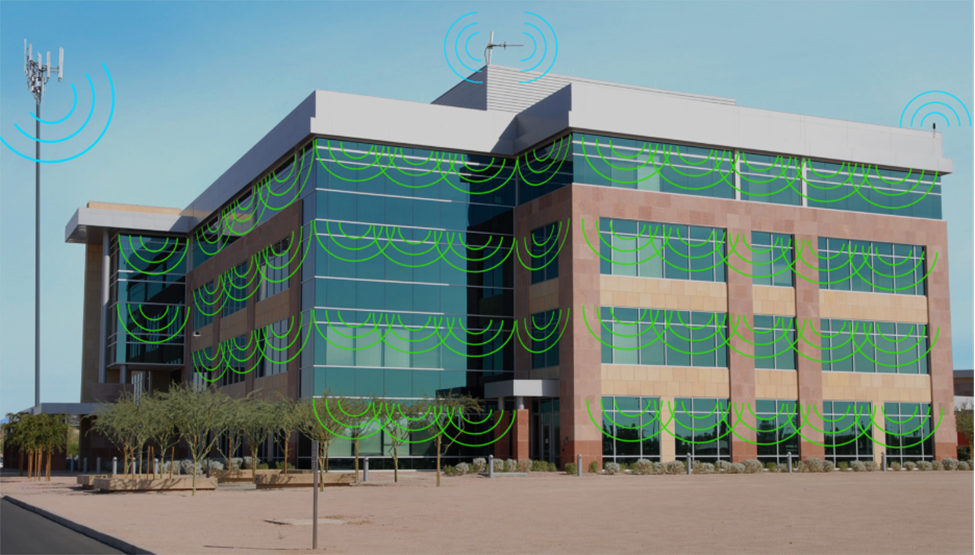
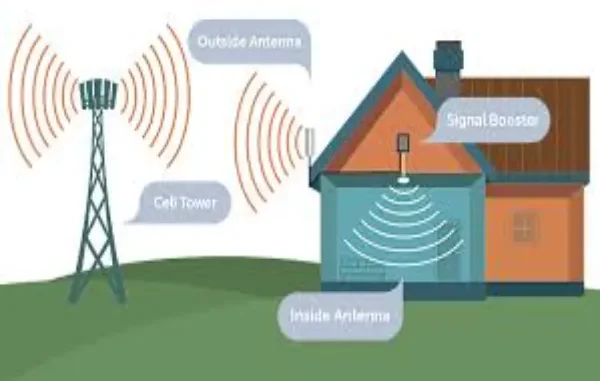
A cell phone booster is a system that is intended to receive weak cellular signals from outdoors, amplify signals, and rebroadcast stronger signals inside your building or workspace. As a result, calls become clearer, data speeds are improved, and dropped connections decrease.
Rather than synthesizing a new signal, the system amplifies the signal that is already available from outside. Therefore, even universally marginal coverage locations can get reliable indoor connectivity after the signals have been strengthened and redistributed.
Typically, there are three main components of the system:
- An outdoor antenna for collecting present cellular signals
- An amplifier that increases signal strength
- An indoor antenna that distributes the enhanced signal
As a result, your devices are able to communicate with their nearest cell towers with greater efficiency, resulting in a better call quality as well as data performance.
Now that we know what exactly a cell phone signal booster is. Let us discuss how exactly it works.
1. Capture Outdoor Cellular Signal
To start the boosting process, the system starts the process of capturing the available signal outside of your building. An external antenna is added to a roof or on a high exterior point, where signal strength is high. Placement is extremely important since signals vary according to height, direction, and obstacles in the area.
Therefore, installers normally test a number of positions before finalizing the antenna location. Once captured, the signal is transmitted via cables to the amplifier positioned indoors. As a consequence, even weak signals become usable for strengthening.
This stage is very crucial as boosters are entirely dependent on increasing the existing signals instead of creating new signals.
2. Amplify Captured Signal

After signals enter the system, they reach the amplifier, which is the center element of the booster setup. Here, incoming cellular signals are boosted before they are redistributed indoors.
The amplifier boosts the power of the signal and retains compatibility with cellular networks. Meanwhile, modern systems automatically adjust amplification levels in order to prevent interference with nearby towers.
As a result, signals are strong enough to enable consistent voice calls, messaging, and faster data performance within buildings.
At the same time, the amplifier also prepares outgoing signals from your phone so that two-way communication improves, rather than only incoming signals.
3. Distribute Enhanced Signal Indoors
Once signals are amplified, they are transmitted to indoor antennas, which broadcast better signals throughout the building. These antennas behave as mini coverage points, and they provide powerful signals to areas that were previously affected by dead zones.
Depending upon the size and configuration of the structure, systems can employ a single or several different antennas. As a result, signals are able to reach interior rooms, basements, offices, and large open spaces.
Signal distribution should be well-designed to avoid overlapping or weak areas. Therefore, professional installations often map out the planting locations to ensure consistent performance.
Your phone then connects to this boosted signal naturally, just as it would connect to a nearby cell tower when outdoors.
4. Strengthen Outgoing Signals from Your Device

Signal boosting can work in both directions. In addition to boosting the signals coming into your building, the system also boosts signals leaving your phone.
When you make a call or send data, your phone or device first connects to the indoor antenna. Then, signals travel back through the amplifier and are boosted before they are transmitted outdoors.
As a result, your phone can have a stronger connection with nearby cell towers, eliminating cell dropouts or a slower upload time.
This two-way enhancement facilitates the stability of communication, especially in places where phones were previously struggling to make and keep connections.
5. Automatic Signal Management and Optimization
Modern booster systems include intelligent controls that automatically adjust performance based on real-time signal conditions. These controls ensure stable operation without requiring manual adjustments.
For example, if outdoor signals fluctuate due to weather or network congestion, the system automatically adapts amplification levels. As a result, indoor connectivity remains stable even when conditions change outside.
Additionally, systems prevent feedback loops between antennas, which could otherwise create interference. Proper spacing and system calibration, therefore, maintain smooth performance.
Ultimately, automatic optimization ensures the booster works efficiently while protecting carrier networks and delivering consistent connectivity indoors.
Final Thoughts
Weak cellular reception disrupts communication, delays work, and creates avoidable frustrations in both personal and professional environments. However, understanding how signal boosters function shows that poor indoor coverage is often fixable.
By capturing outdoor signals, amplifying them, and distributing them inside buildings, booster systems restore reliable connectivity. Consequently, calls remain clear, data flows smoothly, and mobile communication becomes dependable again.
Ultimately, improving signal quality transforms dead zones into connected spaces, allowing communication and productivity to continue without interruption.





Leave a Reply