
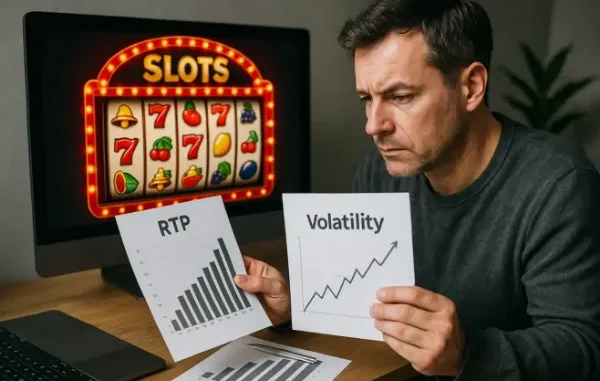
The world of digital gaming is governed by complex algorithms, yet most players focus on a single number: the Return to Player (RTP). This theoretical percentage represents the amount of wagered money a slot is designed to pay back over an infinite number of cycles. However, the reality of a single session often contradicts this static figure. Two machines can both boast an RTP of 96%, but one might leave you with a depleted balance in minutes, while the other keeps you playing for hours with constant small rewards. This discrepancy exists because RTP is a long-term average that does not account for the “path” the money takes to return to the player.
Understanding this path requires looking at the internal architecture of the software. For instance, when engaging with modern crash-style mechanics like jugabet balloon, the player experiences a very different mathematical tension compared to a traditional reel-based slot. While the return might be mathematically similar over the long haul, the immediate feedback loop is defined by the frequency of bursts and the risk taken by the user. This illustrates that while RTP provides a safety net for the player’s expectations, it is the underlying volatility that actually dictates the rhythm of the game and the emotional highs and lows experienced during every single spin.
Defining Volatility and Variance
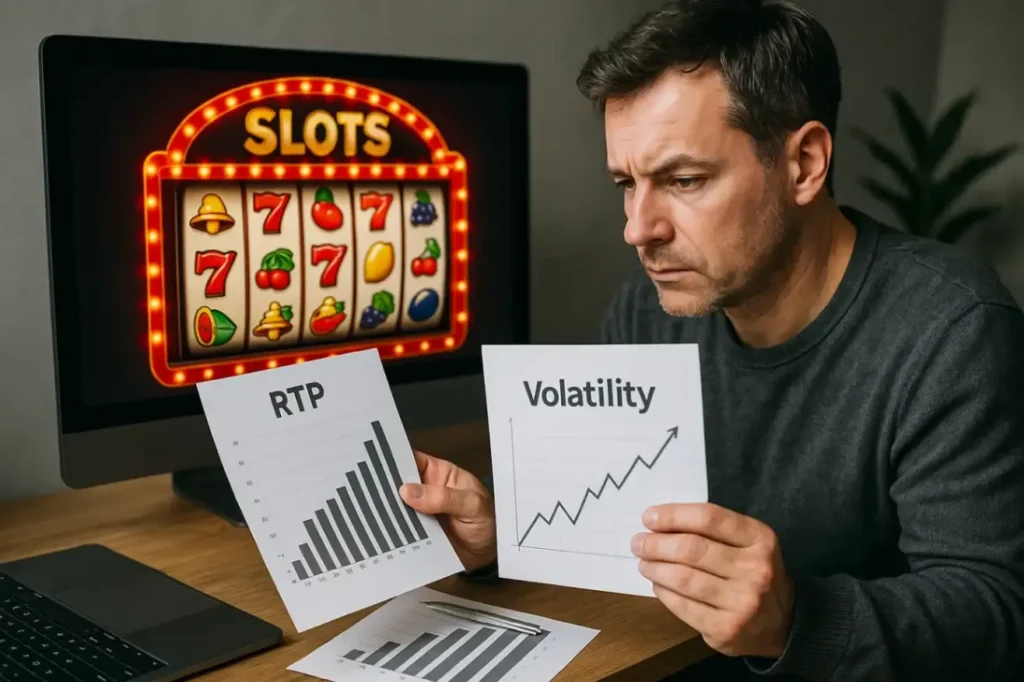
In mathematical terms, volatility refers to the level of risk associated with a specific game. It describes how much and how often a player can expect to win. High volatility slots are the “marathon runners” of the casino world; they are designed to go for long periods without paying out significant amounts, but they hold the potential for massive, life-changing wins in a single stroke. Conversely, low volatility slots are more like “sprinters,” providing frequent, smaller payouts that help maintain the player’s bankroll but rarely result in a staggering jackpot. Variance is the statistical measure of these fluctuations around the average RTP.
The feeling of a game is entirely dependent on where it sits on this variance scale. If you are playing a high-variance game, the standard deviation from the mean is vast. This means that in the short term, your actual return can be 0% or 500%, regardless of the 96% label on the box. Professional developers use these mathematical deviations to target different types of players. Some players seek the adrenaline of the “all or nothing” approach, while others prefer a steady, relaxing experience where their money lasts longer. Both games are fair and follow their programmed RTP, but their mathematical “personalities” are polar opposites.
The Role of Hit Frequency
Hit frequency is a crucial metric that works alongside volatility to shape the player experience. It represents how often, on average, a winning combination will appear on the reels. A game might have a hit frequency of 25%, meaning one in every four spins results in a win. However, hit frequency does not tell you the size of those wins. A low volatility game usually has a high hit frequency, where many of those “wins” might actually be less than the original bet. This phenomenon, often called “losses disguised as wins,” provides positive sensory feedback to the player while the bankroll slowly trends downward.
In contrast, a high volatility slot might have a much lower hit frequency, perhaps only 10% or 15%. This creates a psychological environment of “dry spells” where the player might go ten or twenty spins without seeing any return at all. When a win finally occurs in this scenario, it is usually much larger than the stake, providing the significant “feeding” sensation that high-risk players crave. This balance between how often you win and how much you win is what creates the “feel” of a slot. Even with identical RTPs, the game with a 30% hit frequency will feel vastly more generous than one with a 10% hit frequency, even if the eventual total payout is the same.
Payout Distribution and the Jackpot Factor
The way a game’s prize pool is distributed across its features is another reason why identical RTPs feel different. Imagine two slots: Game A puts 80% of its return into the base game through small symbol combinations, while Game B puts 50% of its return into a single, rare progressive jackpot. If you play Game B and do not hit that jackpot, you are effectively playing a game with a 46% RTP. This “effective RTP” is what the player actually experiences during a standard session. The presence of a massive top prize necessitates that the rest of the game must be “tighter” to stay within the overall RTP limits.
This mathematical trade-off is why jackpot hunters often feel that their favorite games are “cold.” The math requires the machine to “save up” for the big payout. On the other hand, a game without a massive jackpot can afford to distribute its RTP more evenly across the paytable. This creates a “looser” feeling where the player sees a variety of medium-sized wins. When you compare these two games, the one with the flat payout structure will feel like it “feeds” you more consistently, whereas the jackpot-heavy game will feel like an uphill battle. Both are mathematically honest, but their payout distributions create entirely different financial realities for the user.
The Psychological Impact of Bonus Rounds
Bonus rounds are the high-octane components of modern slots where the majority of high-volatility action occurs. In many contemporary titles, the base game acts merely as a waiting room for the Free Spins or “Hold and Win” features. A slot might allocate 40% or more of its total RTP specifically to these bonus rounds. If the bonus is very difficult to trigger—mathematically referred to as “bonus frequency”—the player will experience long periods of attrition. The tension builds because the player knows the “return” is locked behind a feature that hasn’t appeared yet.
When two games have the same RTP but different bonus structures, the “feeding” sensation changes. One game might offer a frequent but low-paying bonus, providing a sense of progress and achievement. Another might offer a rare bonus that has the potential to pay 5,000 times the bet. The latter will feel “brutal” and “hungry” for most of the session, only to suddenly “explode” with wealth. This creates a different narrative for the player. The math hasn’t changed regarding the long-term return, but the concentration of that return into a few seconds of gameplay alters the perception of whether the machine is being “generous” or “stingy.”
Short-Term Volatility vs. Long-Term Certainty
One of the most difficult concepts for players to grasp is the “Law of Large Numbers.” RTP is calculated over millions, sometimes billions, of spins. In a single session of 200 or 500 spins, the RTP is essentially irrelevant. In the short term, volatility is the only factor that matters. This is why a player can walk away from a 96% RTP slot after losing $100 and feel cheated, while another player wins $1,000 on the same machine five minutes later. The statistical “noise” in the short term is so great that it completely obscures the underlying mathematical return.
This short-term chaos is what makes gaming exciting, but it is also what leads to the perception that some machines are “broken” or “hot.” Mathematicians use a “Confidence Interval” to determine how far the actual results might deviate from the theoretical RTP over a specific number of spins. For a high volatility slot, that interval is massive. It might take hundreds of thousands of spins for the actual return to get within 1% of the theoretical RTP. Therefore, two identical RTP machines can “feed” differently for weeks at a time simply because they are operating at different points within their statistical variance.
Mathematical Modeling of “Feeding” Patterns
Slot designers use mathematical models to create “player journeys.” A “steady feeder” model is designed to give the player a high “Time on Device” (TOD). This is achieved by clustering small wins together so that the player’s balance fluctuates in a narrow range. The psychology here is to minimize the “pain of losing” by providing frequent “micro-rewards.” Even though the player is slowly losing money due to the house edge, the constant feedback suggests that a big win is just around the corner. This model is common in social gaming and low-stakes entertainment slots.
On the other hand, the “big hit” model is designed for high-risk appetites. The math is modeled to allow for deep “drawdowns” where the balance drops significantly, followed by a sharp, vertical spike. This creates a “feast or famine” experience. If you compare a “steady feeder” to a “big hit” machine, the first will feel like it is “supporting” you, while the second feels like it is “robbing” you—until it isn’t. Engineers carefully calibrate these models to ensure that the game’s “math model” matches its visual theme. A gritty, high-stakes pirate adventure is likely to have a high-volatility model, whereas a colorful, cute fruit slot might be more of a steady feeder.
The Impact of Bet Sizes and Multipliers
Volatility is not just about the game’s code; it is also influenced by how the player interacts with the betting options. Many modern slots include “Ante Bets” or “Bonus Buys” that allow players to increase the volatility of the game manually. By paying a premium, the player can skip the low-volatility base game and jump straight to the high-variance bonus rounds. This effectively changes the “feel” of the RTP. While the percentage might only move by 0.5%, the volatility triples, making the game feel much more aggressive and less “nourishing” in the traditional sense.
Multipliers also play a huge role in the math of volatility. A game that relies on multipliers to reach its maximum win potential is inherently more volatile than a game with a flat paytable. If a 96% RTP game has a 100x multiplier that triggers once every 500 spins, the absence of that multiplier makes the game feel incredibly tight. If another 96% RTP game has no multipliers but higher base symbol values, it will feel much more “honest” to the average player. The “feeding” sensation is more consistent when the wins are derived from the symbols themselves rather than a rare mathematical “booster.”
Regulatory Standards and RNG Fair Play
Despite how different two slots might feel, they are both subject to the same rigorous testing by agencies like eCOGRA or iTech Labs. These labs ensure that the Random Number Generator (RNG) is truly random and that the theoretical RTP is achievable. The “feeling” that a machine is “rigged” or “starving” the player is usually just the result of a high-volatility math model performing exactly as intended. Regulators require that every spin is an independent event, meaning the machine has no “memory” of whether it just paid out a jackpot or took ten losses in a row.
This independence of spins means that “hot” and “cold” streaks are purely a matter of statistical probability. A machine with high variance will naturally produce longer streaks of both wins and losses. This is often misinterpreted by players as the machine “feeding” them or “starving” them intentionally. In reality, the math model is simply exploring the outer edges of its variance. Understanding that the RTP is a legal requirement but volatility is a design choice helps players manage their expectations and choose games that align with their personal risk tolerance and desired gameplay experience.
Conclusion
In the final analysis, the Return to Player (RTP) is merely the destination, while volatility is the road you take to get there. Two slots with an identical 96% RTP can provide fundamentally different lives to your bankroll because they are built with different mathematical priorities. One is an architect of endurance, designed to keep you in the game with frequent, small reinforcements. The other is a purveyor of high-stakes drama, willing to let you suffer through long droughts for the chance of a meteoric gain. Neither is “better” than the other; they simply serve different psychological and financial purposes in the ecosystem of gaming.
Ultimately, being a savvy player means looking past the RTP and investigating the volatility and hit frequency of a title. If you prefer a game that “feeds” you regularly and allows for a long session, seek out low-variance titles with high hit frequencies. If you are chasing the thrill of a massive payout and can handle the “famine” periods, high-volatility games are your arena. By understanding the mathematics behind the curtain, you can transform your gaming from a confusing series of “hot” and “cold” moments into a deliberate choice of mathematical destiny, ensuring that the “feel” of the game always matches your personal strategy.
Related posts:
 The Legal Requirements for Starting an Online Casino
 How to Make Money: Secret Tips on “Pronostic Quinté,” the French Horse Racing Betting Pool
 Why You Might Have A Problem Cashing Out Your Casino Bonus
 Safety tips for depositing before playing slot gacor
 The Evolution of Live Dealers: How AR Technology is Transforming Roulette into an Interactive TV Show
Leave a Reply