
The landscape of digital gambling has traveled a vast distance from the static, pixelated interfaces of the late nineties. Today, we find ourselves in the midst of a technological renaissance where the boundary between a physical casino and a digital broadcast studio has almost entirely evaporated. Live dealer games initially focused on providing a sense of trust by showing a real person shuffling cards, but the current ambition is far more cinematic. We are witnessing the birth of a hybrid entertainment form that combines the high stakes of gambling with the production values of a primetime variety show, engaging audiences with professional lighting, multi-angle cameras, and immersive soundscapes.
This shift toward highly polished, interactive content is driven by a mobile-first generation that demands seamless accessibility and visual excellence. To participate in this new wave of entertainment, users often choose to utilize specialized platforms that offer high-speed connectivity and optimized graphics, making it essential to know how to https://jugabet-app.cl/app/ instalar jugabet for a stable and high-definition experience. As the hardware in our pockets becomes more capable of rendering complex visual data, the industry is moving away from simple video feeds toward fully integrated environments where every digital element reacts to the physical world in real time.

Augmented Reality: More Than Just a Visual Filter
Augmented Reality (AR) is the primary architect behind the “TV show” feel of modern roulette. Unlike Virtual Reality, which replaces the world, AR overlays digital information onto the live video feed of the dealer and the table. This allows developers to project giant, floating 3D multipliers, celebratory fireworks, and complex statistical heat maps directly onto the physical roulette wheel. These elements are not just static overlays; they are rendered in 3D space, meaning they maintain their perspective and position even when the camera pans or zooms, creating a convincing illusion of a unified physical and digital reality.
The integration of AR serves a dual purpose: it enhances the aesthetic appeal of the game while providing valuable data to the player without cluttering the interface. Imagine a scenario where the winning numbers of the last fifty spins appear as holographic towers rising from the table, or where a “lucky” lightning strike hits specific segments of the wheel with electrifying visual effects. This level of detail transforms a mechanical process into a narrative event, keeping the player’s attention focused on the screen in a way that traditional, non-augmented games simply cannot achieve in a crowded digital marketplace.
The Professionalization of the Live Presenter
In this new era, the role of the “dealer” has evolved into that of a “show host” or “presenter.” Modern live studios are no longer looking for people who can simply spin a ball or deal a card; they are recruiting charismatic entertainers who can carry a live broadcast for hours. These presenters are trained in the art of public speaking, camera presence, and real-time audience engagement. They interact with the live chat, celebrate individual wins by name, and maintain a high-energy narrative that keeps the momentum of the show moving forward even during the betting intervals.
This professionalization is a direct response to the “spectator culture” seen on platforms like Twitch and YouTube. Players are looking for a social connection and a sense of shared excitement that goes beyond the mathematical outcome of the game. The presenter acts as the bridge between the complex AR technology and the human element, ensuring that the spectacle remains grounded in personality. By treating the game as a live performance, operators have successfully lowered the barrier to entry, making roulette feel less like a daunting gambling activity and more like a fun, social event that anyone can enjoy from their living room.
Multi-Camera Direction and Cinematic Pacing
One of the most significant changes in the transition to a TV-style format is the use of automated camera direction. Traditional live games often relied on a single, fixed perspective that could feel stagnant and disconnected. Modern AR-enhanced roulette utilizes a suite of high-definition cameras that switch dynamically based on the phase of the game. Close-ups of the ball’s final bounces, wide-angle shots of the presenter’s reactions, and slow-motion replays of significant wins create a rhythmic pacing that mimics a live sporting event or a game show like “The Price is Right.”
The pacing is further refined by digital transition effects and “stings” that signal different game states. For instance, when the “No More Bets” signal is given, the lighting in the studio might dim, and AR-generated graphics might pulse with anticipation. This choreographed approach ensures that there is never a dull moment on screen. By controlling the visual flow of the information, studios can build tension and release it at exactly the right moments, maximizing the emotional impact of every round and ensuring that the player remains fully immersed in the “show” from start to finish.
Gamification and Social Integration Features
The evolution of live dealers is deeply intertwined with the concept of gamification. Modern roulette shows often incorporate secondary games, bonus rounds, and “meta-goals” that reward loyalty and frequent participation. These features are often displayed through AR interfaces that show the progress of the entire community toward a specific goal. This creates a sense of collective triumph; when a massive multiplier is triggered, the entire “audience” celebrates together through interactive emojis and live chat bursts that are sometimes even visible to the presenter in the studio.
Social integration goes a step further by allowing players to see the bets and wins of others in a non-intrusive way. Digital avatars or usernames might appear briefly in the AR space above the table when a significant win occurs. This mimics the atmosphere of a busy land-based casino where a crowd gathers around a “hot” table. By fostering a sense of community, AR technology transforms a solitary digital experience into a collective event, making the game feel like a shared journey rather than an isolated confrontation with a random number generator.
The Impact of 5G and Low-Latency Streaming
The technical backbone of this AR revolution is the advent of 5G technology and ultra-low-latency streaming protocols. For an interactive TV show to work, the delay between the physical action in the studio and the player’s reaction must be near-zero. If the AR graphics are out of sync with the spinning ball by even a fraction of a second, the illusion is shattered. Recent breakthroughs in WebRTC and high-speed data transmission have finally made it possible to stream 4K video with complex data overlays to millions of devices simultaneously without a perceptible lag.
This reliability allows for more complex interactions, such as “betting on the fly” or interactive mini-games that take place during the spin itself. As 5G becomes more prevalent, the complexity of the AR elements can increase, moving from simple 2D overlays to high-fidelity 3D models that interact with the physical movements of the host. The stability of the connection ensures that the “spectacle” is never interrupted by buffering or pixelation, which is crucial for maintaining the professional “broadcast” quality that players have come to expect from modern iGaming leaders.
Customization and Personalization of the View
Unlike a traditional television show where every viewer sees the same image, AR-enhanced live games offer a high degree of personalization. Players can often toggle different AR layers on or off depending on their preference. For example, a “pro” player might want to see advanced hot and cold number statistics and wheel bias charts, while a casual player might prefer to see festive animations and simplified betting guides. This flexibility ensures that the game can cater to a wide spectrum of psychological profiles within a single broadcast.
Furthermore, some advanced platforms are experimenting with “player-centric” AR, where the graphics on the screen are tailored to the individual’s betting history or favorite colors. If a player consistently bets on “Red,” the AR interface might highlight red winning streaks with special visual effects just for them. This level of customization makes the player feel like the “star” of their own personal show, further deepening the emotional connection to the game and increasing the time spent within the interactive environment.
Security and Transparency in the Digital Age
While the visual effects are flashy, the underlying technology also plays a vital role in ensuring game integrity and transparency. AR can be used to display real-time verification of the game’s randomness. For instance, some studios use AR to show the digital “tracking” of the ball, providing a visual representation of the sensor data that confirms the result is legitimate. This “high-tech” transparency builds trust with a generation of players who are naturally skeptical of digital algorithms and want to see the physical evidence of a fair game.
The use of Optical Character Recognition (OCR) technology allows the system to read the physical results of the wheel instantly and translate them into the AR space. This means there is no human error in reporting the winning number. The marriage of entertainment and security is a cornerstone of the live dealer evolution; by making the “fairness” of the game part of the visual spectacle, operators can reassure players without interrupting the flow of the show. Technology, in this sense, serves as both the magician’s flourish and the auditor’s magnifying glass.
The Future: From AR to Full Mixed Reality
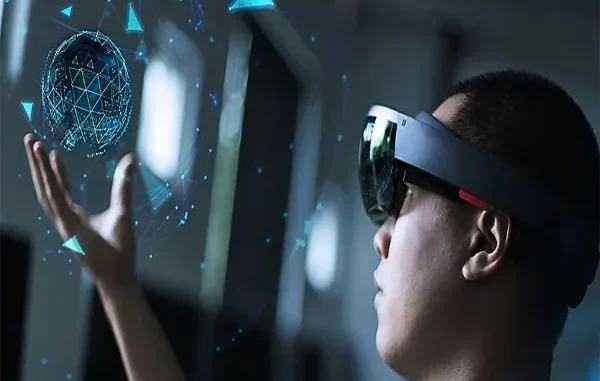
As we look toward the next decade, the evolution of live dealers will likely transition from Augmented Reality on a screen to full Mixed Reality (MR) through wearable devices. Imagine sitting in your living room and seeing a life-sized, holographic roulette table appear on your coffee table, with a 3D host standing next to you. In this scenario, the “TV show” becomes a 360-degree immersive experience where you can walk around the table and interact with digital objects as if they were physical. This is the ultimate goal of the “metaverse” within the iGaming sector.
The transition to MR will require even more sophisticated spatial mapping and hand-tracking technologies. However, the foundational work is already being done in the AR studios of today. The assets, the hosting styles, and the interactive logic being developed for 2D screens are the direct precursors to the fully spatialized casino games of tomorrow. As the hardware matures, the “Interactive TV Show” will evolve into an “Interactive Alternate Reality,” where the thrill of the casino is no longer something you watch, but something you inhabit.
Conclusion
In conclusion, the evolution of live dealers through AR technology represents a fundamental shift in how we perceive and consume casino games. Roulette has been transformed from a simple game of chance into a sophisticated, multi-layered entertainment product that rivals the best live broadcasts on television. By combining the human touch of a professional host with the limitless possibilities of digital graphics, operators have created a new medium that is as much about the “experience” as it is about the “outcome.”
This transformation is a testament to the power of technological convergence. As high-speed internet, advanced graphics processing, and creative showmanship continue to merge, the future of iGaming looks increasingly like a grand, interactive spectacle. The “Heros in the Shadow” of the technology world—the coders, the designers, and the engineers—have successfully turned a spinning wooden wheel into a global digital phenomenon. For the player, this means that every time they log in, they are not just placing a bet; they are taking center stage in a high-tech drama that is being broadcast across the world in real time.
Related posts:
 The Legal Requirements for Starting an Online Casino
 How to Make Money: Secret Tips on “Pronostic Quinté,” the French Horse Racing Betting Pool
 Why You Might Have A Problem Cashing Out Your Casino Bonus
 Pave the Way for Storms to Come: The Complete Sneak Peek of the 2024-25 NBA Season
 Safety tips for depositing before playing slot gacor
Leave a Reply