
Sharing a living space often means blending two distinct design preferences. Couples frequently discover that individual tastes in color, furniture, and layout don’t naturally align.
Design preferences are shaped by personal experiences, cultural influences, and daily habits. One partner may prioritize comfort and function, while the other values visual consistency or decorative detail.
Understanding the reasons behind each preference helps reduce tension. Design disagreements often stem from how each person wants a space to feel rather than from the specific items themselves. Recognizing these underlying priorities allows couples to focus on shared goals for comfort, usability, and atmosphere.
Finding ways to create a cohesive home without favoring one style over the other requires balance, communication, and thoughtful choices. With a few mindful tips, you and your partner can create a shared space that you both love.
1. Establishing Shared Goals for the Space
Before selecting furniture or décor, agreeing on the purpose of each room provides a useful foundation. A living room intended for relaxation may call for different choices than a space designed for entertaining or work. When both partners align on function, style decisions are easier to make.
Shared goals also help guide compromise. Instead of debating individual pieces, couples can evaluate whether a choice supports the intended use of the space. This approach keeps discussions focused and reduces frustration.
2. Choosing a Neutral Foundation
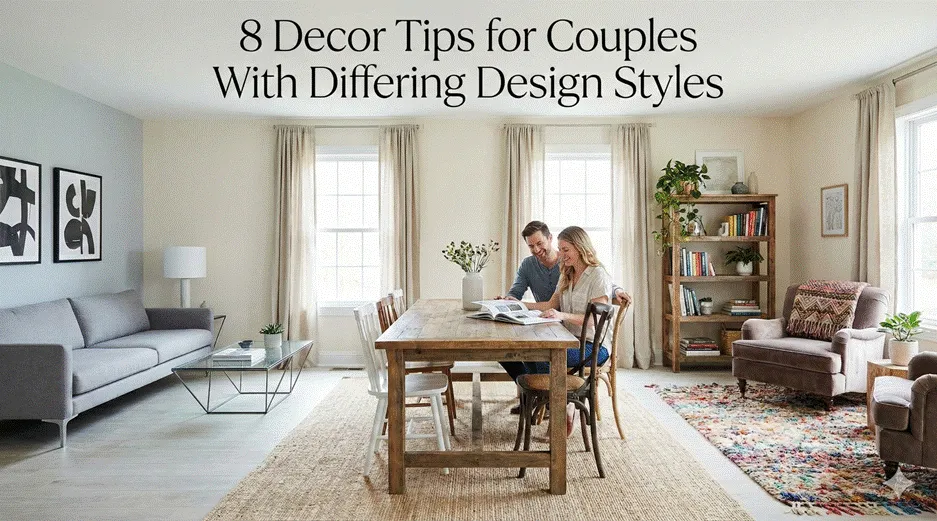
A neutral foundation allows multiple styles to coexist more easily. Walls, floors, and large furniture pieces often work best in subdued tones that do not dominate the room. Neutral backgrounds provide flexibility and make it easier to layer contrasting elements without overwhelming the space.
This approach does not require eliminating personality. Instead, it creates a backdrop that supports a mix of textures, colors, and design influences. A neutral base gives both partners room to express their preferences through accents rather than permanent fixtures.
3. Using Key Pieces To Bridge Style Differences
Certain design elements naturally connect contrasting styles. Design elements such as area rugs, curtains, and tablecloths are often introduced early in the process because they can visually connect different styles while remaining easy to update.
Look for pieces that combine clean lines with soft textures, or traditional shapes with modern materials, to attempt to appeal to both partners. These transitional pieces act as visual anchors within a room.
Strategically placing these items helps unify the space. When shared elements are distributed evenly, neither style feels isolated or dominant. This balance supports a cohesive look while still allowing individuality.
4. Balancing Personal Expression Throughout the Home
Rather than attempting to blend every preference into a single room, some couples find success by allowing different spaces to reflect different styles. A bedroom may lean toward one aesthetic, while a home office or reading area reflects another. This distribution guarantees that both partners feel represented.
Even within shared spaces, personal expression can be balanced. Alternating artwork, decorative objects, or furniture pieces allows each style to contribute without overwhelming the room. Consistency in scale and proportion helps maintain harmony.
5. Prioritizing Function Alongside Style
Functional needs should remain a central consideration in design decisions. Storage, seating, lighting, and layout affect daily comfort more than decorative details. When both partners agree that a space functions well, stylistic differences often feel less significant.
Practical solutions can also support compromise. Multi-purpose furniture or adaptable layouts allow for flexibility as preferences evolve. Prioritizing usability helps ensure the home is comfortable and efficient.
6. Allowing the Design to Evolve Over Time
Design does not need to be finalized all at once. Allowing a space to develop gradually gives couples time to adjust and reassess. Living with certain choices often reveals what works well and what may need to change.
An evolving approach reduces pressure to make perfect decisions immediately. As tastes shift and shared experiences grow, the home can adapt accordingly. This flexibility supports long-term satisfaction.
7. Communicating Openly About Preferences
Open communication is essential when managing differing design styles. Discussing preferences, dislikes, and priorities prevents misunderstandings and helps identify areas of compromise. Respectful conversation keeps design decisions collaborative rather than competitive.
8. Respecting Budget and Long-Term Flexibility
Design decisions are often influenced by budget, which can serve as a useful guide when styles differ. Focusing spending on shared priorities while keeping trend-driven items flexible allows the space to evolve without major reinvestment. Choosing pieces that can be updated, repurposed, or replaced over time supports compromise and helps maintain balance as preferences change.
Creating a Home That Reflects Both Partners
Blending differing design styles requires patience, flexibility, and shared intention. By focusing on function, choosing unifying elements, and allowing the space to evolve, couples can create a home that feels balanced and welcoming. Thoughtful design decisions ensure that both partners see their preferences reflected, resulting in a space that supports harmony and long-term enjoyment.





Leave a Reply