

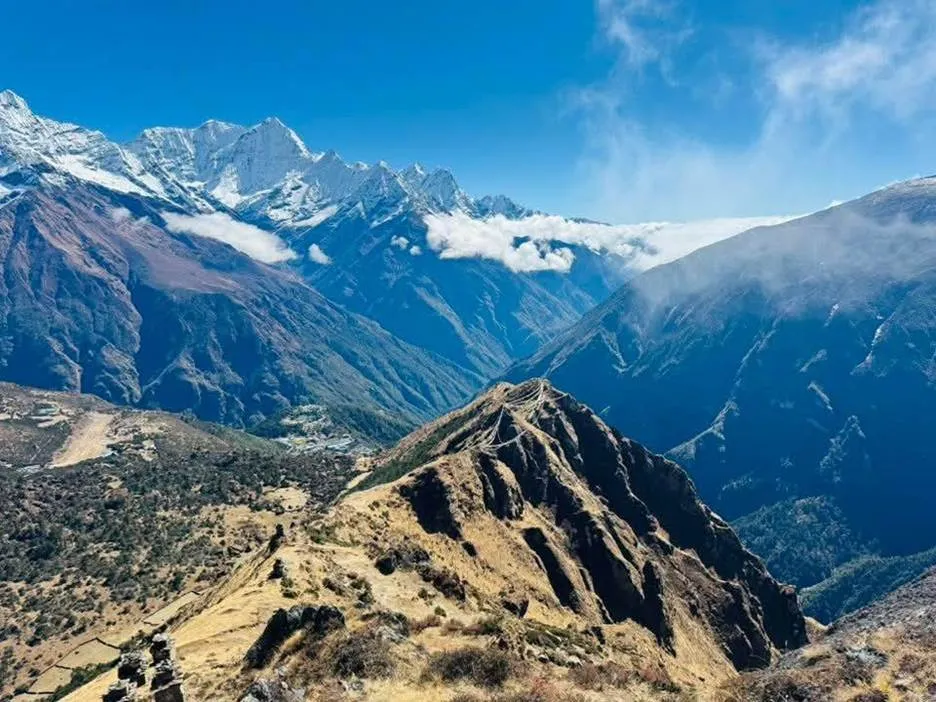
Altitude sickness isn’t just something that affects Himalayan climbers or extreme mountaineers. It’s a concern for anyone hiking at high elevation, whether you’re in the Rockies, the Andes, or the Himalayas. What makes Everest Base Camp Trek different is how quickly you gain altitude, and how high you stay for days at a time.
Experienced Himalayan climbers know this well. They don’t fear altitude, but they respect it. They move slowly, build acclimatization into their plans, and pay close attention to how their bodies respond. Trekkers on the Everest Base Camp (EBC) route face the same physiological challenges, just without ropes and ice axes.
You can train for months, pack the right gear, and feel strong as you leave Namche Bazaar. The mountains feel closer. The air feels sharper. And then, somewhere above 4,000 meters (13,123 feet), everything changes.
Breathing gets harder. Your pace slows. Sleeping feels strange. Even tying your boots can leave you short of breath.
This isn’t a weakness.
It’s altitude.
Above 4,000 meters (13,123 ft) on the Everest Base Camp trek, your body enters a completely different environment. Oxygen levels drop sharply, your heart works harder, and your system begins adapting in ways you’ve probably never experienced before. Understanding what’s happening inside your body at this altitude can be the difference between a smooth trek and a dangerous situation.
This guide explains, in plain language, what really happens to your body above 4,000m, why altitude sickness becomes a serious risk, and how to help yourself adapt safely as you move higher toward Everest Base Camp.
Why 4,000m (13,123 ft) Is a Turning Point on the EBC Trek
On the Everest Base Camp route, 4,000 meters (13,123 feet) isn’t just another number on the map. It’s where the trek starts to feel real.
By the time you reach Dingboche (4,410m / 14,468 ft), the air contains roughly 40% less oxygen than at sea level. According to research from the International Society for Mountain Medicine (ISMM), oxygen availability drops rapidly above 3,500 meters (11,483 ft), placing significant stress on the body’s cardiovascular and respiratory systems.
From this point onward, your body has to work much harder just to do normal things.
You’ll notice it quickly:
- Walking uphill feels heavier
- Your breathing stays fast even after resting
- Energy levels dip earlier in the day
This is why acclimatization days are built into EBC itineraries at this elevation. From here on, rushing becomes risky. Even experienced trekkers, and climbers, struggle if they don’t respect the altitude.
Think of 4,000 meters (13,123 ft) as the point where smart trekking really begins.
How Your Body Reacts Above 4,000m (13,123 ft)
Once you cross this altitude, your body starts making emergency adjustments to survive in thinner air.
Your breathing rate increases to pull in more oxygen. Your heart beats faster to deliver oxygen to vital organs. Your body begins producing more red blood cells to improve oxygen transport, a process supported by medical research from the Himalayan Rescue Association (HRA), but this adaptation takes time.
The problem?
These changes don’t happen overnight.
That delay is why symptoms often appear around Dingboche (4,410m / 14,468 ft), Lobuche (4,940m / 16,207 ft), and Gorak Shep (5,164m / 16,942 ft). You may feel fine one afternoon and wake up the next morning with a headache, no appetite, and legs that feel unusually heavy.
This is normal, but it’s also a warning.
Common Symptoms Trekkers Feel Above 4,000m (13,123 ft)
Most trekkers experience some combination of the following:
- New or persistent headaches
- Shortness of breath during simple walking
- Fatigue that feels out of proportion to effort
- Loss of appetite
- Poor or restless sleep
These symptoms indicate that your body is adjusting — but they should not worsen.
If headaches intensify, nausea appears, or dizziness doesn’t improve with rest, Acute Mountain Sickness (AMS) may be developing.
The rule used by guides and climbers worldwide is simple:
- Mild symptoms → pause and monitor
- Worsening symptoms → stop ascending or descend
Altitude Sickness Above 4,000m: What You Must Take Seriously
Above 4,000 meters (13,123 ft), altitude sickness becomes the primary risk on the Everest Base Camp trek.
Acute Mountain Sickness (AMS)
AMS is the most common form and typically presents as:
- Persistent headache
- Nausea
- Fatigue
- Poor sleep
According to the CDC and ISMM, AMS is manageable when recognized early — but ignoring it increases the risk of progression.
HAPE and HACE (Medical Emergencies)
These are rare, but life-threatening:
- HAPE (High Altitude Pulmonary Edema): Fluid in the lungs, causing breathlessness even at rest
- HACE (High Altitude Cerebral Edema): Brain swelling, leading to confusion, loss of balance, and severe headache
If these appear, immediate descent is non-negotiable.
No viewpoint, no milestone, and no Base Camp photo is worth staying at altitude with these symptoms.
Helping Your Body Adapt Above 4,000m (13,123 ft)
This is where experience — not strength — matters.
Acclimatization Is Not Optional
Well-designed EBC itineraries include:
- Two nights in Namche Bazaar (3,440m / 11,286 ft)
- Two nights in Dingboche (4,410m / 14,468 ft)
These aren’t rest days, they’re altitude training days. Short hikes to higher points followed by sleeping lower help your body adapt safely.
The same acclimatization principles apply across Nepal’s high-altitude treks. On routes like the Manaslu Circuit Trek, trekkers also build in extra nights at key villages to allow the body to adapt before pushing higher.
Whether you’re approaching Everest Base Camp or preparing for the Larkya La Pass, the rule is the same: gradual ascent, rest days, and listening closely to your body are non-negotiable above 4,000 meters (13,123 ft).
Slow Down — Even If You Feel Fine
Above 4,000 meters (13,123 ft):
- Walk slower than feels necessary
- Take short, frequent breaks
- Avoid matching other trekkers’ pace
Many people feel strong in the morning and crash by afternoon. A slower pace keeps oxygen demand manageable.
Eating, Drinking, and Recovery at High Altitude
Your appetite drops, but your calorie needs increase.
Prioritize:
- Rice, pasta, potatoes, dal bhat
- Warm soups and simple meals
Drink 3–4 liters per day. Research consistently shows dehydration worsens altitude symptoms quickly.
Avoid:
- Alcohol
- Smoking
- Sleeping pills
All reduce oxygen efficiency and impair sleep quality.
When Descending Is the Smartest Decision
Descending is not failure.
If symptoms don’t improve after rest — or worsen — descending even 300–500 meters (980–1,640 ft) often brings rapid relief.
Experienced Himalayan climbers understand this well:
The mountain will always be there. Your health comes first.
Many trekkers reach Everest Base Camp because they were willing to slow down — or turn back — when needed.
After the Trek: How Your Body Recovers
Once you descend:
- Breathing normalizes within 24–48 hours
- Appetite returns
- Sleep improves
Some fatigue may linger, which is normal after prolonged altitude exposure.
Repeated high-altitude exposure can improve adaptation, but acclimatization is required every time — even for experienced trekkers.
Conclusion:
Above 4,000 meters (13,123 ft) on the Everest Base Camp trek, your body is working far harder than you realize. Oxygen is limited, recovery is slower, and mistakes carry bigger consequences.
But with proper pacing, thoughtful acclimatization, good hydration, and honest self-assessment, the human body adapts remarkably well.
Everest Base Camp isn’t about pushing through discomfort.
It’s about moving smart, listening carefully, and respecting altitude.
Do that — and the mountains will reward you with one of the most powerful experiences of your life.





Leave a Reply